

6 Great Picture Book Covers
we like looking at covers


Deep dives on great picture books are here.
We recommend picture books here.
Mac is touring around the USA this fall, sometimes to talk about the art of the picture book as part of his Official Ambassadorial Duties, and sometimes to talk about the new book in The First Cat in Space series, which is a graphic novel, but he thought you wouldn’t mind. This event in Oakland, centered on Margaret Wise Brown and Leonard Weisgard’s The Quiet Noisy Book, will be especially fun and maybe particularly interesting to a Looking at Picture Books reader.
Jon will be in Oakland too! He’s reading and discussing his book The Skull at Womb House Books in Oakland on October 26.
The Looking at Picture Books Shop is here.
A lot of our texts to each other are just photos of book covers we like, so today we decided to share some covers we like with you all too.
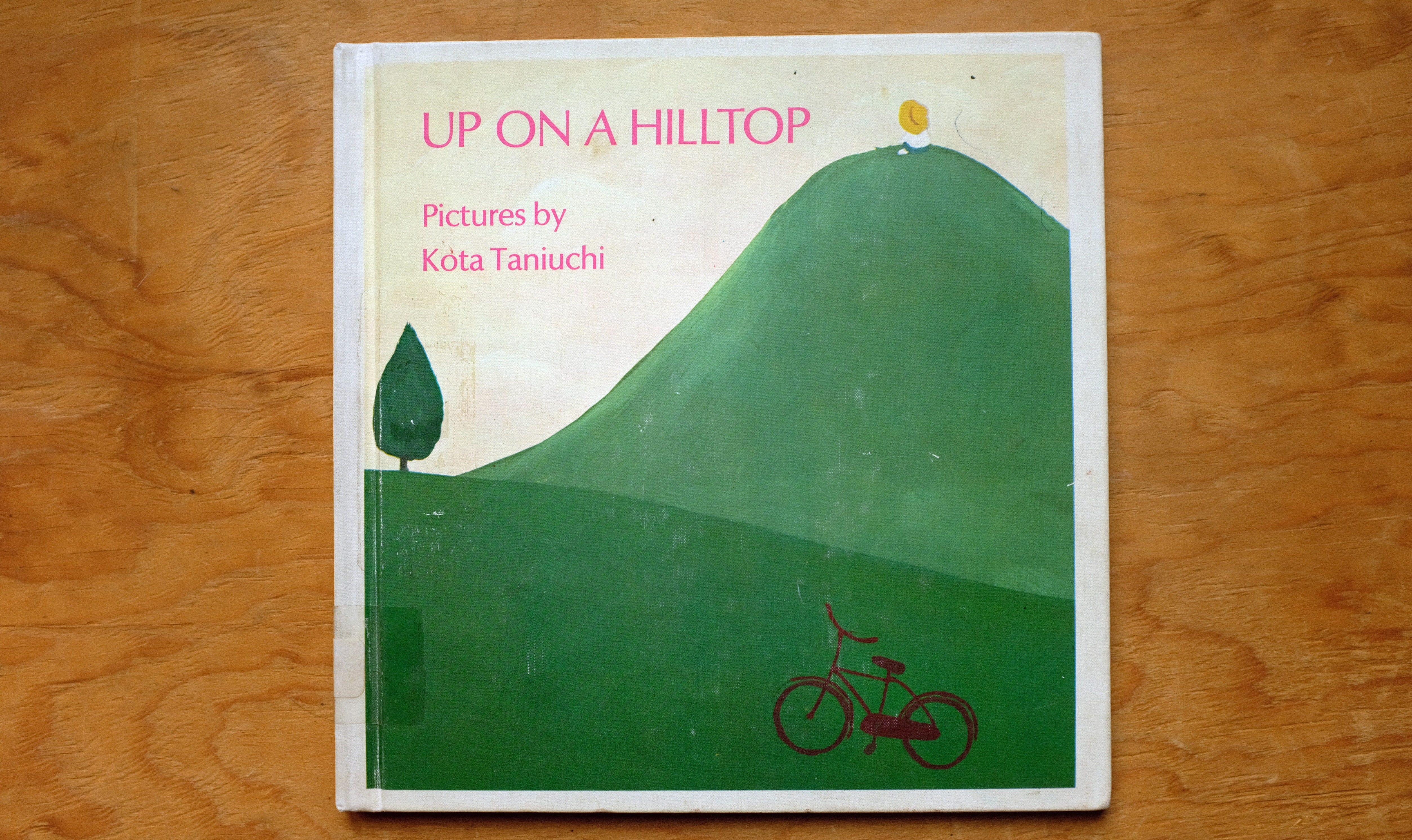
Absolutely lovely. The longer you look at it, the more you see, and both the title itself and its placement guide our eye through the image. The hot pink type is so cool and surprising, at least to me, for a book published in 1969, though maybe our font and color theory experts will correct me in the comments. (That’s cool, they’re normally mad at Jon.) Taniuchi always used “Pictures by” as his credit line, even though he wrote his books too, which is interesting and a little confounding.
—MAC
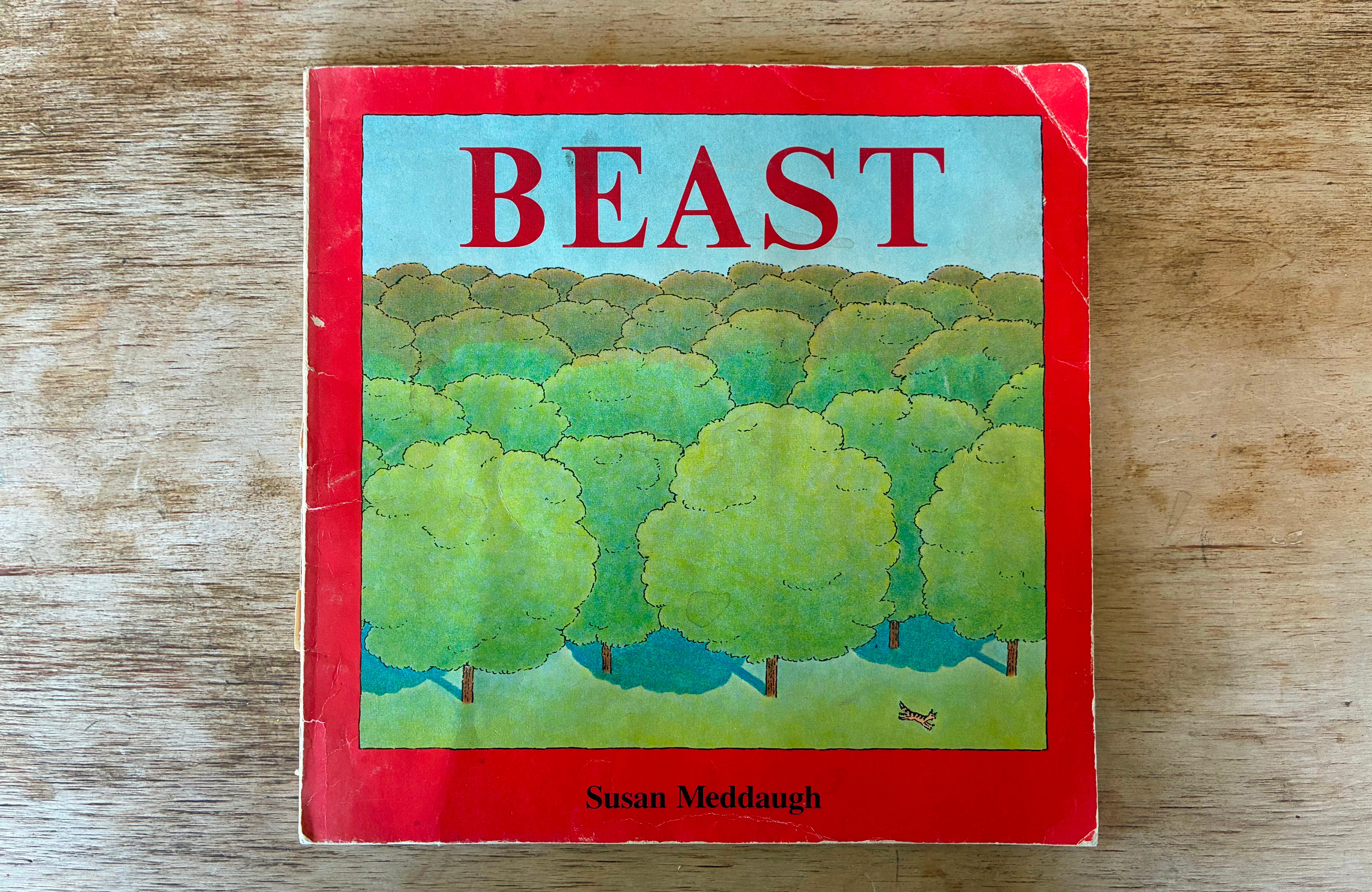
I found this one in a used bookstore last year and I remember staring at it, not quite believing what I wasn’t seeing. I looked all over it, sure that Susan had drawn the BEAST somewhere in there, and made it less good, if only because someone, somewhere, would have demanded that of her. But the more I looked, the more Susan had pulled it off. There is no BEAST on this cover. The cat running for its life all tiny in the corner is the perfect amount of interest and action so it’s not just trees. Four stars.
—JON
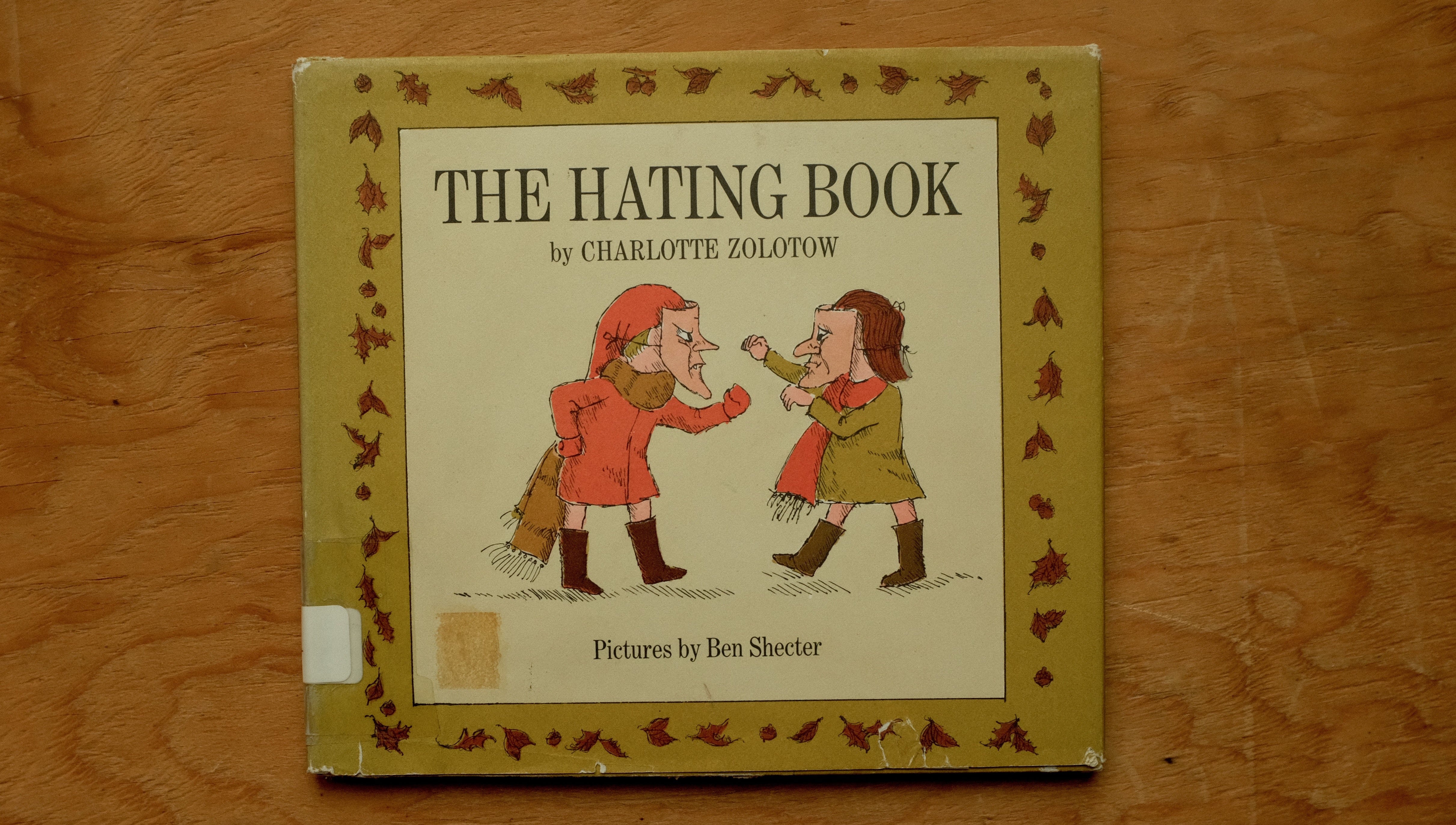
I think in kids’ books, when we look at older stuff, we’re too quick to say “They wouldn’t let you do that today,” and that when we do, we 1) underestimate how difficult and rare it was to make challenging work in decades past and 2) contribute to a contemporary culture of timidity or hopelessness that discourages authors, illustrators, and publishers from taking risks.
But wow they wouldn’t let you do that today.
—MAC
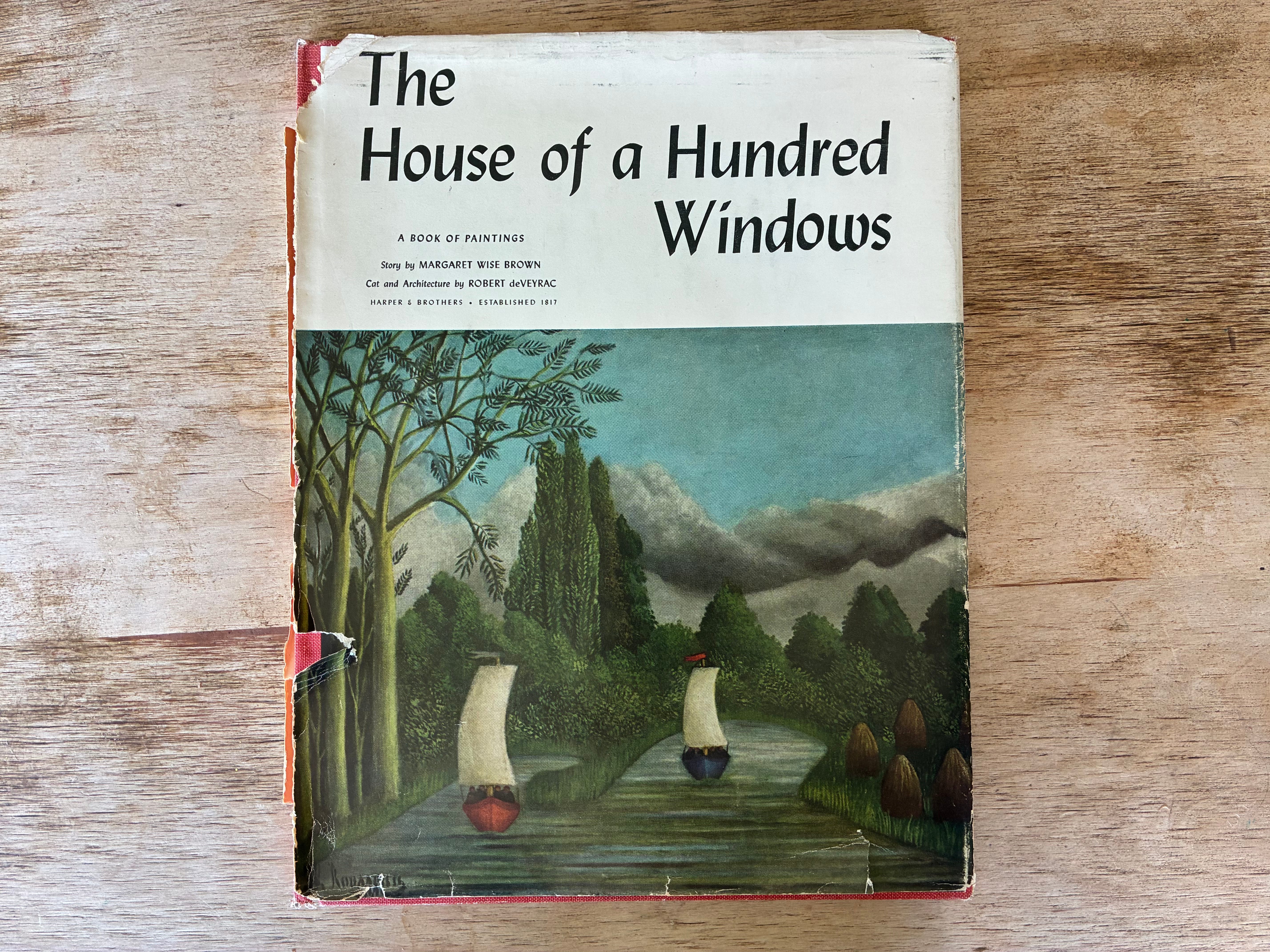
This crazy, crazy book. Probably the best approach here is to just simply list all the amazing things going on here. First off, of course, is the Rousseau painting. Any Rousseau, you’re in great shape, but this one, with its boats full of people facing directly at the viewer, either trapped in their little personal bays or just setting off in some unbelievably slow race, or some third theory, are really funny. Rousseau was so funny.
Then, once that image is in place, you go with this incredible title, typeset so gorgeously with a knowledge of grids and layout that has now died off almost completely (there is no designer credited, by the way — on the last page, along with a list of the paintings they use, is a line that says, “Design of book by Margaret Wise Brown and Robert deVeyrac.”) The title, also, has aggressively little to do with the image underneath it.
Your eye bounces back and forth between the amazing title and the amazing image, both things so amazing that you want to join them, somehow. Surely this is possible. It is not. The only path left to you is to open the book and maybe untangle all of this in there. BUT THEN, just as you’re about to open it and do that, you glance at the smaller text on the cover, and read that this is “a book of paintings” WITH a story by Margaret Wise Brown, and then, the knockout punch. “Cat and Architecture by Robert deVeyrac.” CAT AND ARCHITECTURE?? As the cover credit??? Have you ever wanted to open a book so much in your life?
—JON
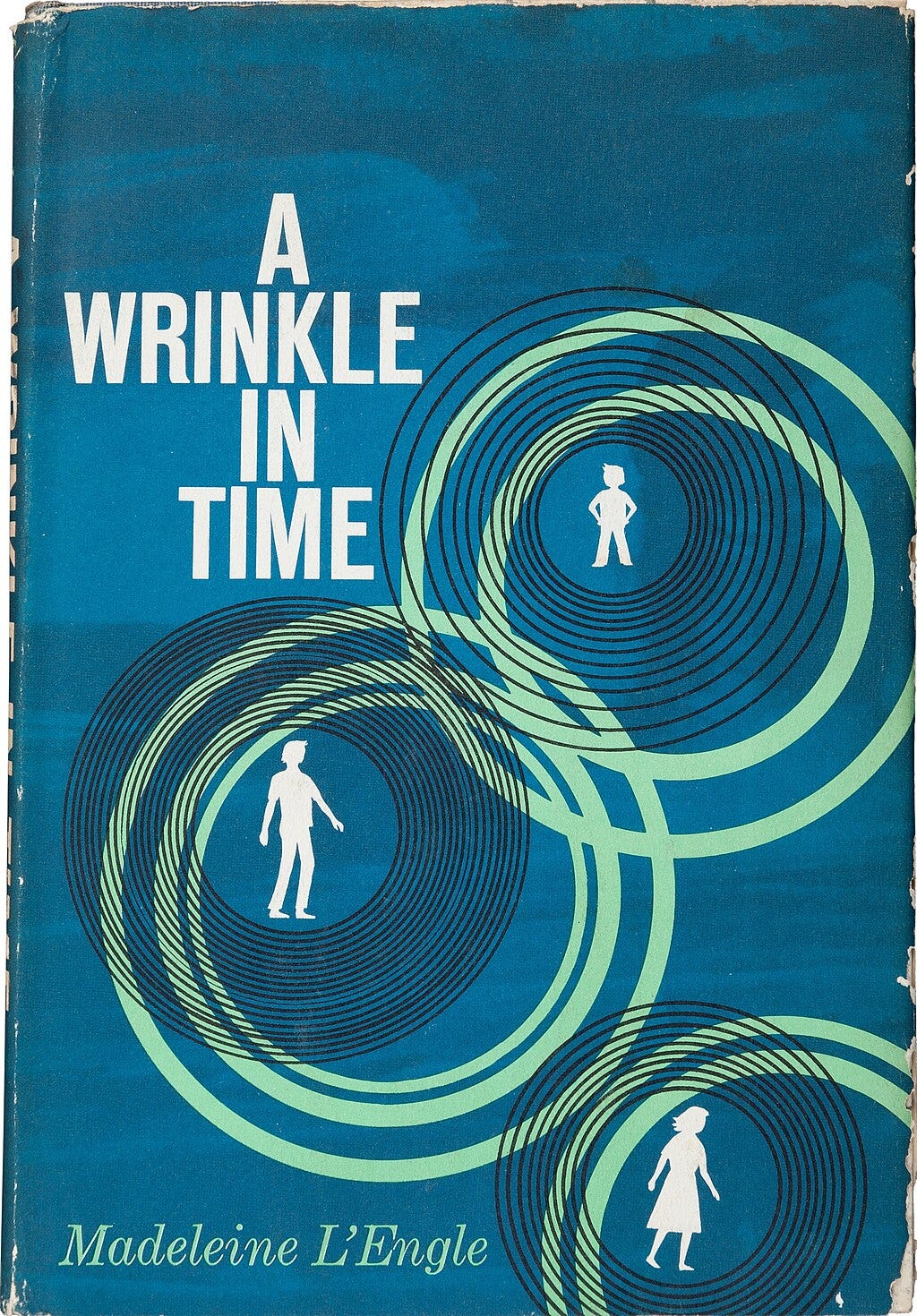
Before Ellen Raskin wrote children’s books, she was a cover designer — she designed the original jacket for A Wrinkle in Time.
She’s most famous for her novels, especially 1979’s The Westing Game, for which she designed both cover and interiors. Raskin must be the only Newbery-winning author to design a jacket for a Newbery-winning book she didn’t write — please remember to thank Looking at Picture Books if you use that fact to win your next pub trivia. (Although now I’m scared Natalie Babbitt might have also done this. Please don’t blame Looking at Picture Books if you lose.)
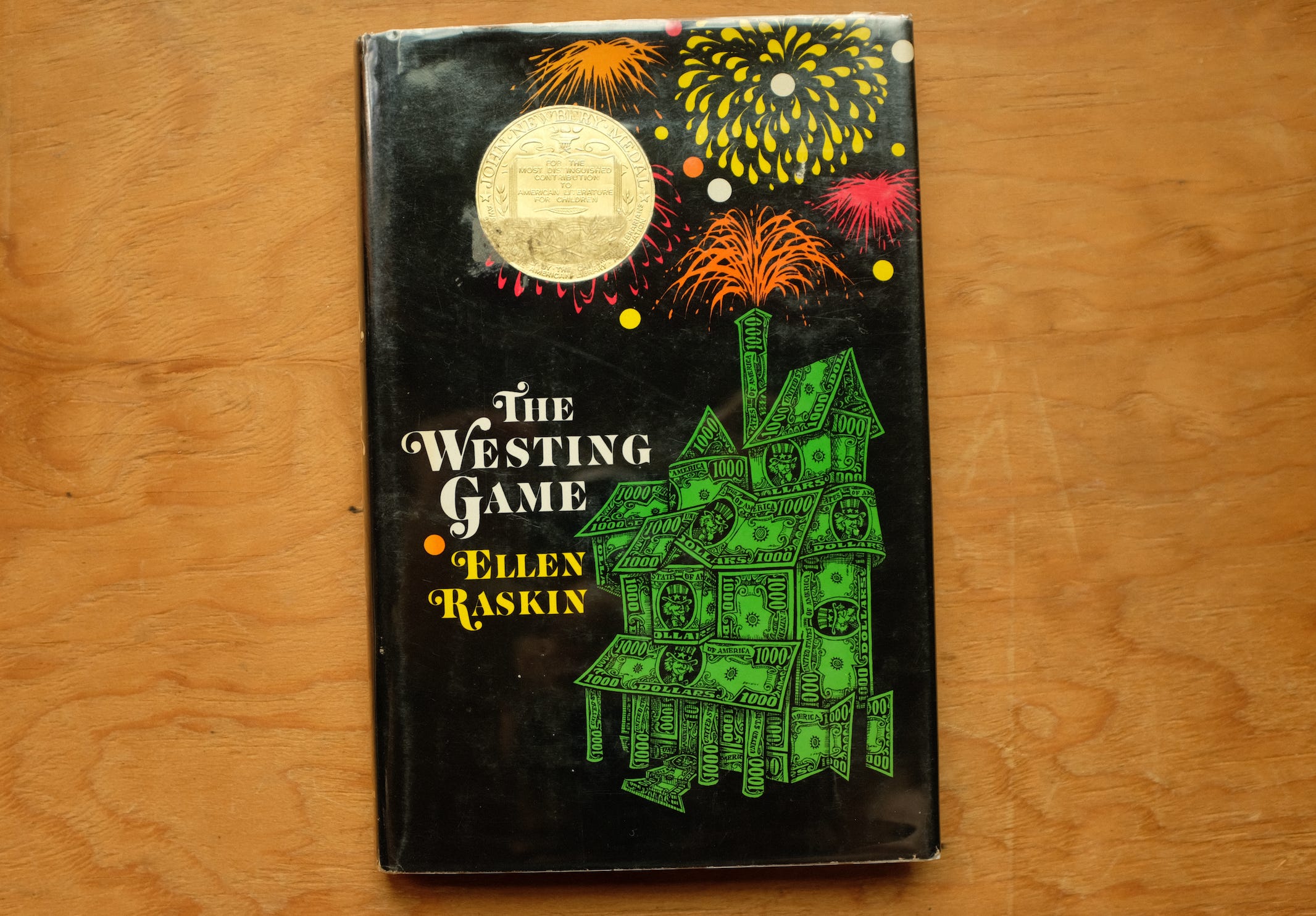
Raskin was a fastidious artist who considered the design of the book inseparable from the artwork and intrinsic to the reading experience. When the printer trimmed the pages of The Westing Game 1/4 inch too short, she insisted that the entire run be pulped and reprinted. You can see a comparison of the discarded and published pages at this wonderful post from the Cooperative Children’s Book Center, which has lots of other insights into Raskin’s design philosophy, including this gem: “She firmly believed, for example, that the width of side margins should equal the length of an average eleven year old’s thumb, so that a child could easily hold a book open without covering up any type.”
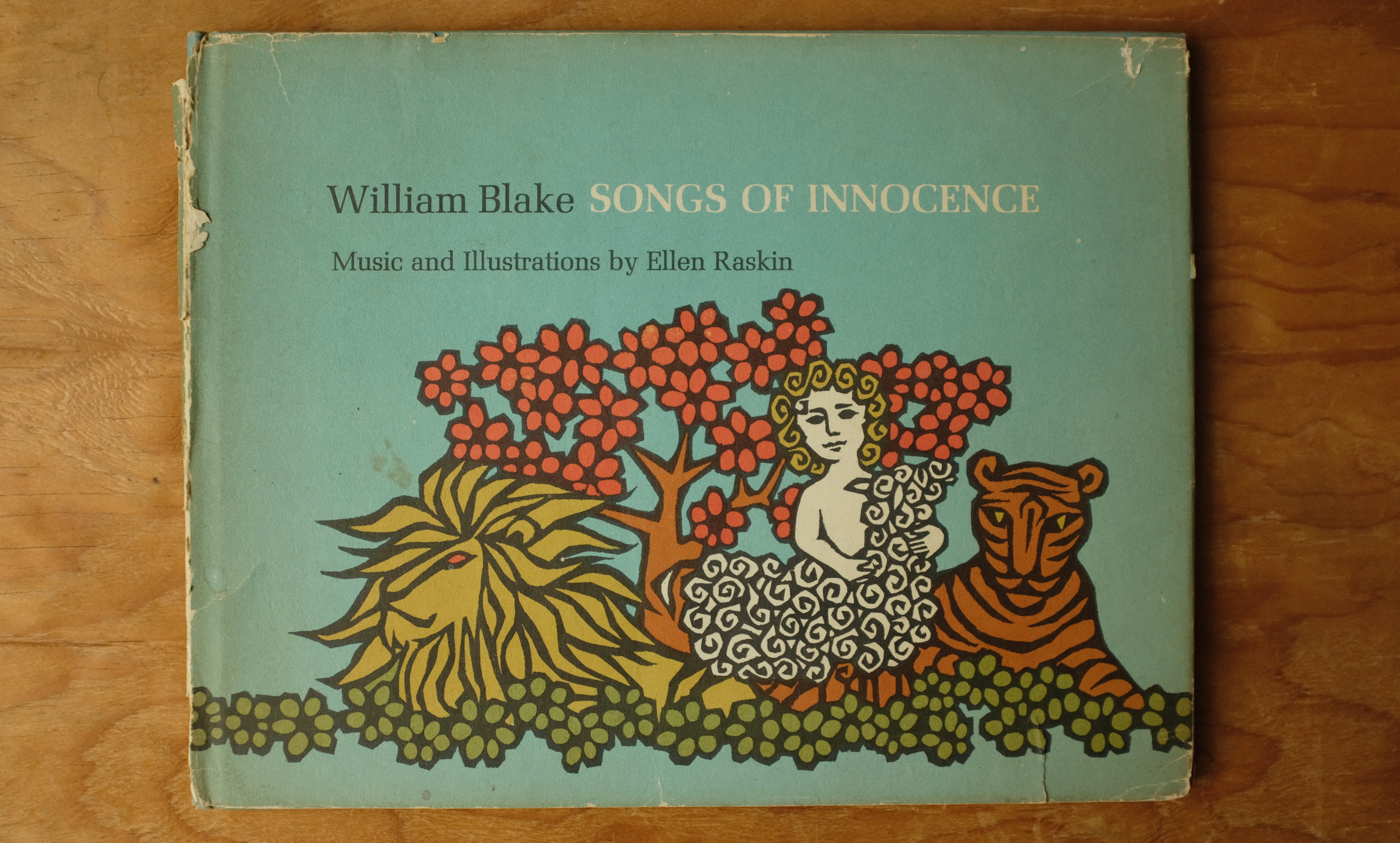
Anyway, sorry, back to that cover! This is a strange and fascinating picture book, setting Blake’s poems to music, arranged for piano and guitar by Raskin; the sheet music is accompanied by woodcut illustrations. From Raskin: “The melodies I have written for the poems seek to interpret them musically, and my decorations seek to interpret them graphically.” There is another volume, just the poems and pictures, with a slightly different cover. Strange!
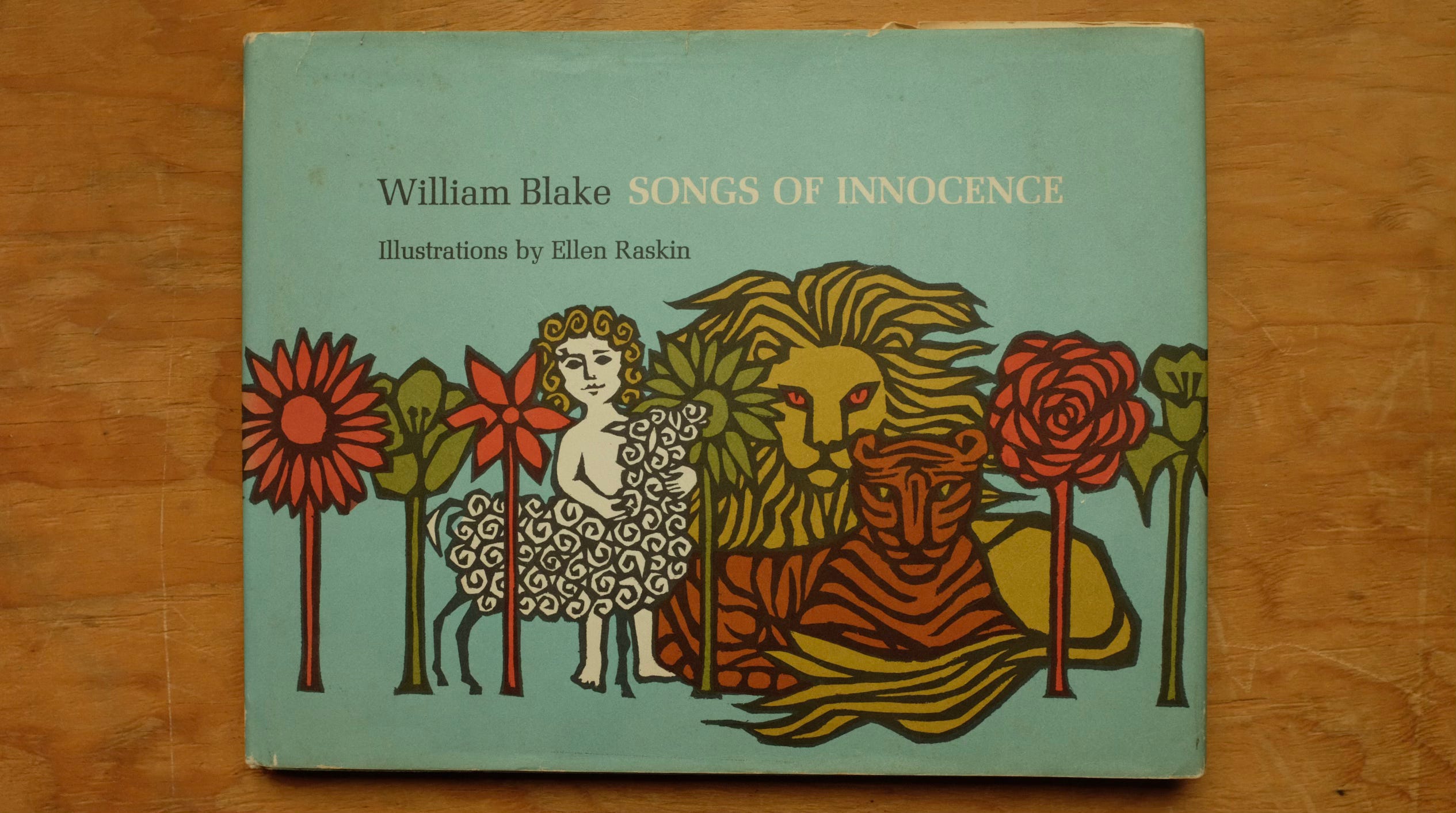
Both editions have some gorgeous foil-stamping on their cloth cases:
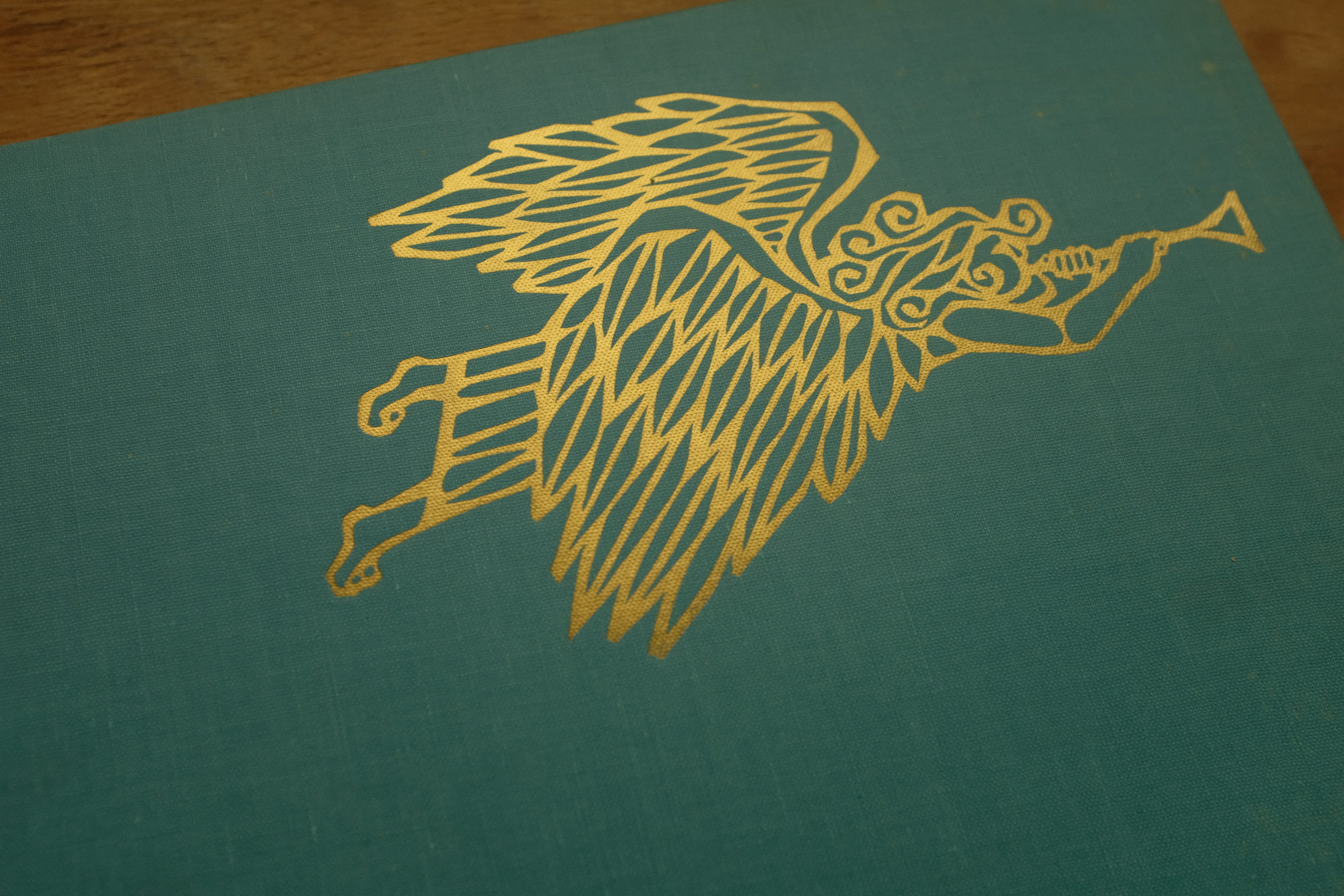
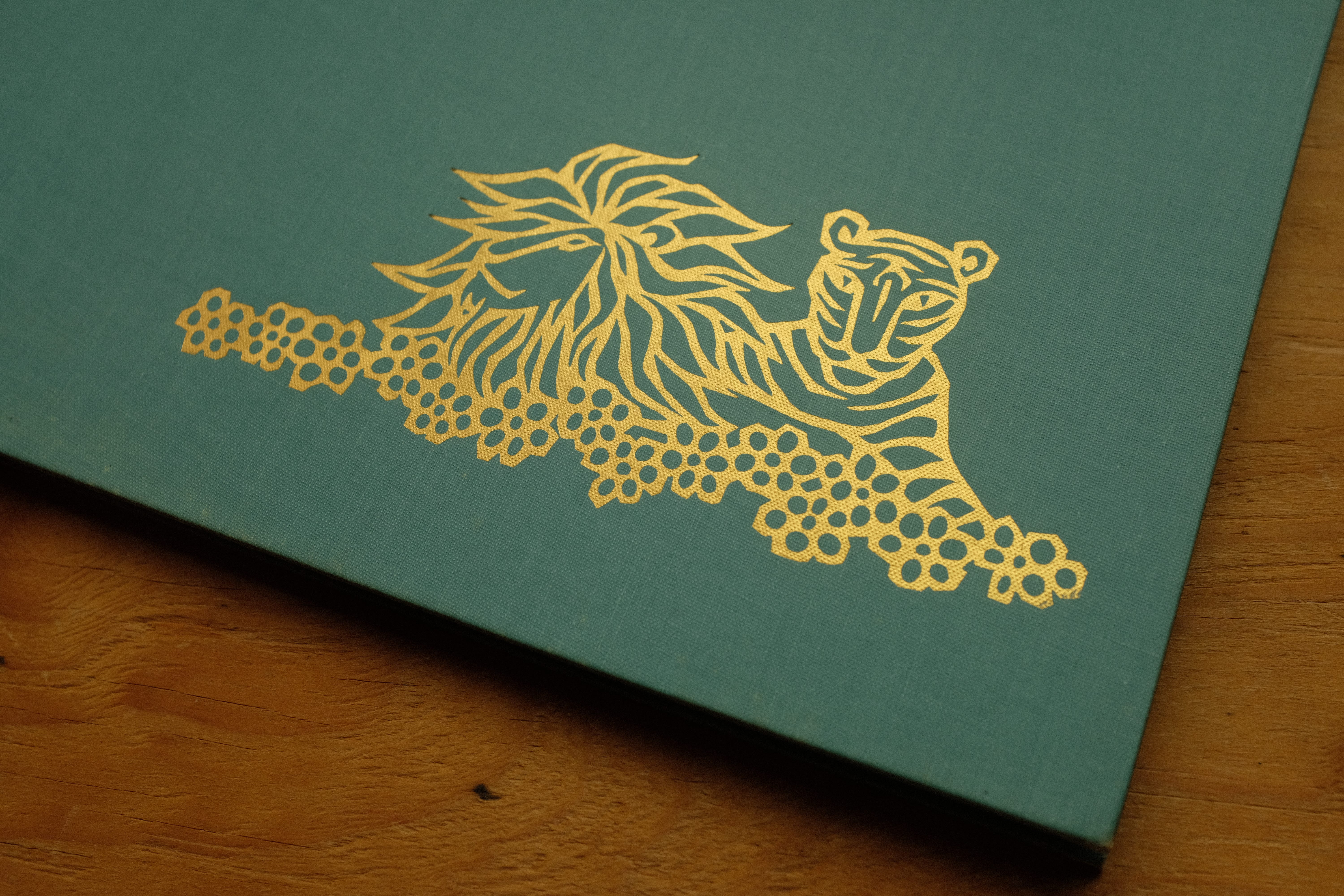
The angel trumpeting is on the music one. The other has the lion and tiger (tyger?).
—MAC
Just want to say that we had a deal where we were only going to post three covers each and Mac was very sneaky and got like 4 more covers in on this entry somehow.
—JON
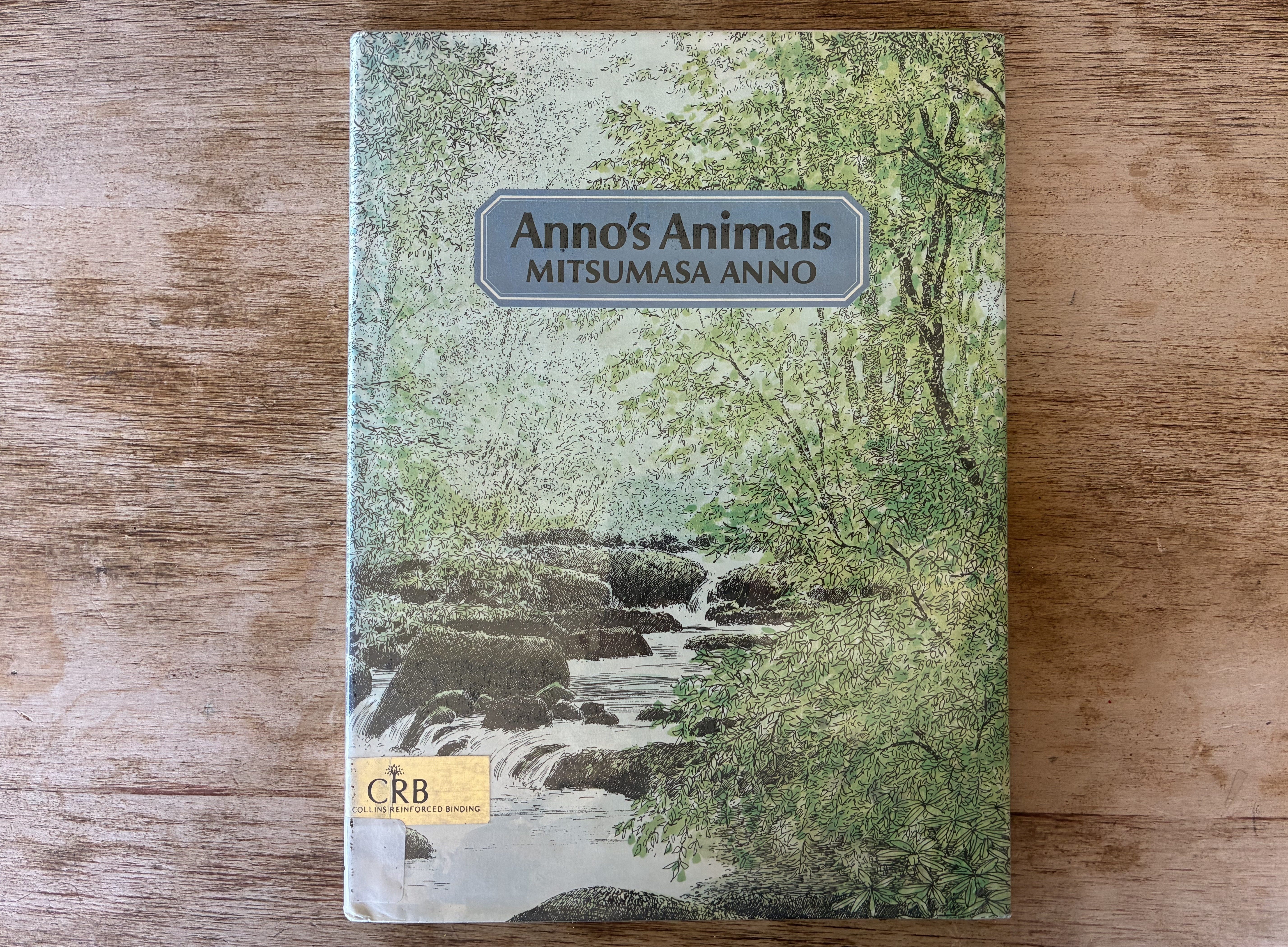
My posting of this cover comes with a question to our readers: Are there any animals on it? The premise of this wordless book is that there are animals in the forest drawings, but the animals are hidden. They are not literal animals — they are outlined in the rendering style. They’re silhouetted in the spaces between the leaves, or the way a collection of rocks is shaped, etc. For instance, on the back cover is this rabbit in one of the rocks in the stream:
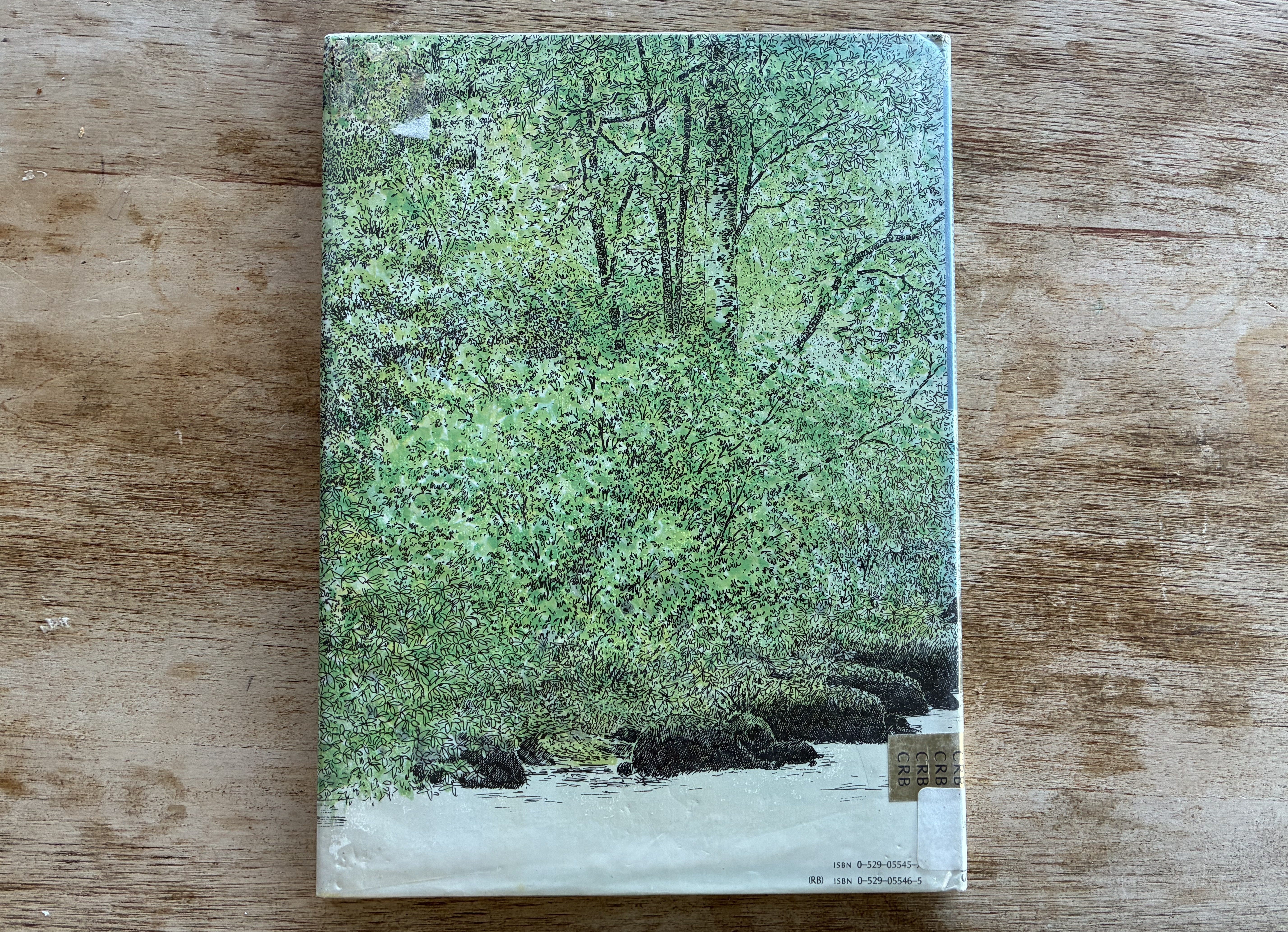
Now, what I currently think is that the front cover actually doesn’t have ANY animals on it, anywhere, and that maybe the rabbit on the back is the only animal on the whole jacket? But you are reading the words of maybe the worst person in the world at spotting things like this. I’m truly horrible at it. BUT, if I’m right, and there really are no animals on the cover of a book called “Anno’s Animals” and it’s just a beautiful, beautiful drawing of a dense forest with a stream and there is just one almost imperceptible rabbit on the BACK cover, this might be the most badass jacket I’ve ever seen. If anyone CAN see an animal on the front, please let us know, and I will be kind of sad, both that there is one and that I’m as bad at spotting things as I ever was. But one should never be afraid of the truth. I guess.
—JON
Spoiler Alert: Don't read further if you want to search for animals on the front jacket of ANNO'S ANIMALS yourself.
Jon— I almost don't want to disappoint you, but I think you'll appreciate knowing there's a turtle on that front cover. It's quite hard to see in the photo here, easier to spot in an actual copy of the book with darker cross hatching. I only say this with certainty because in my copy of the book there's a key in the back to some of the hidden animals. It's worth noting that above the key it says "There are many animals and birds hidden in every page of Anno's Animals. Here are some clues to help you find some of them but you will be able to identify many more for yourself. Here and there, you may even discover that there are people hiding too..."
When I do school visits I have a series of slides that show some of the hidden shapes in my books (hearts, horses, birds/kites/witches) and also some I've found in nature (hearts). And kids are SO much better at spotting them than the grown ups. But also— they always find hidden shapes that I didn't intend (in my books) or spot for myself (in a photo of a gravel driveway). Which is why I love the introduction over the key in Anno's Animals so much: "You will be able to identify many more for yourself" It's wonderful that they left it open ended like that...
I loved this post, but also the linked Ellen Raskin piece. It made me get out my own copy of The Westing Game to compare, and that's how I found out that the 2003 reprinting I bought a few years back is a far inferior setting of the book. Now I must find a Raskin-approved one to replace it before I reread and get too attached! Or worse, lend it to an eleven year old who can't get all the words out from under their thumbs! In any case, I found it really cool to see her notes and what changes she made for design purposes. Thanks for linking it!