

How short can a picture book be?
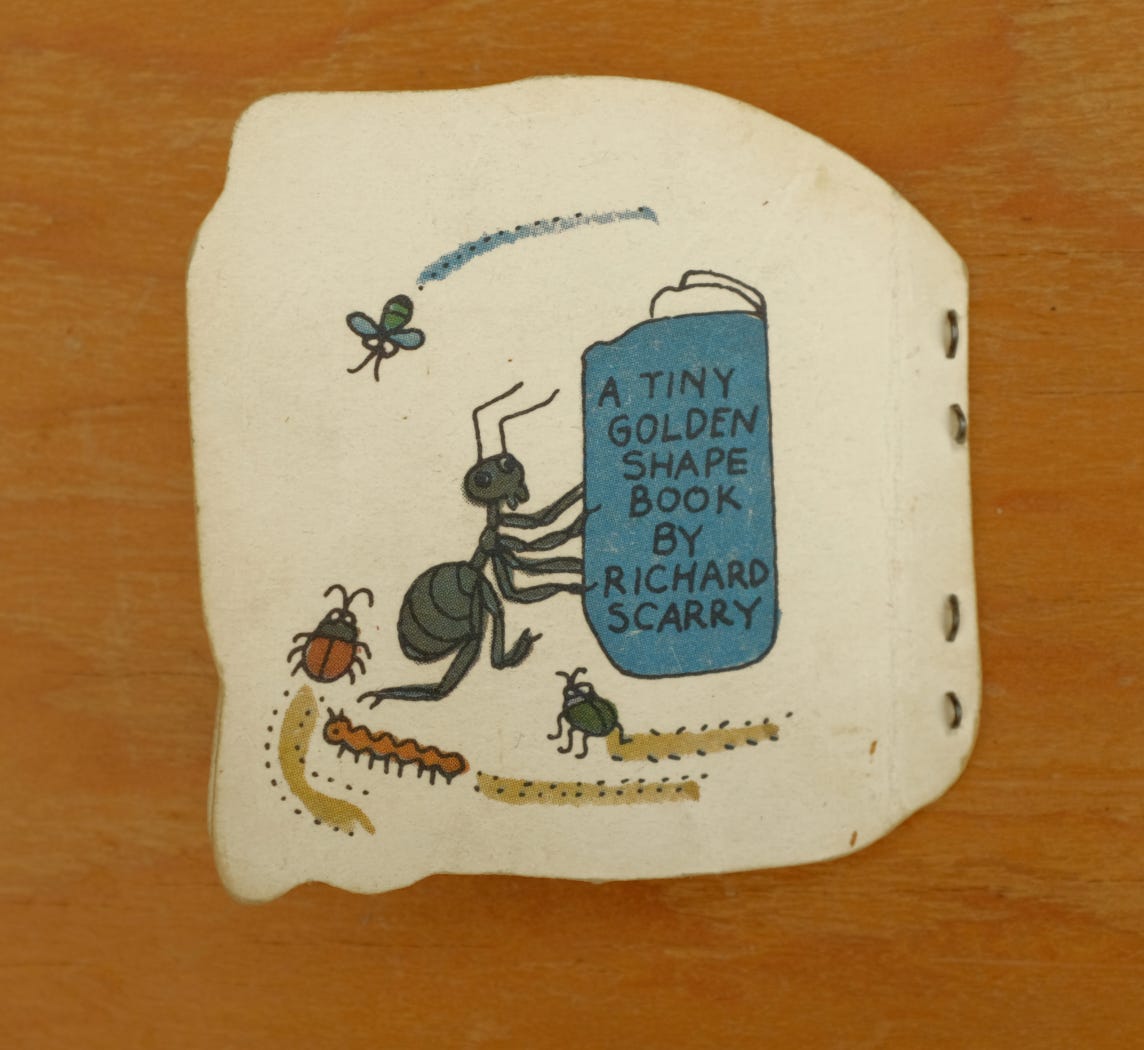
some VERY tiny picture books by Richard Scarry


Deep dives on great picture books are here.
We recommend picture books we like a lot here.
The Looking at Picture Books Shop is here.
As usual, Jon and Mac had this discussion over text. (And if you want, you can just scroll down and read a really great, really short picture book.)
MAC: Hi Jon.
JON: Hi Mac.
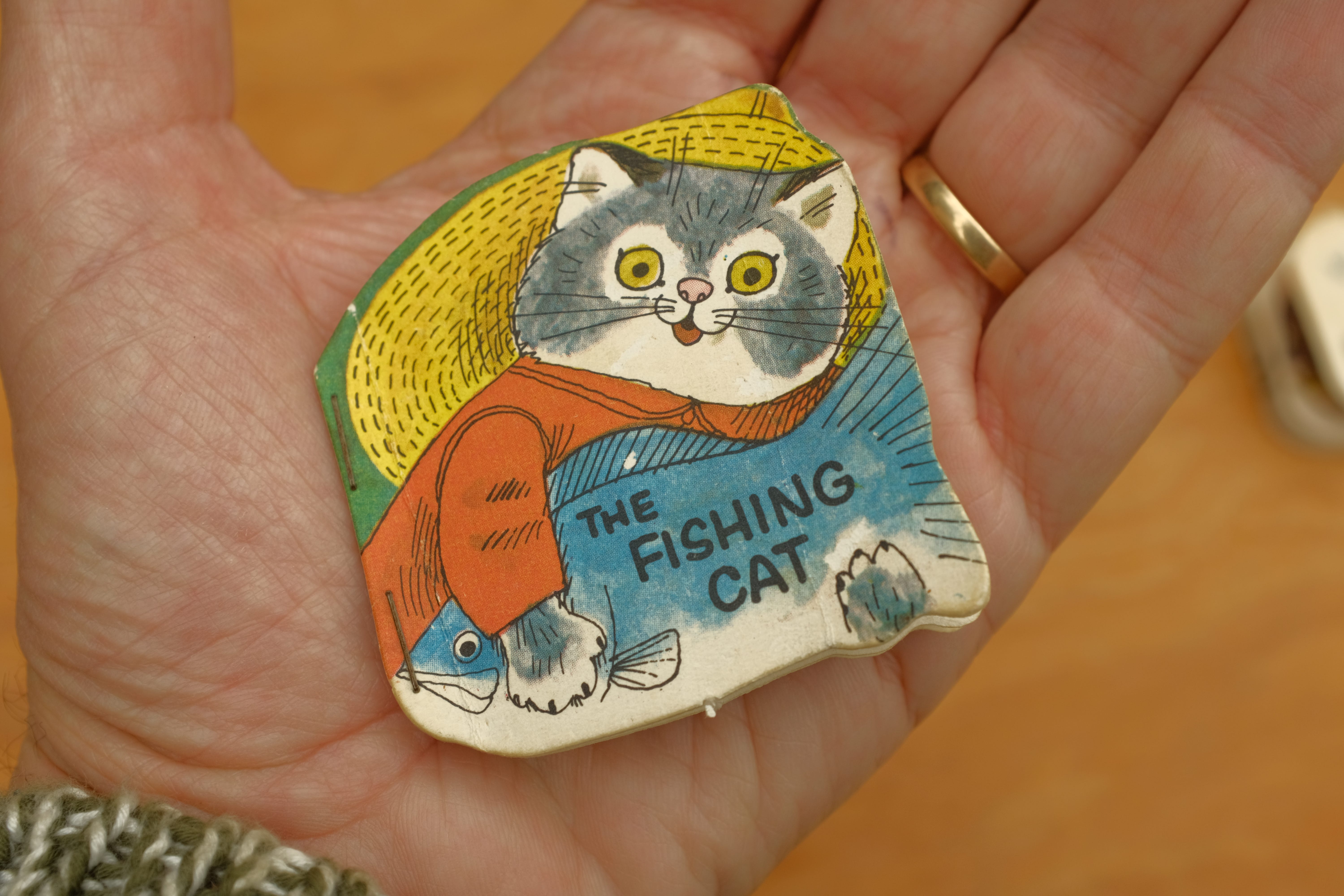
MAC: Last time I was in New York, I stumbled on a bookshop in the East Village, Pillow-Cat Books, that had a really good selection of old picture books, including some little marvels by Richard Scarry that I'd never seen before.
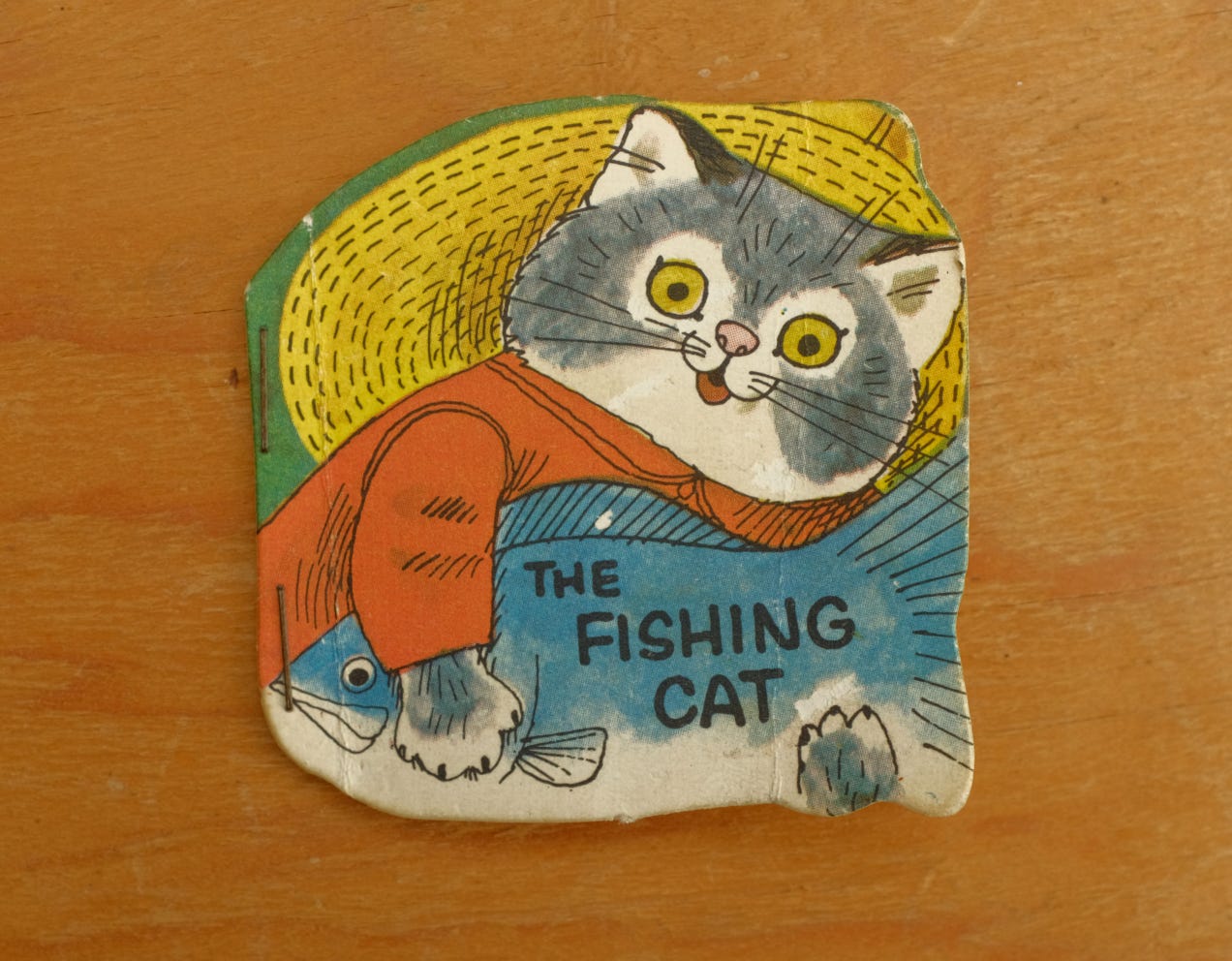
They were "Tiny Golden Shape Books," and they really are tiny. They fit in the palm of your hand.
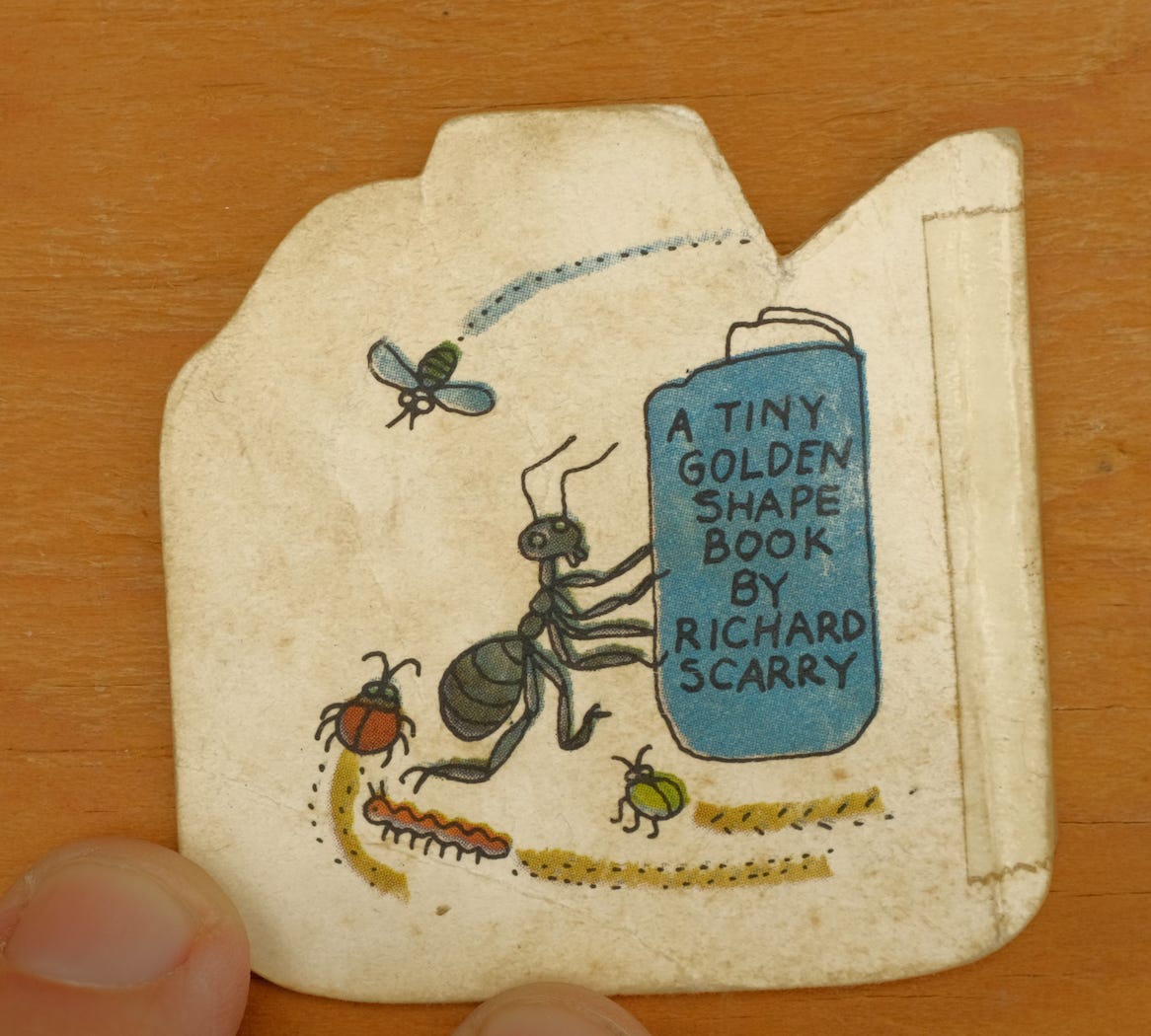
As far as I can tell, they were published in 1959 and sold in two sets. You got eight books for 59 cents.
I bought four of them from Pillow-Cat Books. It cost me more than 59 cents.
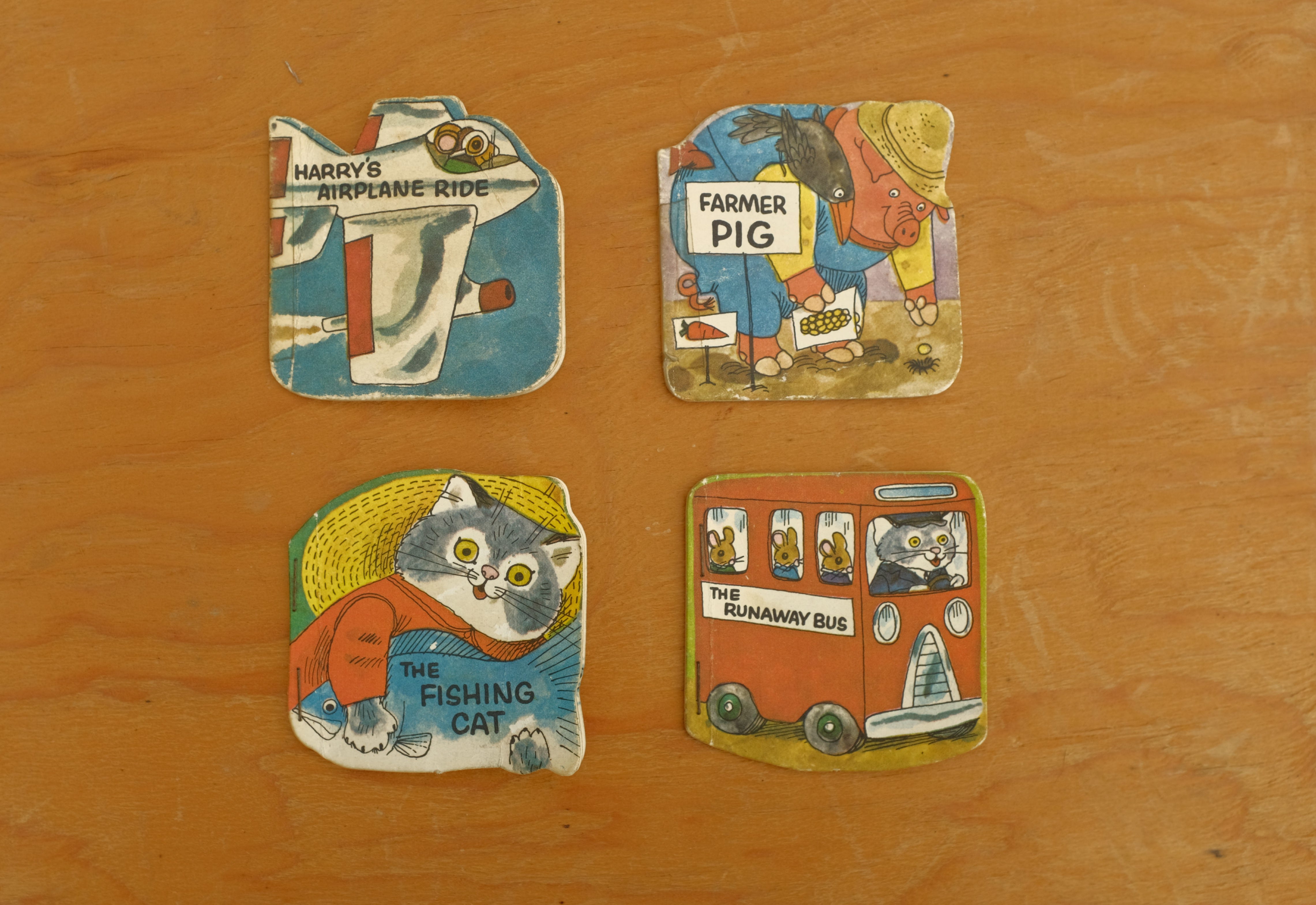
JON: I think you showed them to me like, as you were buying them.
MAC: I showed them to you just after, so you didn't call Pillow-Cat Books and swoop me.
JON: I would've!
Also I remember being in the middle of making a book that had perhaps gotten too long.
And seeing those.
MAC: I'd never seen anything like these before — they're die cut, staple-bound, "paperbacks," in the sense that the covers are printed on the same stock as the interiors. And they're very short.
Most picture books are 32 pages long. Some are 40. Rarely are they longer than 56 pages, although I hear some maniacs are publishing 112-page picture books these days.
JON: I GOTTA BE ME.
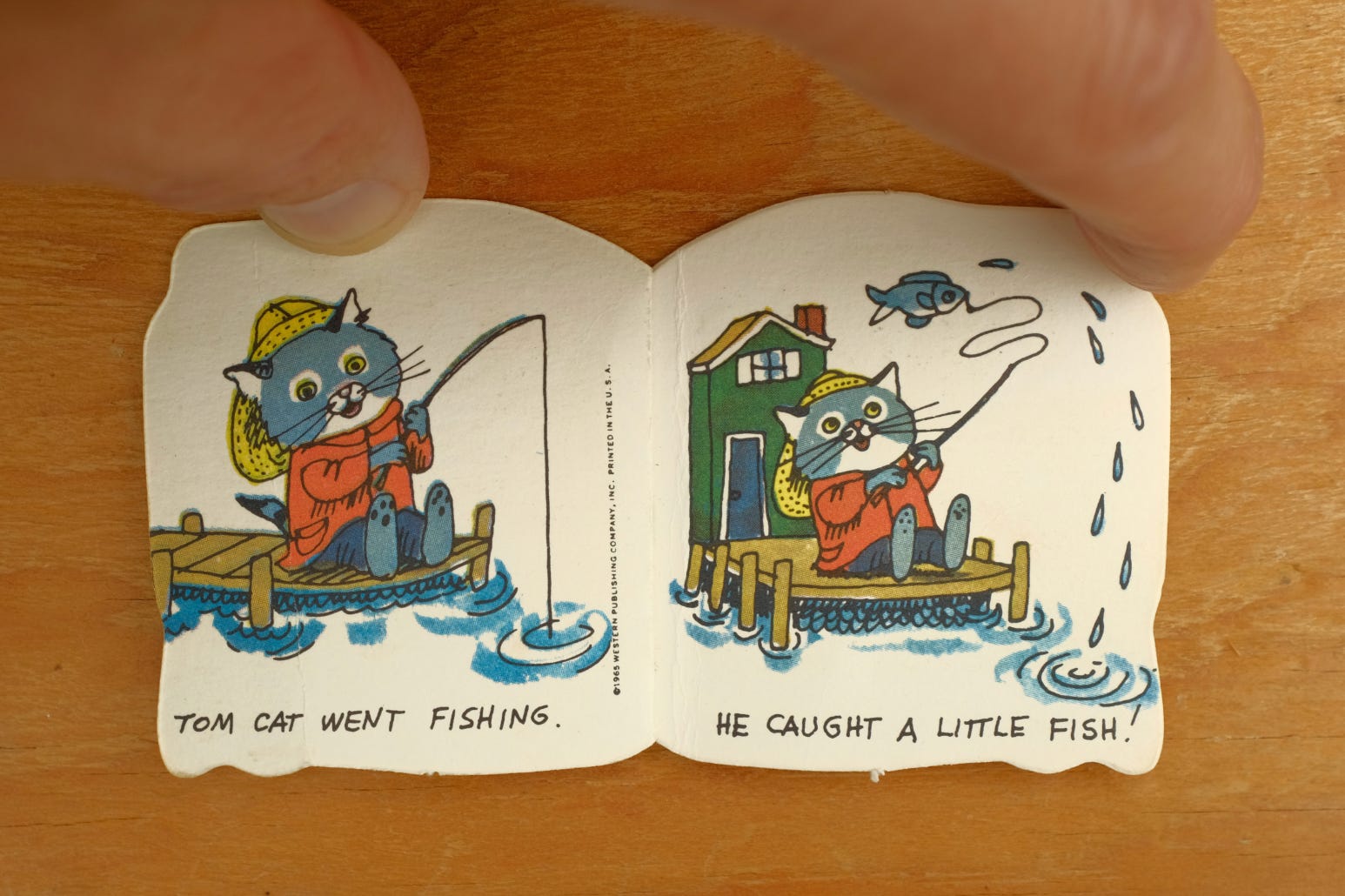
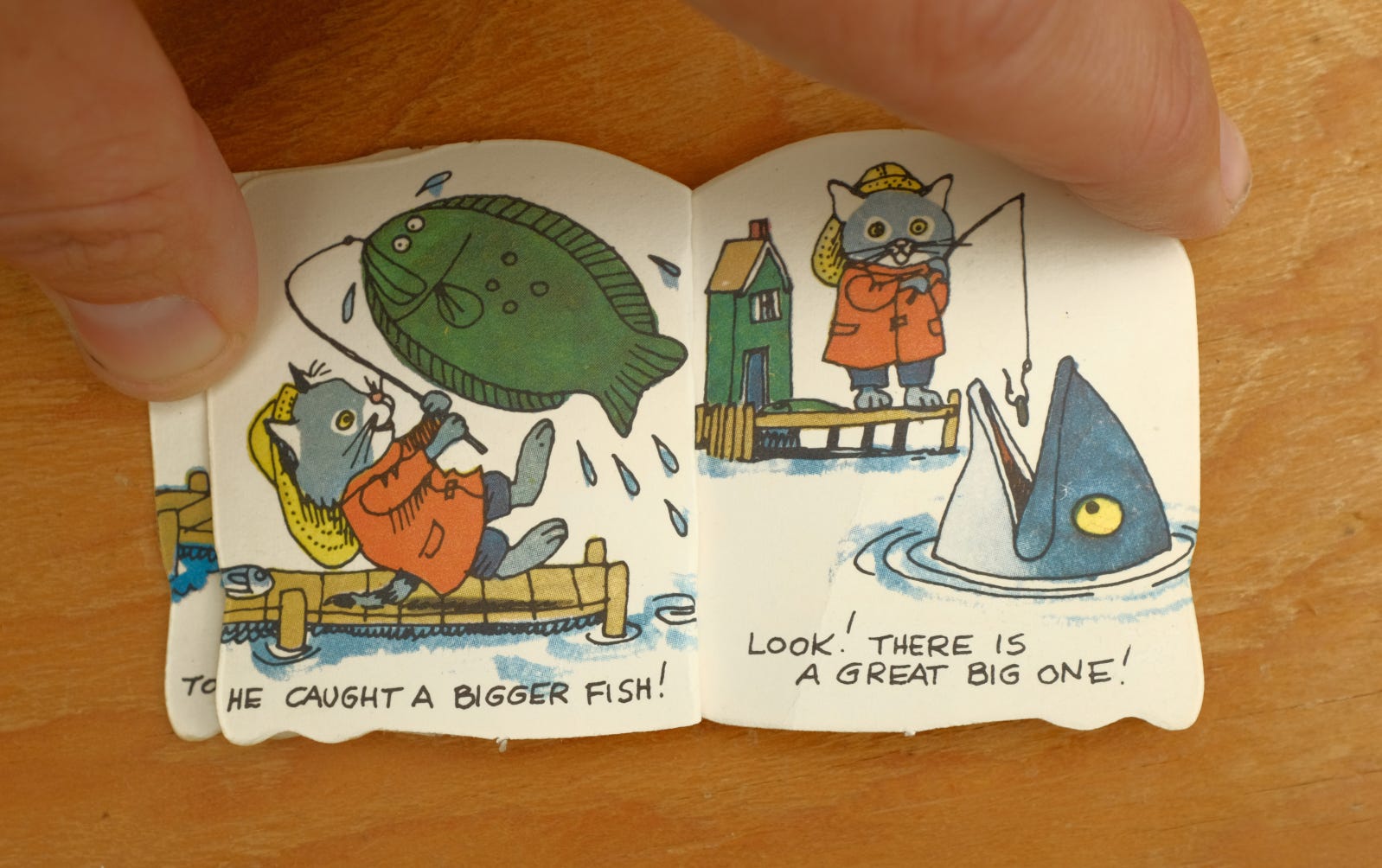
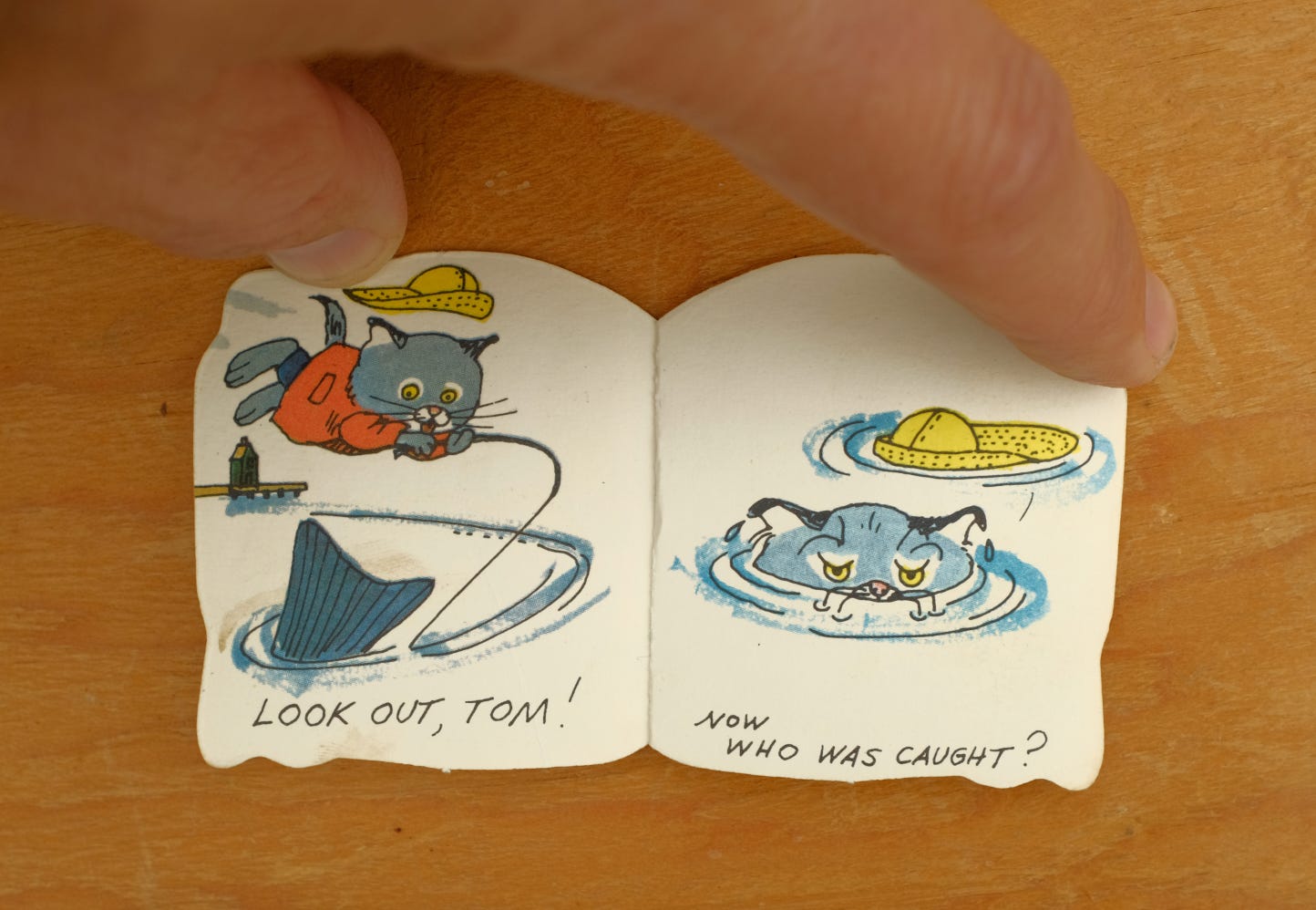
MAC: But yeah, these books are SIX pages long.
Three spreads.
And yet they all feel like complete artworks.
JON: Devastating.
Richard Scarry is so ubiquitous for his style that it's easy to overlook how revolutionary he was structurally. He really could do anything.
In some ways this is the biggest flex you go for.
MAC: Yeah, the Busytown Books are such maximalist picture books. These have all the chaos and humor and vehicular insanity of Busytown but they are also these elegant, gestural stories.
JON: Ooh, gestural. I like that.
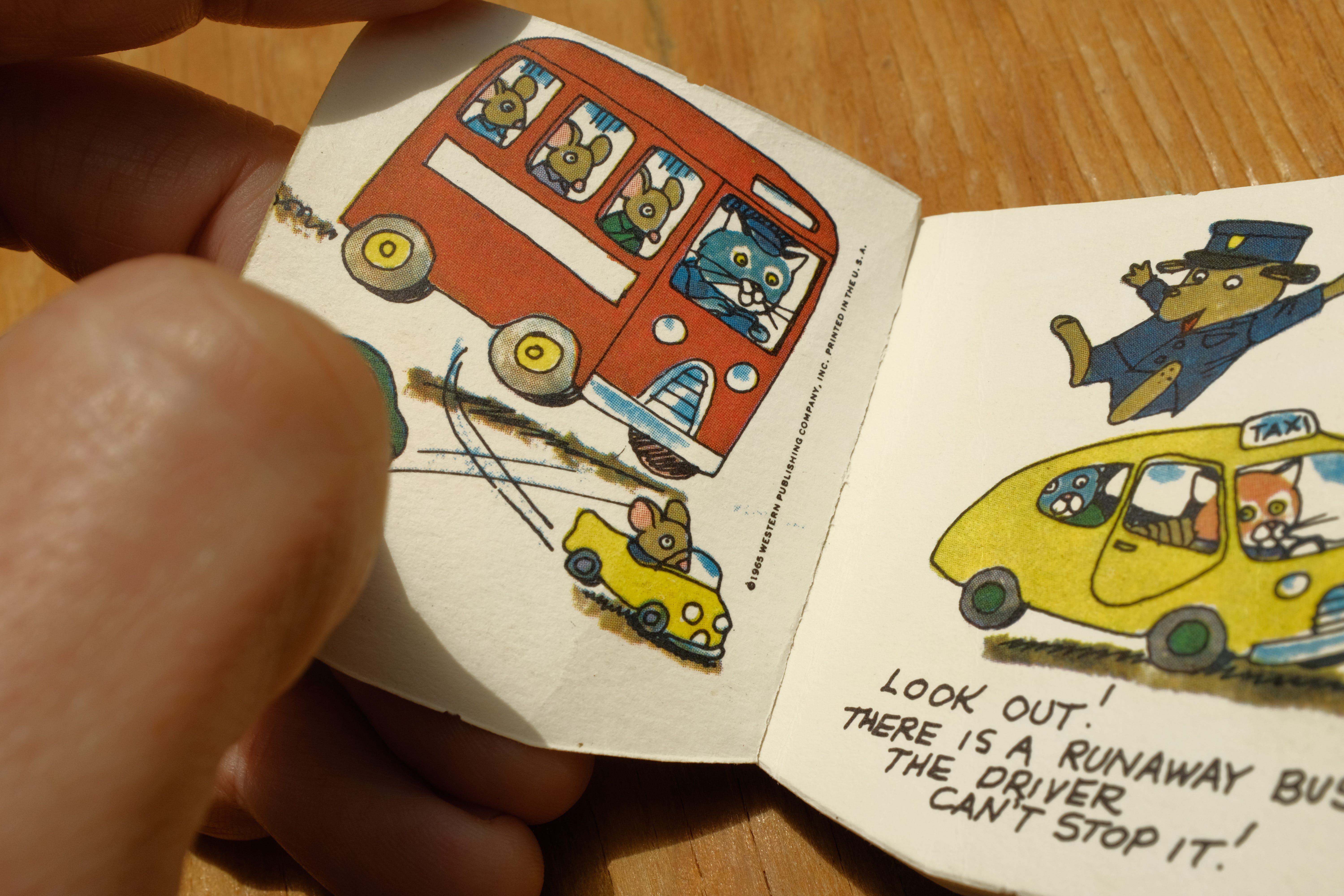
MAC: He's so efficient here. The Runaway Bus (even the title does so much storytelling) starts off:
"Look out! There is a runaway bus! The driver can’t stop it!"
JON: It took Speed like 27 minutes to establish that.
MAC: Scarry takes care of so much so fast that he leads with a two-page spread, a wild move, immediately burning two pages when you only have six.
JON: That's what's so crazy about all of these! They don't even feel rushed!! He's relaxed!
MAC: A lot of these books are “just” one gag, but by titling them, and binding them, and producing them with such care, Scarry is insisting that we take these seriously as finished, complete things.
There's something to be said here for the way that the object focuses our attention — when Scarry says "this is a picture book," our experience of the gag changes — it feels like a story.
Just to be clear, Scarry also writes these very well, and provides depth and emotion in the pictures too. But the thingness of these little tiny things is part of what makes them work.
JON: I've been finding something similar in the board book format. The book object itself does so much work in giving validity to a seemingly small idea. You know, as the reader, when you're coming up to the end. You're physically holding the size of the story, so you have some general idea of how long it will be so you're doing some dramatic work yourself, as the reader. You’re getting ready for it to end, even if you’re not sure how it will happen.
You can feel, physically, that you only have two pages left, or when you've got six total, and you as the reader prepare yourself accordingly.
MAC: And then you have this little thing to ponder, like an epigram, joke, or koan.
JON: Yeah, what you're left to ask yourself is "Was that enough for me? Why? Why not?" And it's really fun when the answer is “yes!”
MAC: Take a look at how much Scarry accomplishes in The Fishing Cat — he establishes a scenario, builds the drama, and lands a surprise ending, a total reversal of our main character's fortunes. In six pages. Also, The Fishing Cat, what great title.
I’ll stop now or we'll get depressed and give up trying to make these things.
JON: The daily routine.
I love the thingness of picture books! Maybe it’s why I love them so much? I hope I don’t upset anyone when I say there aren’t many things sadder than a digital picture book.
I love this post, and those tiny little books. Writing them is a true work of art. As a teacher, young learners will learn much even from the smallest books.