

Jon’s New Ghost Book
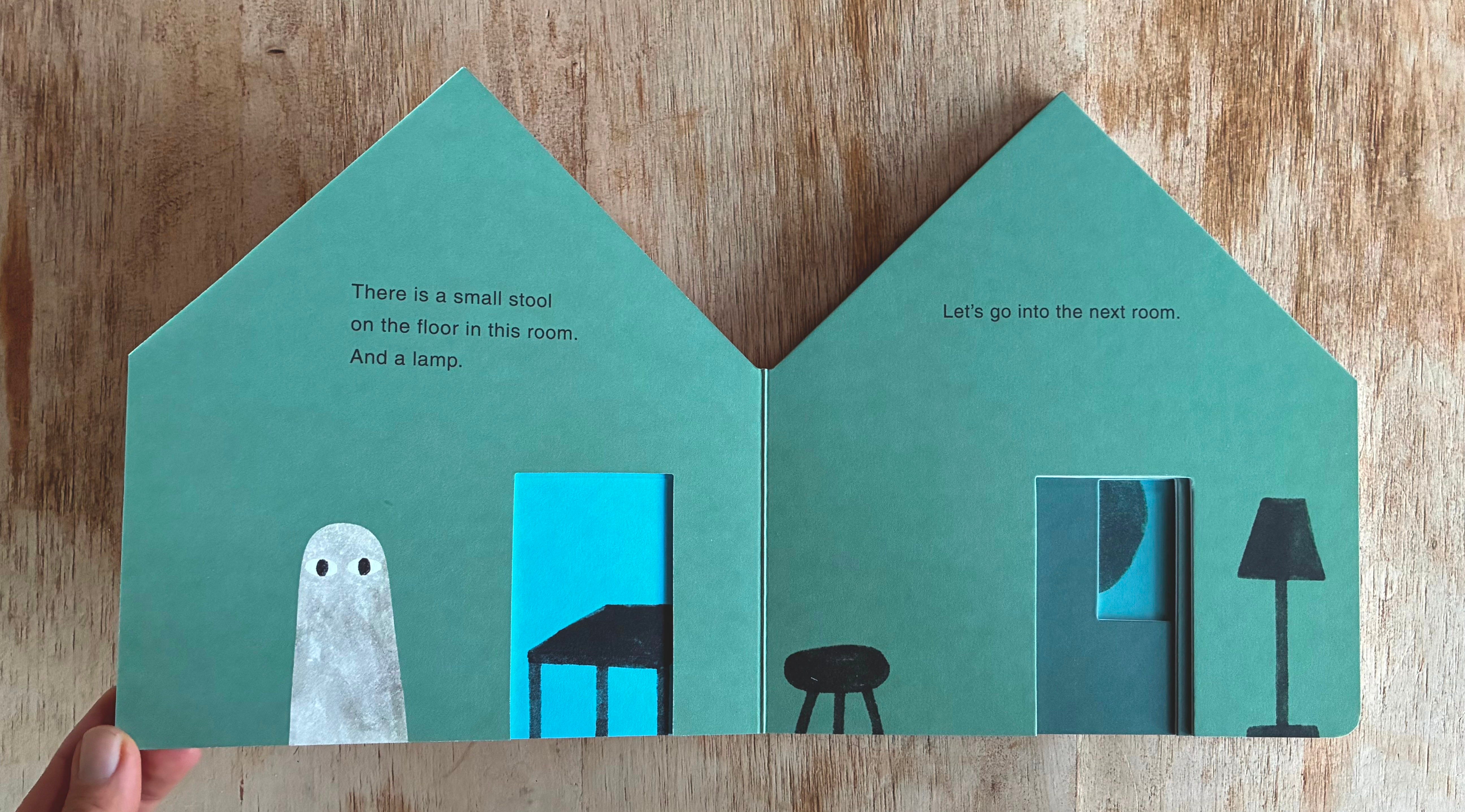
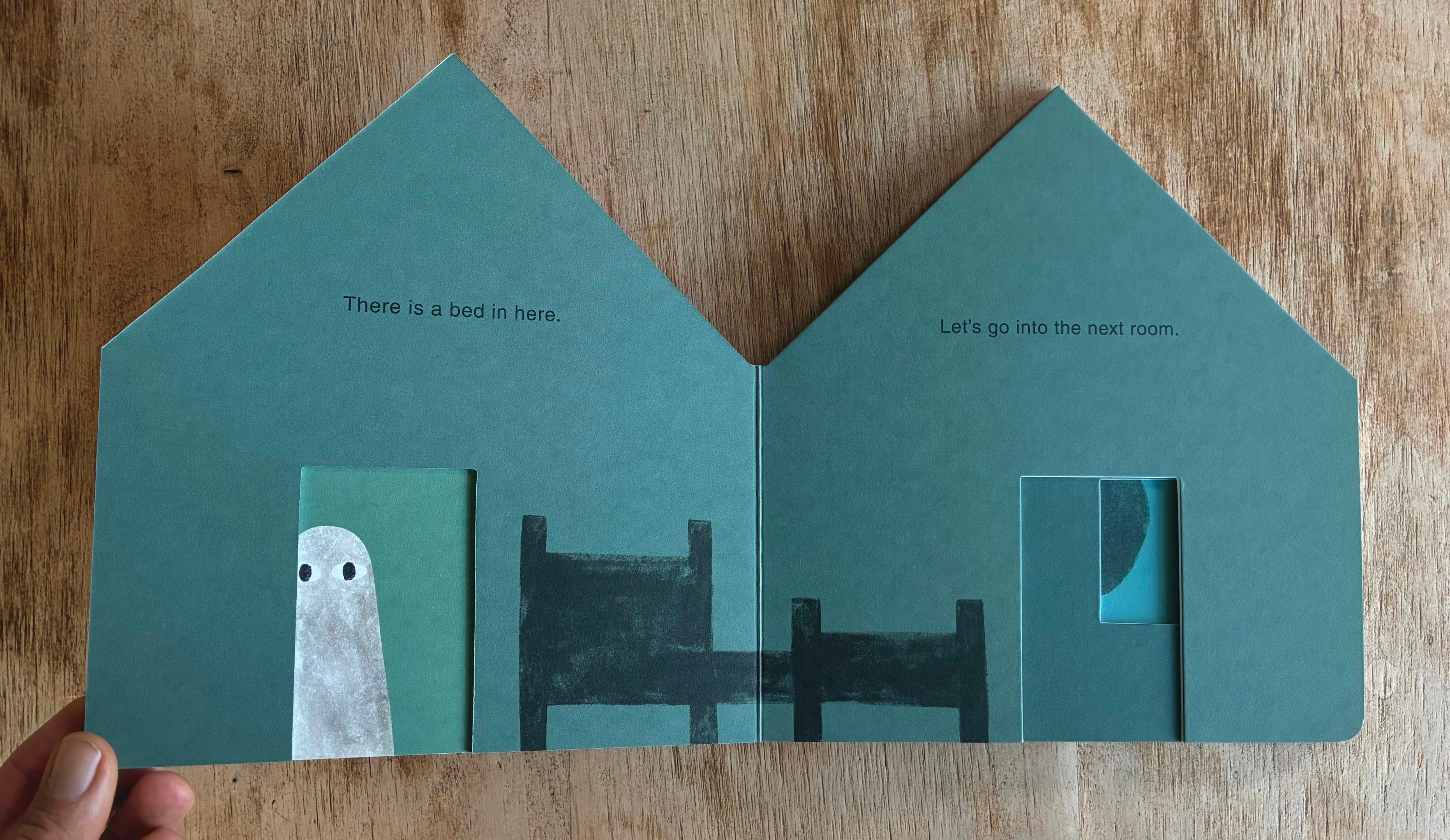
"Let's go into the next room."

Deep dives on great picture books are here.
We recommend picture books here.
The Looking at Picture Books Shop is here.
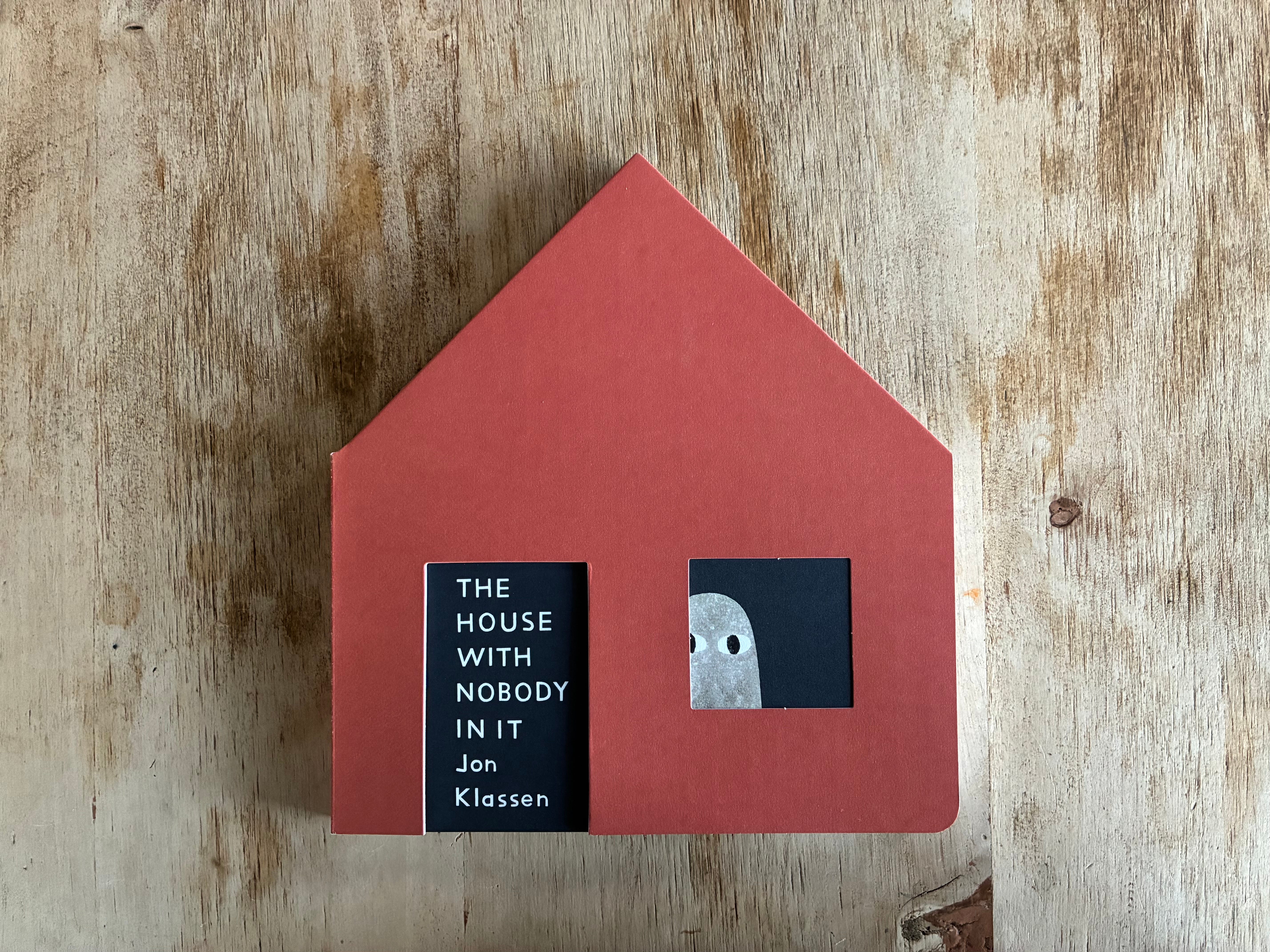
Mac is out on tour with Shawn for the release of the latest installment of their “First Cat In Space Ate Pizza” series (catch the show if you can — we went to the event in Pasadena and they are dialed IN). So I’m left on my own here, but fortunately I have a book coming out that we announced last week that I can talk about.
It is a board book, and quite short, but I really like it and I really enjoyed making it. It was the result of a confluence of things that have been bouncing around for a bit, but, as usual with something like that, the hope is that the final product still makes sense on its own once its broken out of the labyrinth of influences and preoccupations that led to it.
A lot of my work, I’ve come to realize, is about creative permission. I want the book to sound or look or feel a certain way, but in order to get “permission” to have it sound or look or feel like that, I feel like I need to counterbalance it somehow. If I want a book about a bear looking absolutely blank with no scenery or action to speak of, he needs to murder someone (offscreen) for that to be entertaining. If I want two characters standing in a field discussing where to stand in the field, there needs to be a giant boulder falling somewhere above them. If I want an expressionless little girl holding an even more expressionless skull, there has to be some operatic stuff going on for both of them before the story even begins. So the negotiation is often that I want the thing to feel quiet, but it needs a hook to allow for that.
Before I got into doing picture books, I worked for a lot of years as a set and prop designer for animated films. That suited me really well. I love drawing objects and rooms, and designing them with a dramatic purpose is so fun. When I got a book agent, I sent him some drawings of furniture with some captions on them — things about how their owners used them, or dialogue that had been said on them a long time ago, and asked if he thought there was a picture book in it. (I think I chose yellow and black because of the Madeline books.)


He wisely said that there probably was not quite a book in it, not as it stood, anyway. Stories for children, it was gently explained, usually require characters, with problems and expressions, or at least faces, or at least eyes. It took me about 15 years to figure out that I could put eyes ON the objects I wanted to draw and make books THAT way. Checkmate.
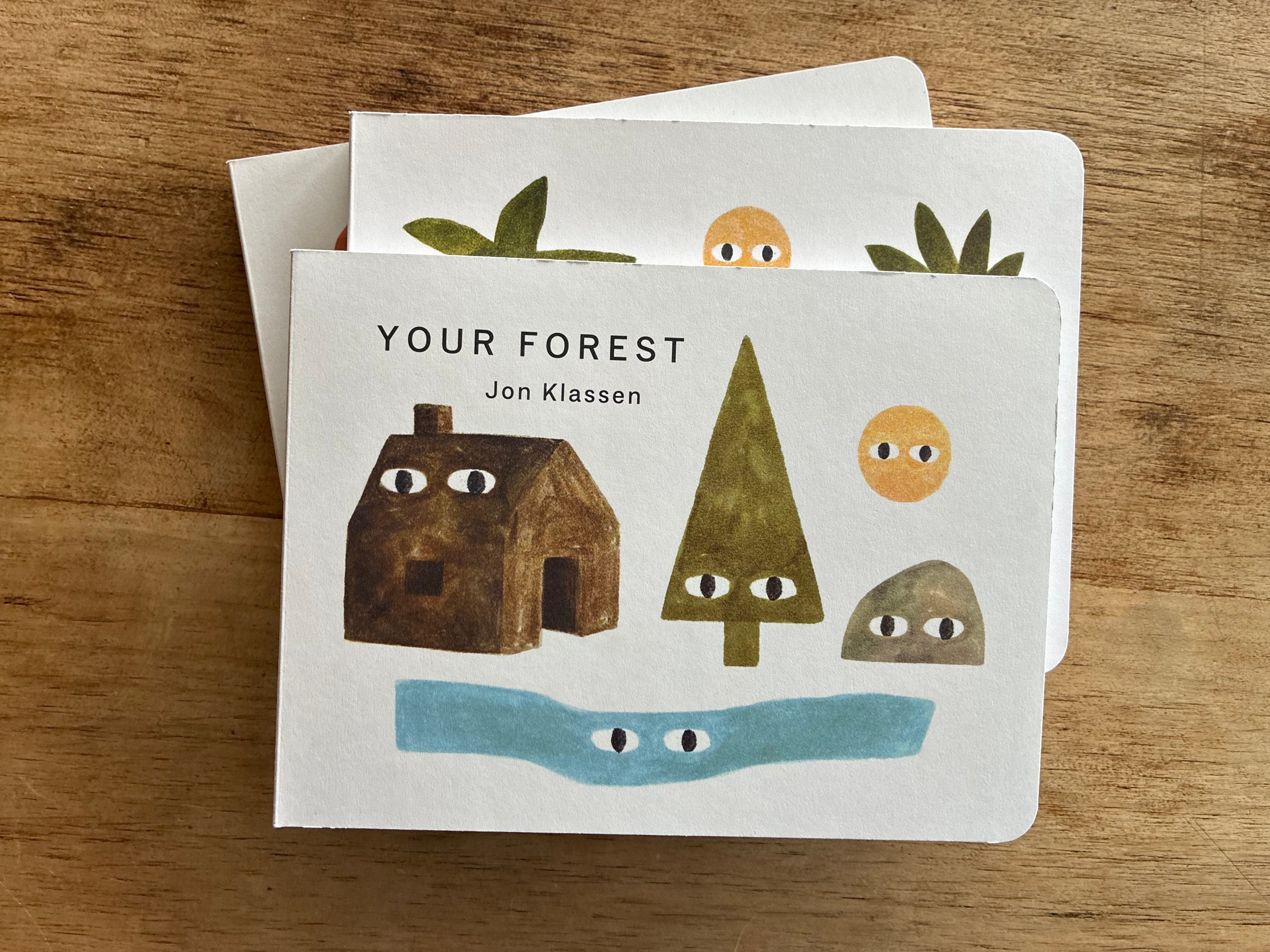
One of these books, along with listing cabins and rocks and little bridges etc, had a ghost in it.
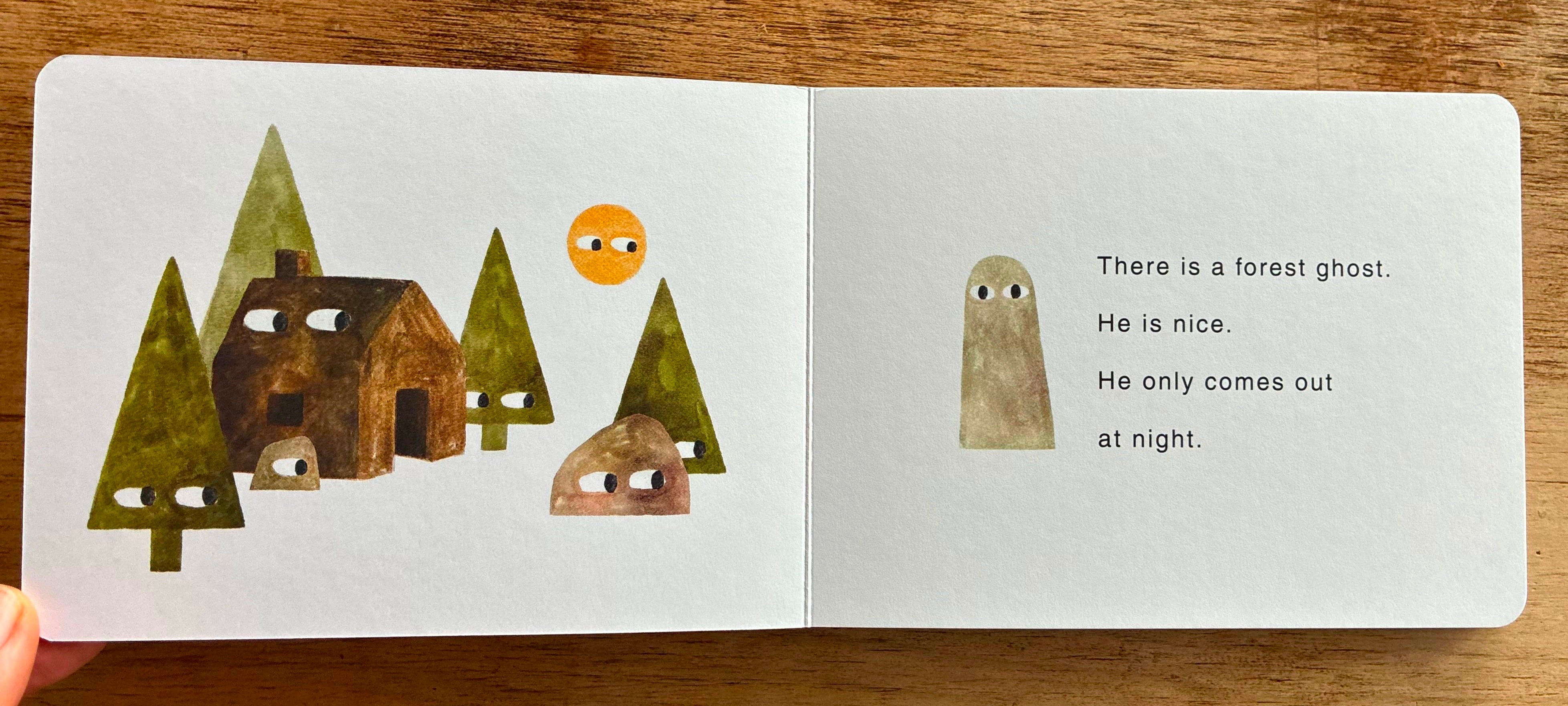
I liked him, and I’ve been kicking around ghost ideas for a long time. I have a longer ghost book idea I’ve been trying to crack for about as long as I’ve been making books, and the first thing I can remember ever writing and drawing, in third grade, was about a ghost who lived in a cave.
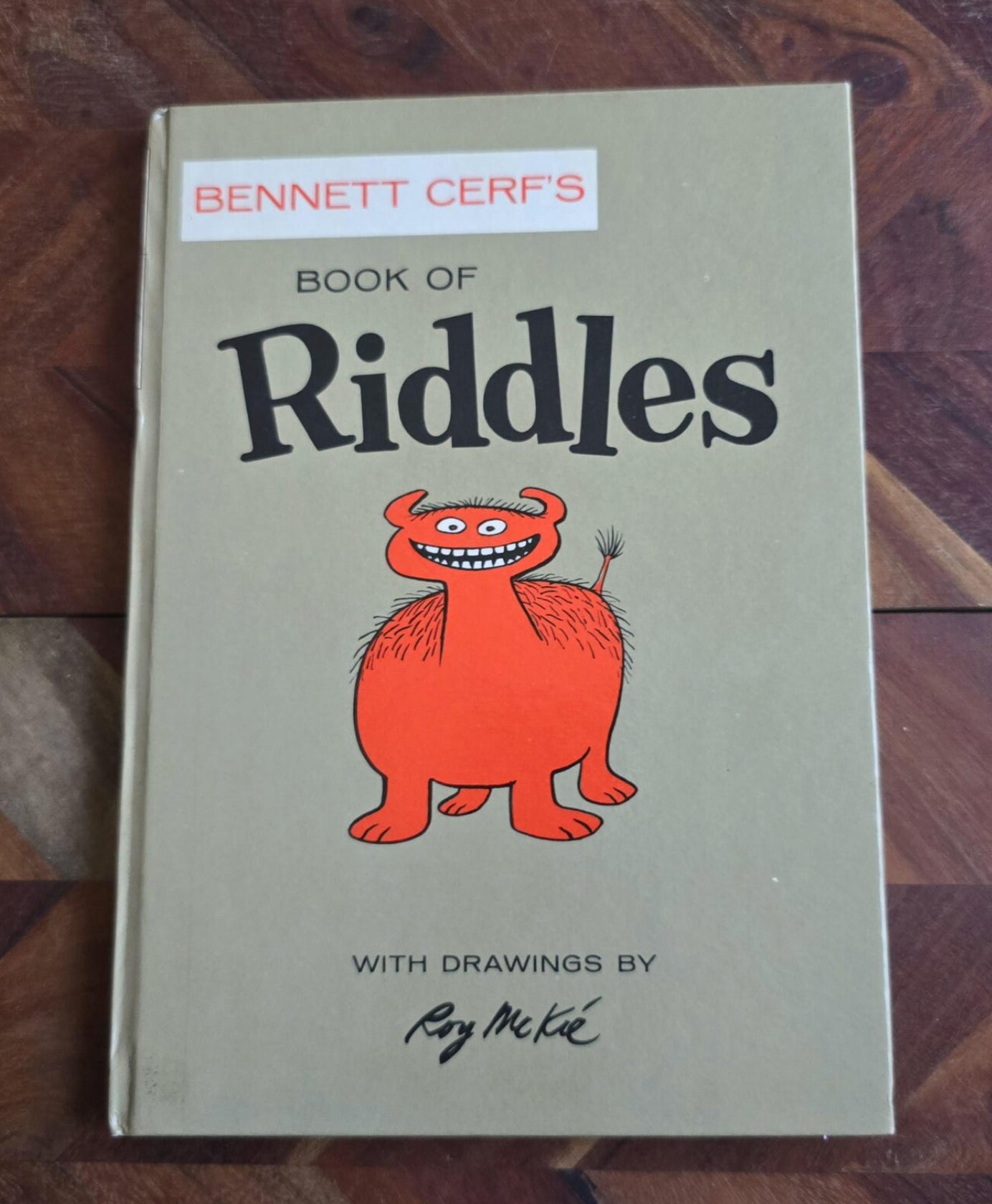
Around the time of the third grade cave ghost story, I would’ve also been into some books that were illustrated by Roy McKie. I’m a huge Roy McKie guy. He was one of my top guys. He did the drawings for Bennett Cerf’s amazing Book of Riddles.
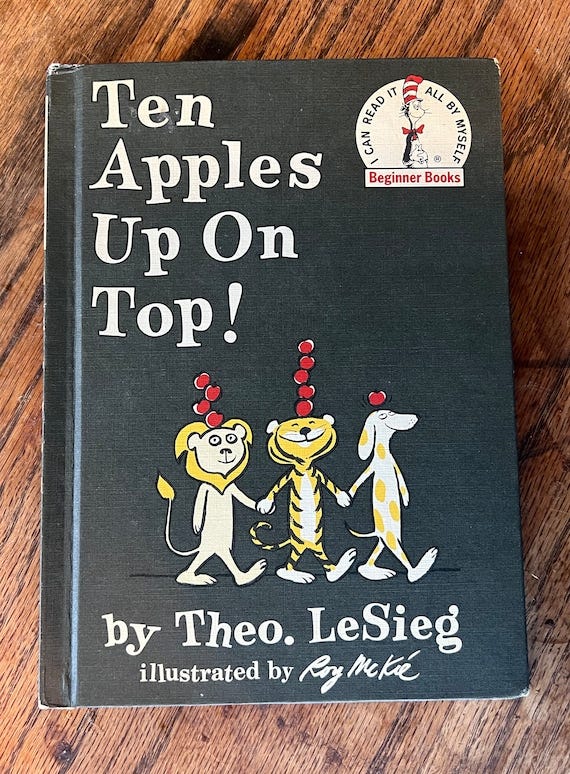
The reason I wanted to make a dark-colored book — This Is Not My Hat — can easily be traced to how cool I thought the dark cover looked for his and Theo LeSieg’s (aka Dr. Seuss) Ten Apples Up On Top.
And also there was this other book by them.
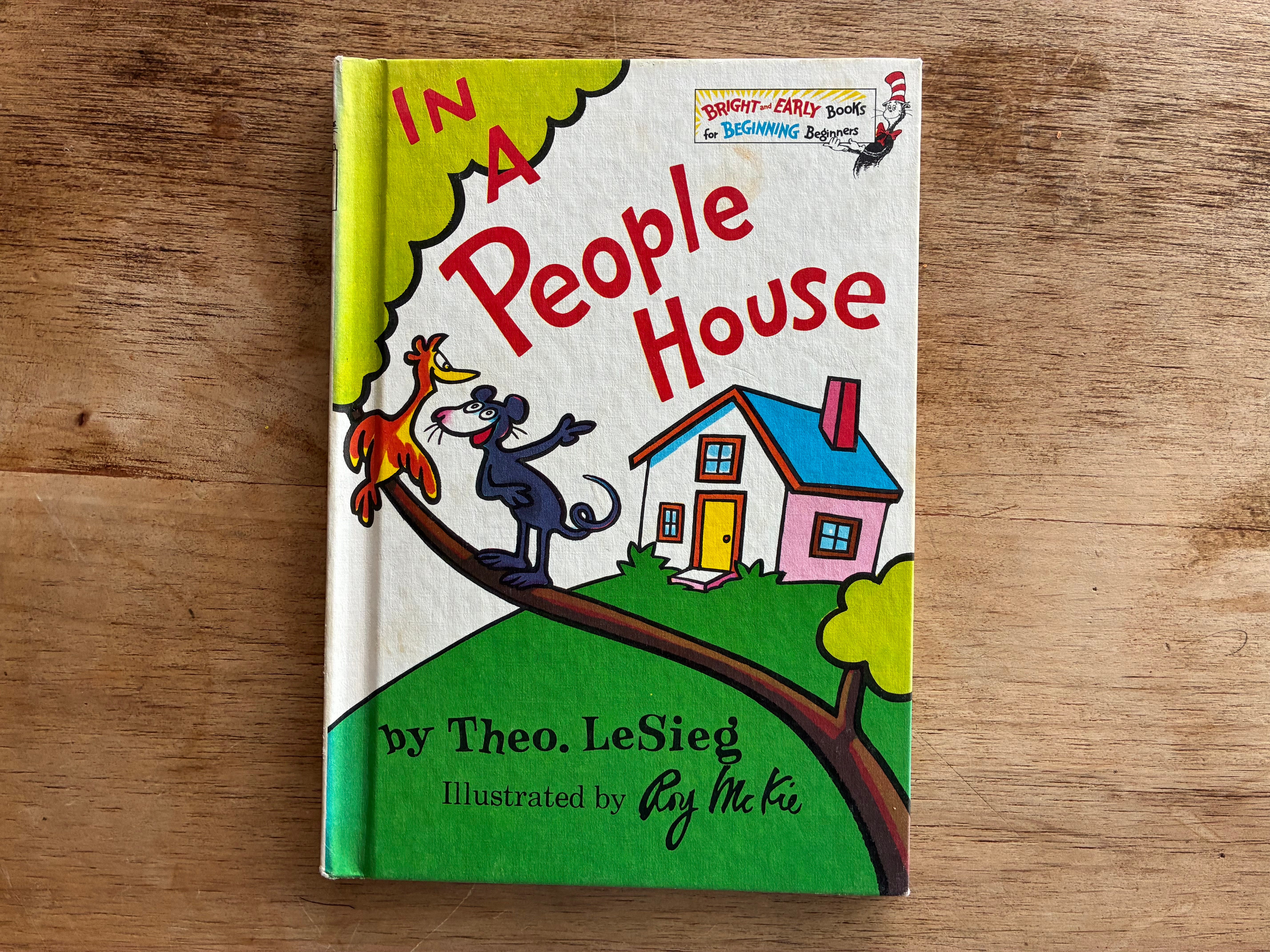
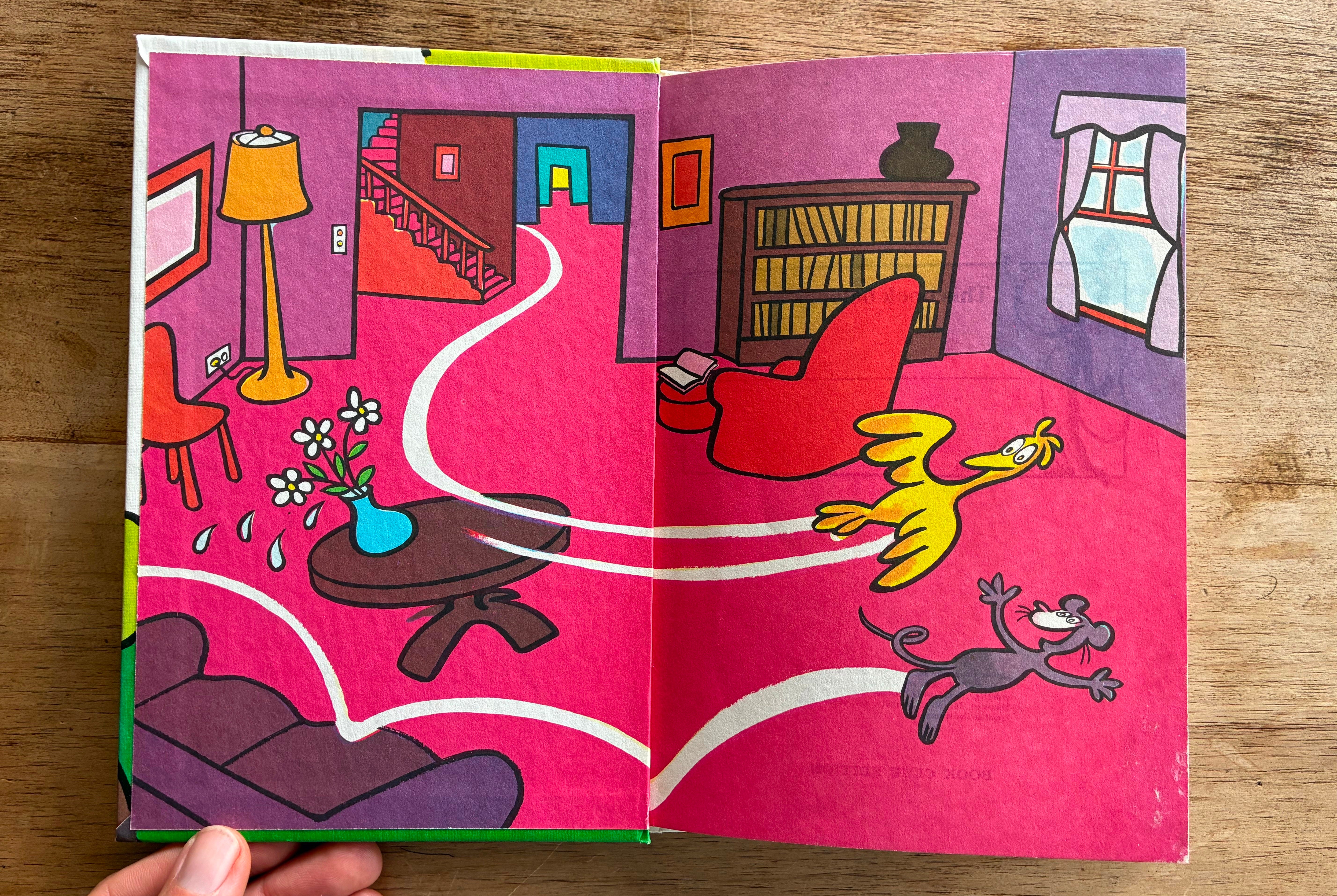
I really loved this book, and I still love this book. I remember especially loving the endpapers.
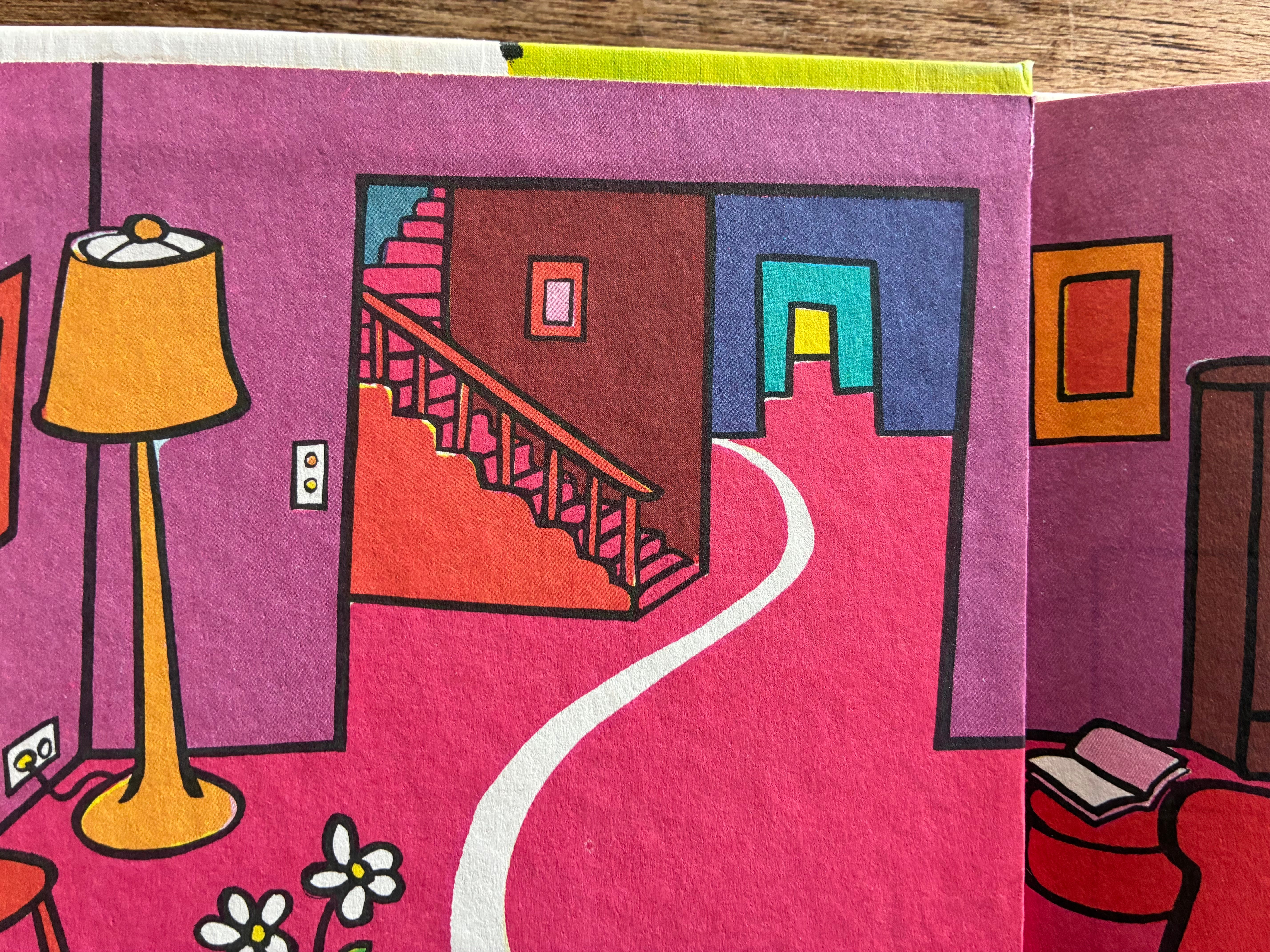
Especially especially this little zone at the top — those layered doorways. I really loved that part. I looked at it a lot.
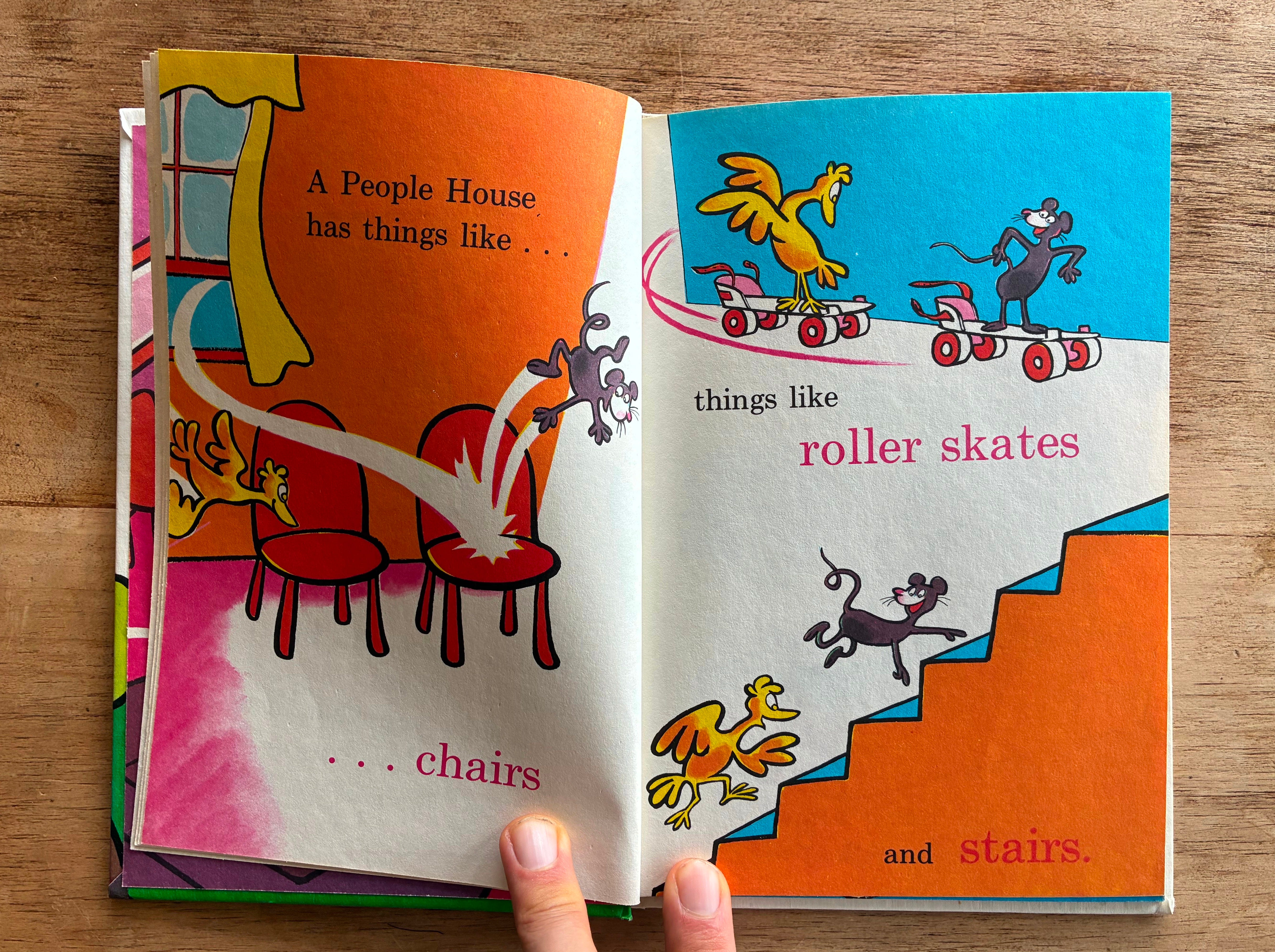
In A People House is, in some ways, also a book about permission. Theo LeSieg gets to write a book that mostly just lists things that are in a house, but he has a conceit that gives this exercise some interest and tension. A bird and a mouse have snuck in through an open window, and the mouse knows the names of things in there, and he’s going to teach the bird what they are.
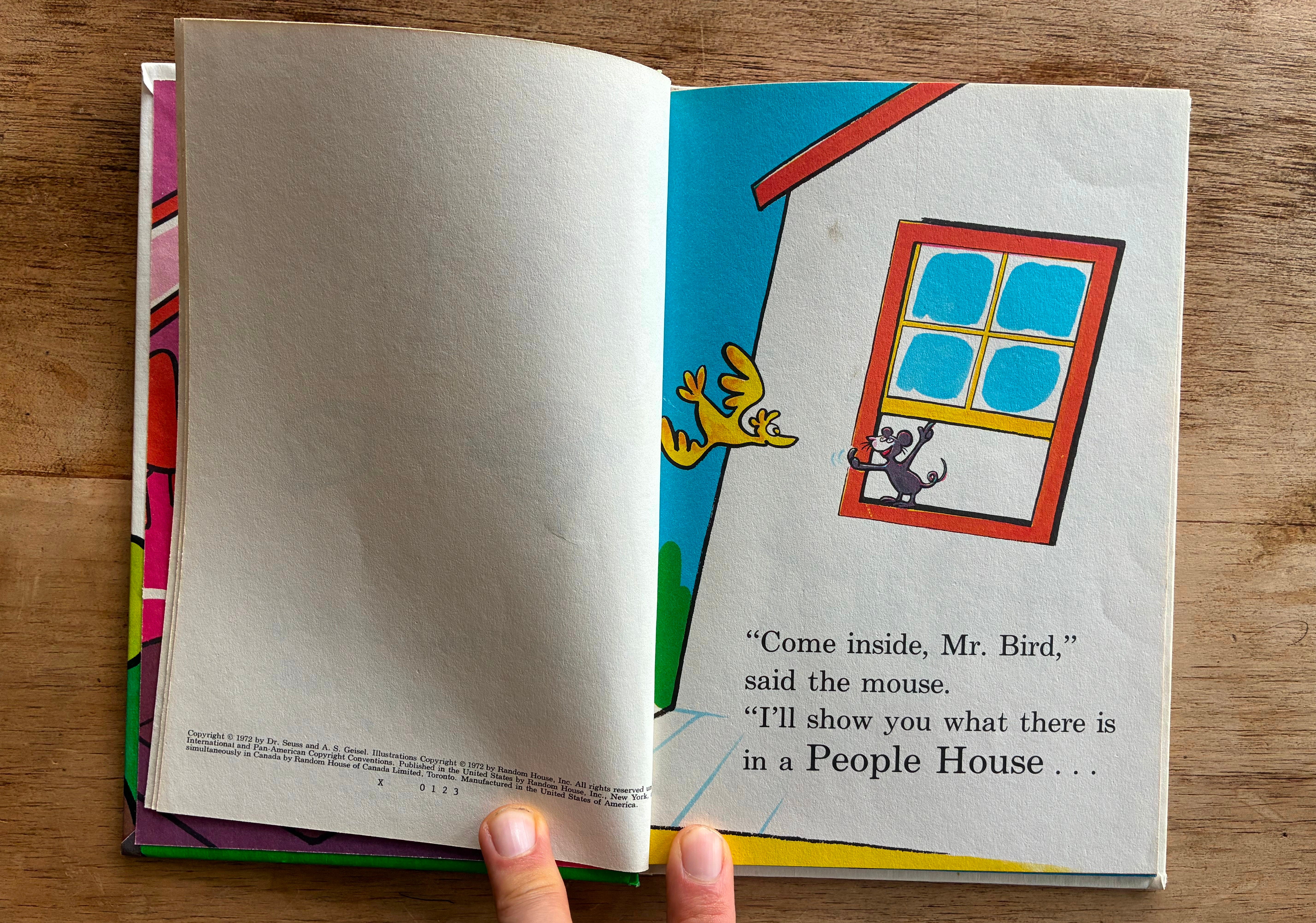
This book stressed me out SO MUCH. I couldn’t believe they were in a people’s house, just bouncing around. It’s not their house!! Get out of there!! But once this is set up, the text is mainly just listing stuff.
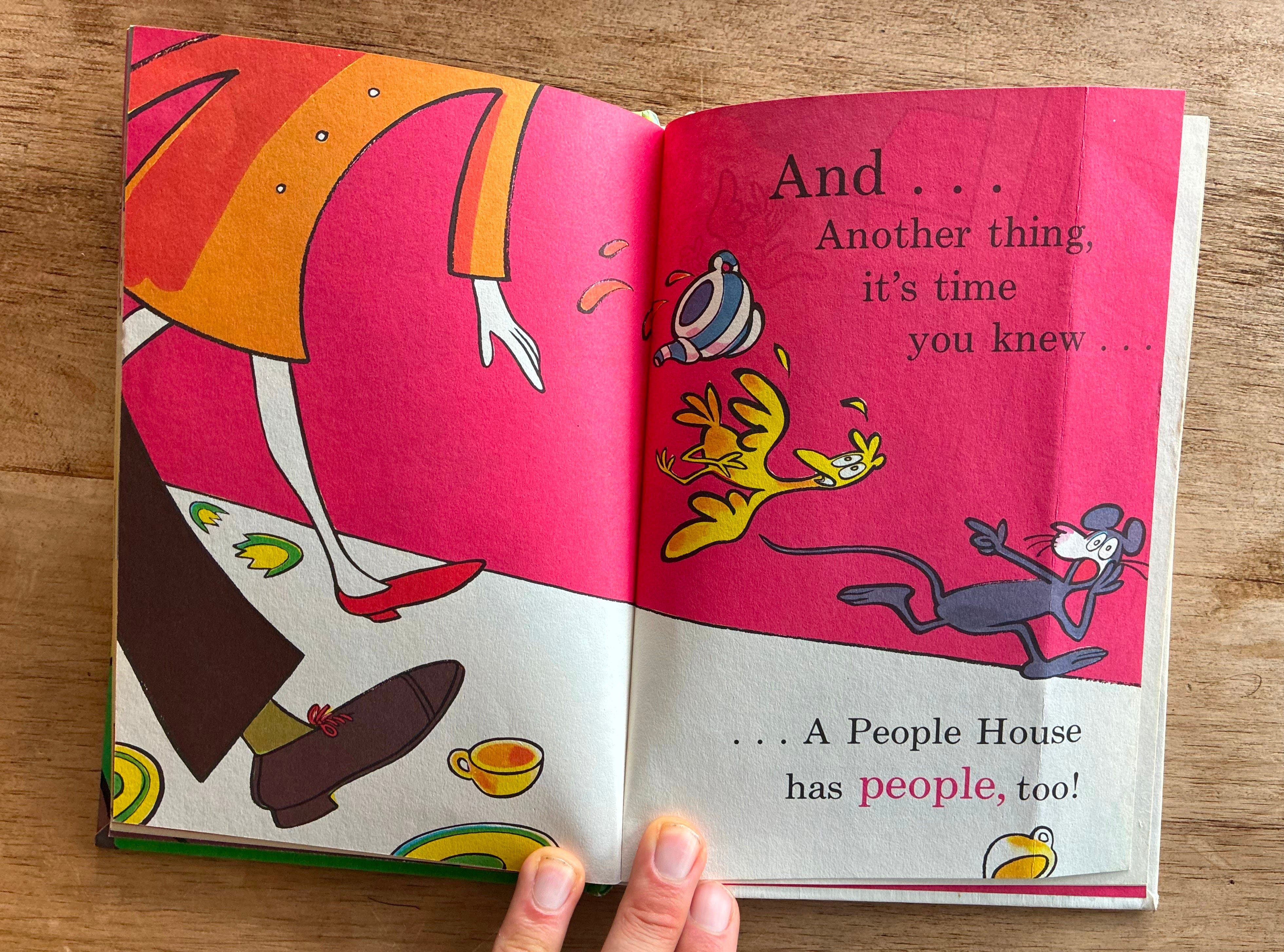
And then, finally at the end, the people who do own the people house come home and kick them out.
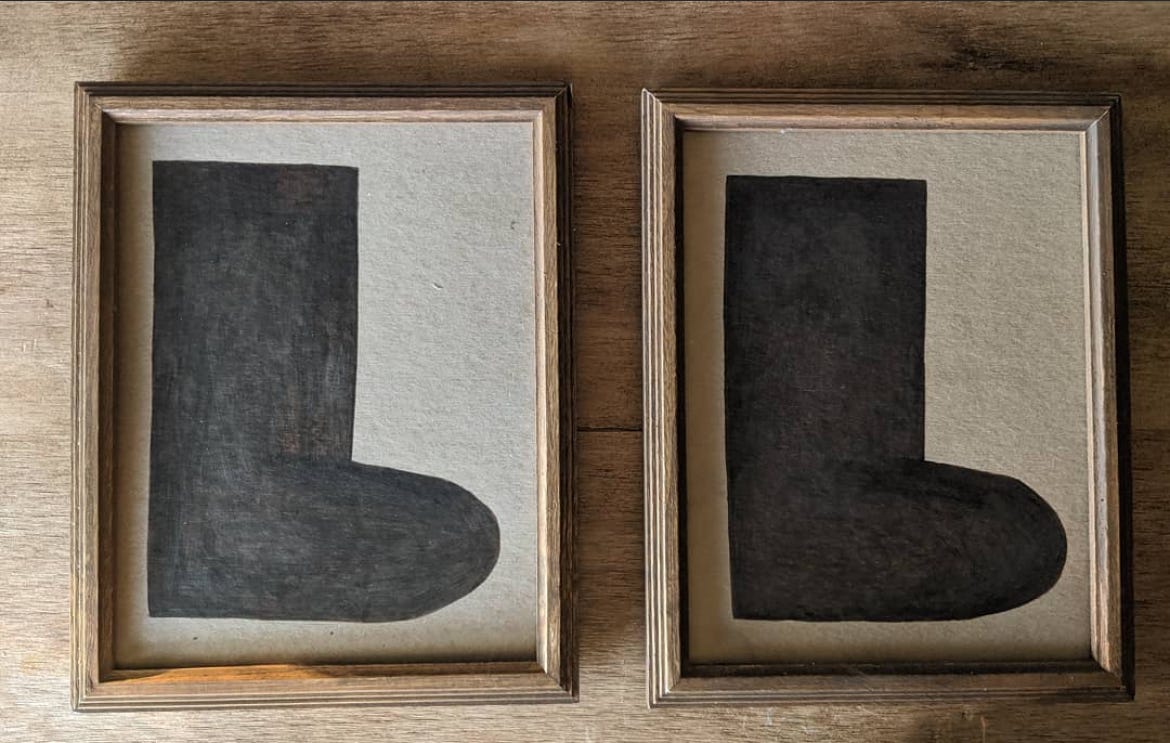
So, on my end, we have a ghost, we have furniture, we have In A People House. What was ALSO going on, semi-recently, is that on the side I’ve been into either drawing or carving objects that DON’T have eyes, just for myself. I like making these things. They feel like small revenges on my things that need eyes in order to be engaging. They are almost overly passive, on purpose.
Here’s a pair of boots that I drew.
Here’s a red house under a tree.
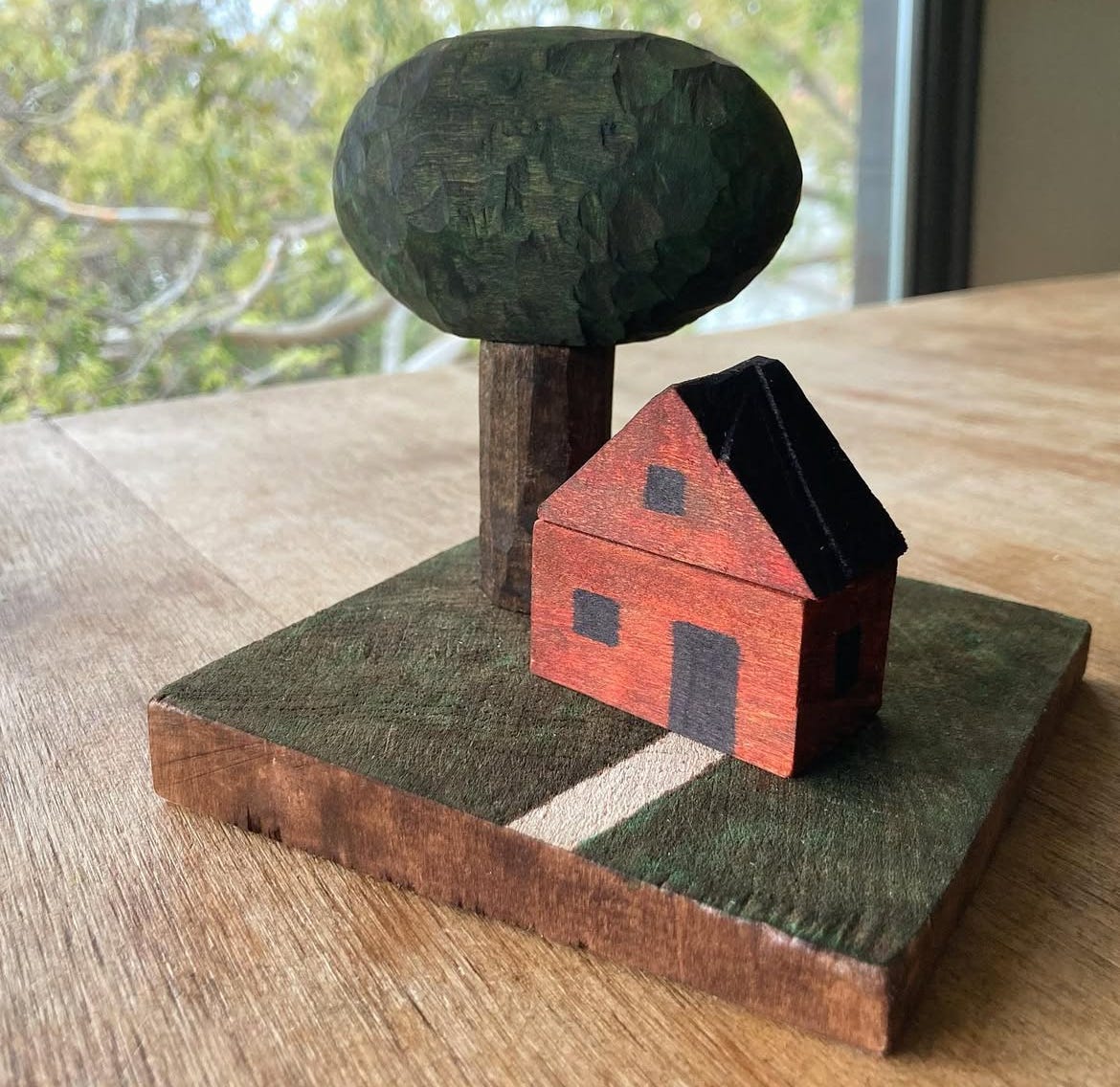
My getting into board books and making little wooden toyish areas feels very connected. The board books, so far, have been about assembling a series of components that make up a place — a farm, an island, a forest — like a little toy set. When the place feels complete, all the pieces go to sleep (and close their eyes), and the book is over. But also, board books, as objects themselves, FEEL more like toys to me than books. They are like blocks. They are solid, sturdy things. And you can cut them into shapes of other things and they hold that shape very well. Almost as soon as I started making board books I started to think about making a house-shaped one. And the idea of treating it almost as a toy of a house, with a cut-out front door, and doors inside that door, moving through the book from room to room, like our Roy McKie endpaper-doors up there, felt exciting. I liked the idea of just a house-shaped book that listed things in that house. But that’s a little too dry, right? It needed a permission slip, some kind of tension, like the trespassing-mouse-and-bird idea. What I decided on was that the book really was going to ACT and LOOK like a straightforward object-listing book — simple shapes, primary colors, clear typeface. It thinks its job is to list things in a house. It doesn’t believe in ghosts, and probably it can’t even see them.
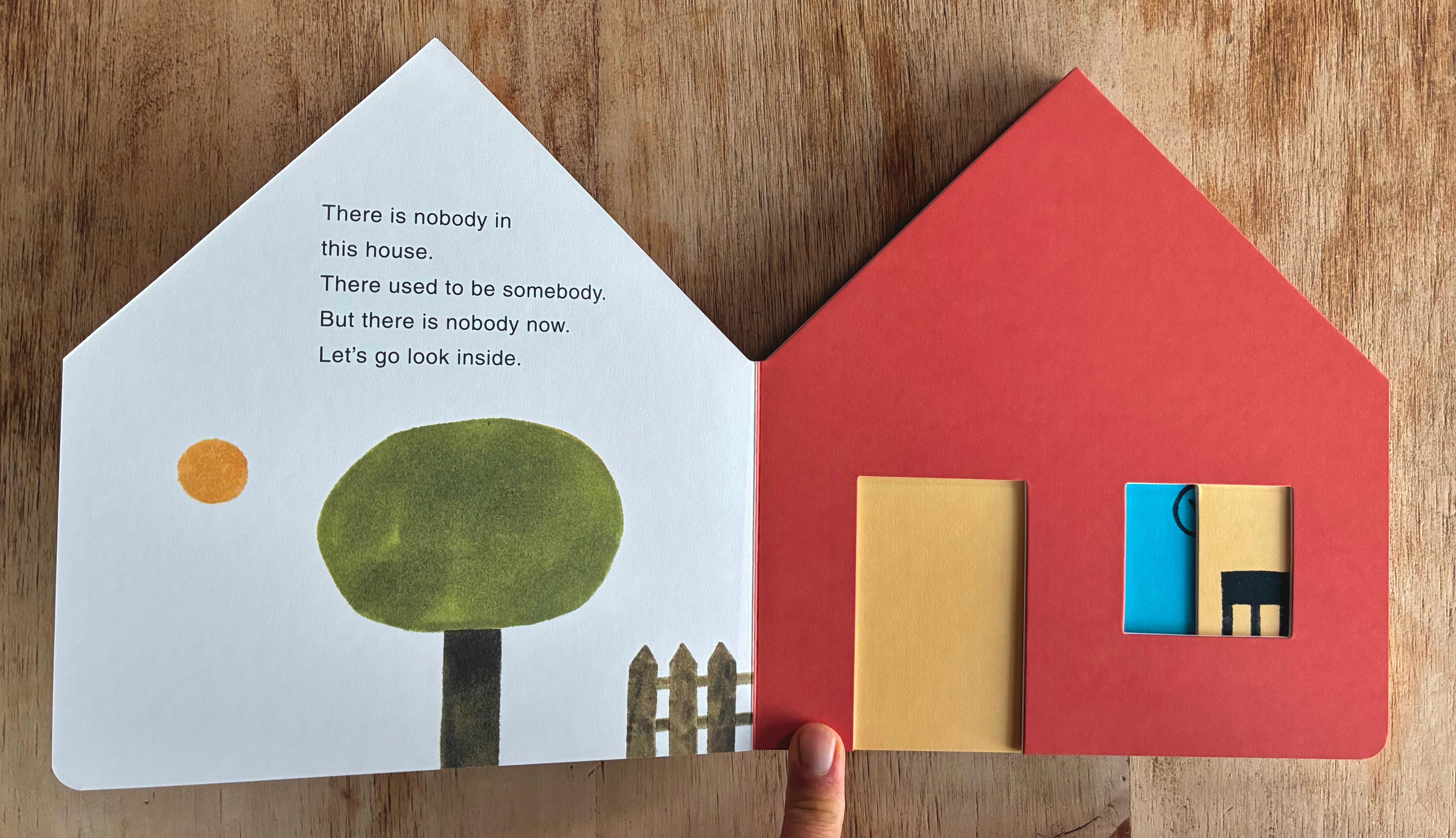
So, after all this set up, all these disparate things all collected, fifteen-odd years later, I got to put a black chair, without eyes, in a yellow room, just like those early images I sent to my agent. I got permission for this to be a page in a book, and it truly is one of my favorite pages of any book I’ve done, because of everything that needed to surround it to make it happen.
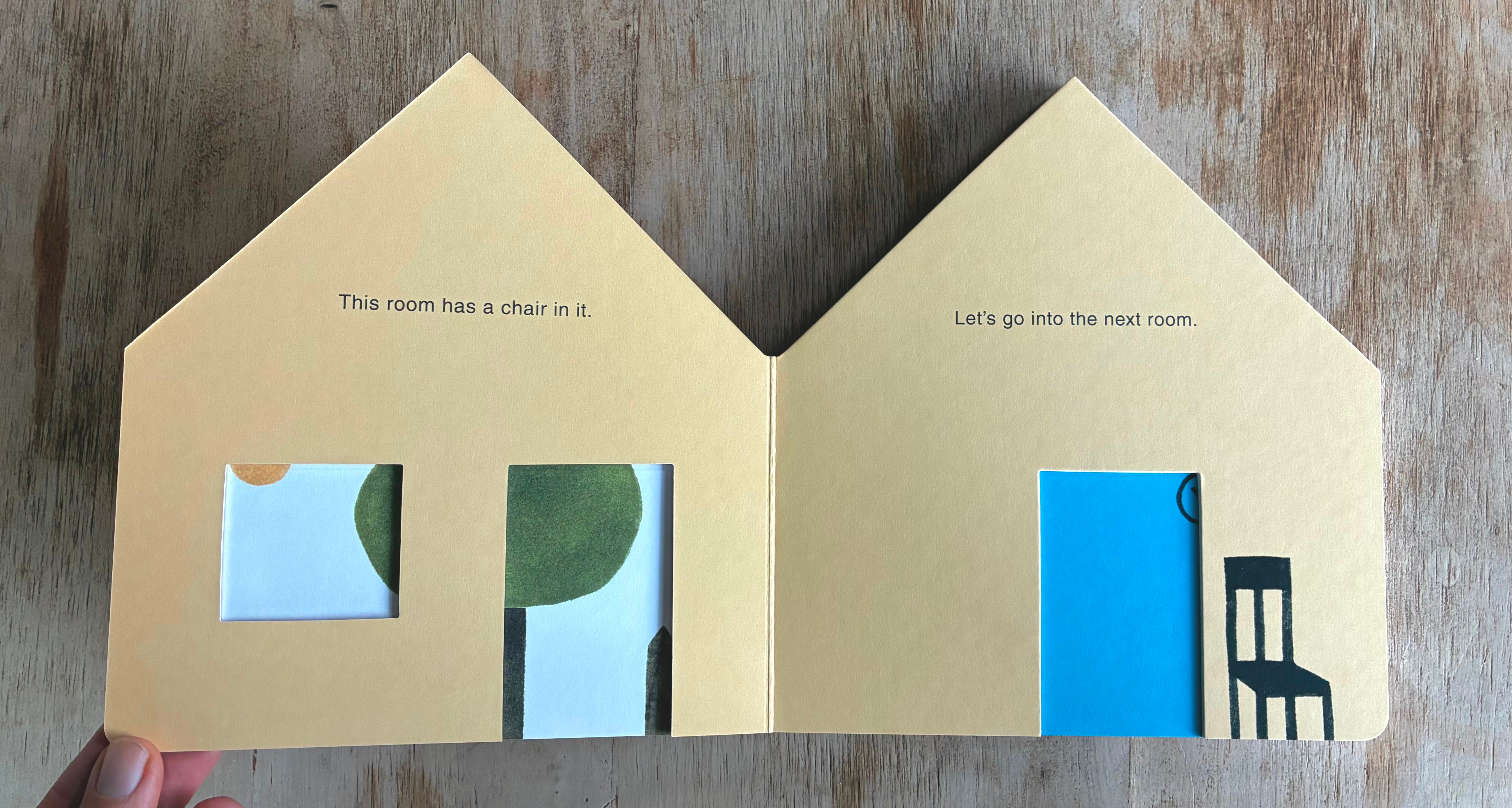
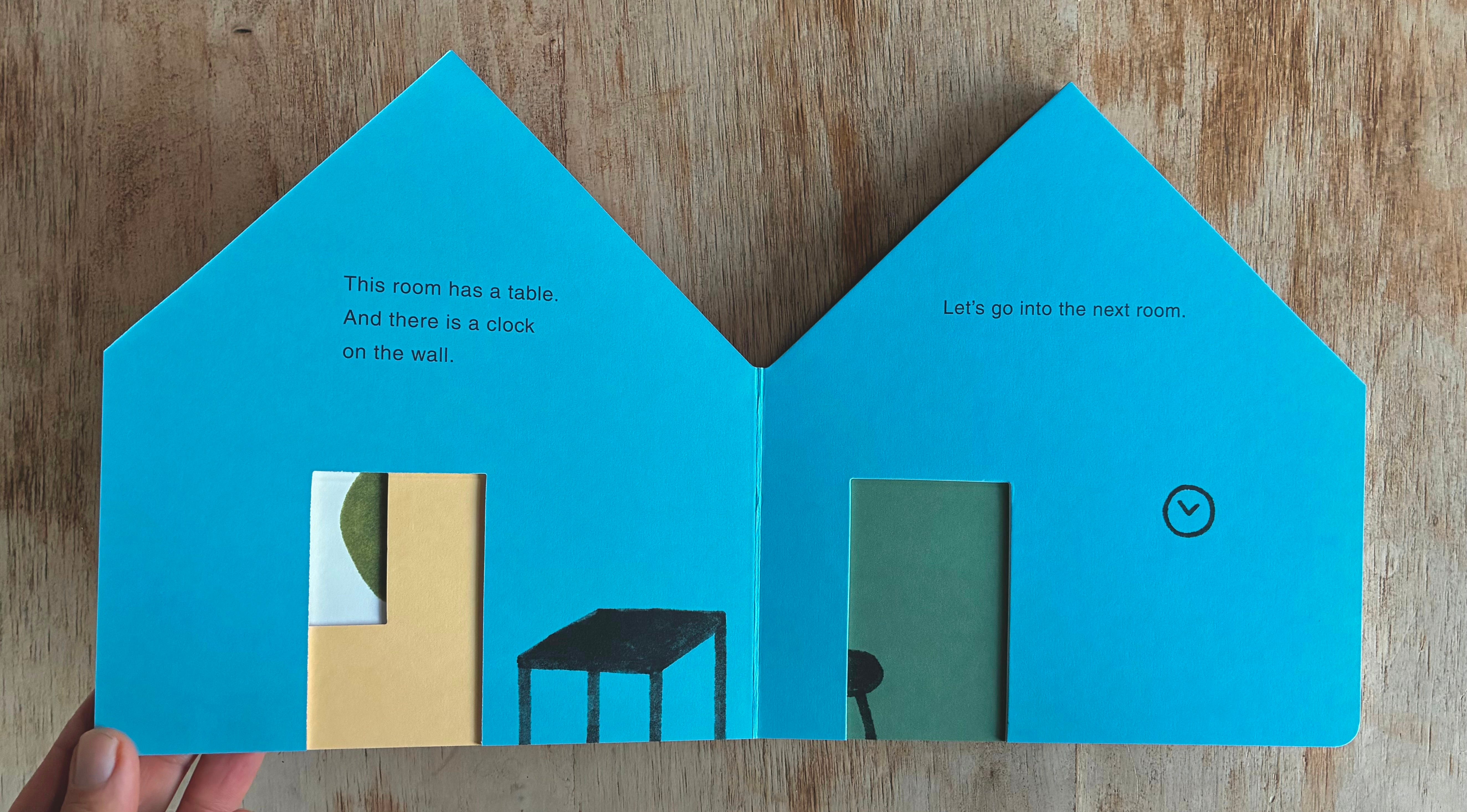
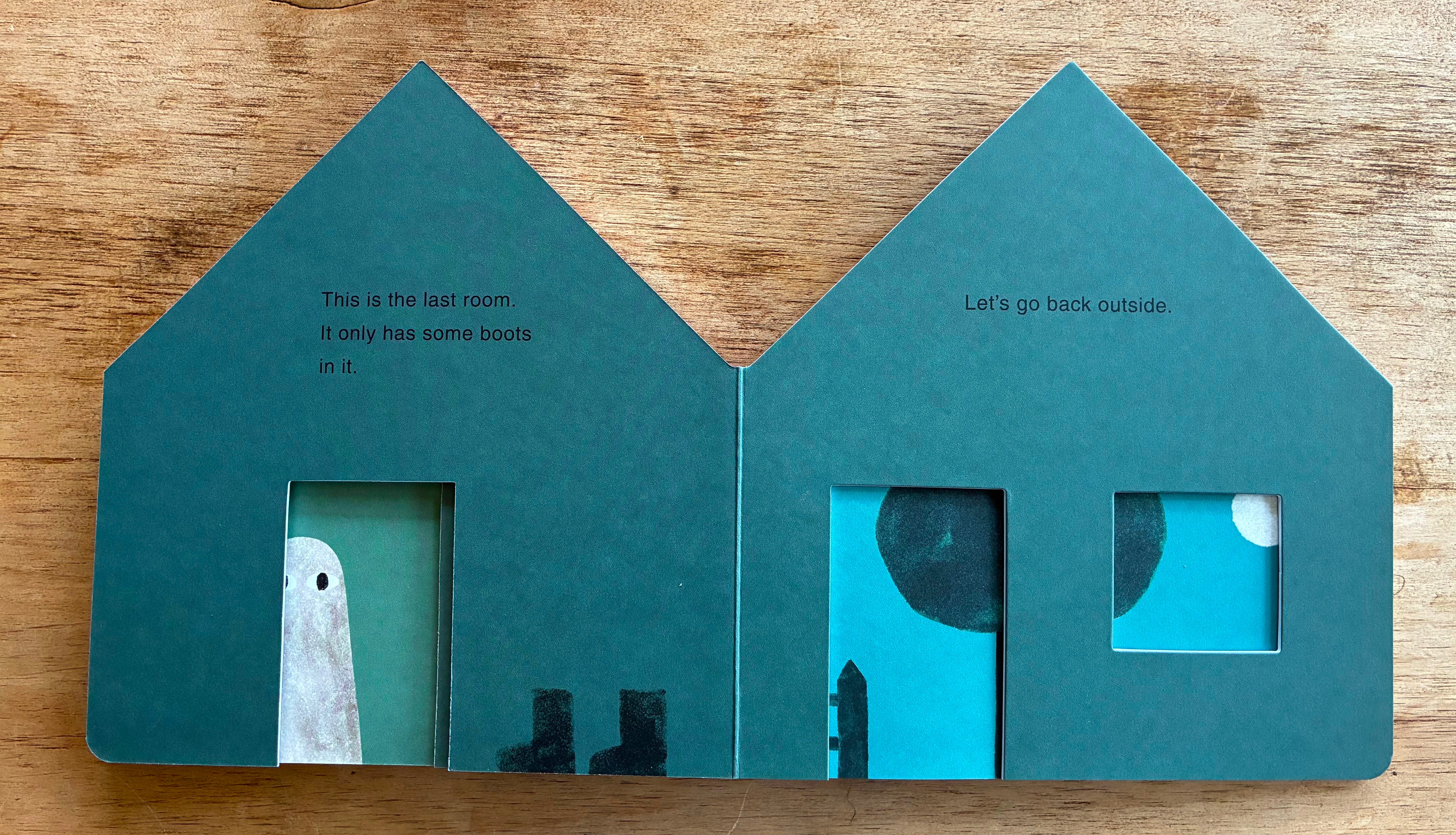
I’ll finish up this post by just showing a few more pages from the book (like I said, it’s very short, only a few pages longer than what we’ll show here. It kind of had to be short — you can’t wait TOO long to show the ghost, you’ll upset the children that have been promised one on the front, but once that ghost DOES show up you’ve kind of blown your cover and you need to get out pretty quick).
I hope this meandering behind-the-scenes has been fun to read. If anything, maybe it’s useful as an illustration that a weird pile of things you like and wish you could do can kind of coagulate over time into one thing.
I would also be remiss if I didn’t say a special thank you to my longtime art director at Candlewick Press, Ann Stott, for all her help in making this one. I’m well aware that something like this is a heavy, heavy lift on the production department, and she never made me feel like it was. We had a blast. The book itself doesn’t come out till summer ‘26 but it IS up for pre-order now at an indie bookstore near you.
—JON
My two-year-old requests "Your Forest" almost daily for the forest ghost. She's going to love this. Almost as much as me. Can't wait! (Also, loved this style of post. More please!)
The shape of the book - I gasped!