

Six Picture Book Mysteries
Are you in need of a detective?


Deep dives on great picture books are here.
We recommend picture books here.
We reviewed the new Hansel and Gretel for the New York Times here.
The Looking at Picture Books Shop is here.
The picture book is a form, not a genre. It is a way of telling stories, many different types of stories, of all kinds of genres. But a good picture book mystery is tough to pull off. Mysteries require mechanisms, conventions, and pacing that don’t easily fit in a limited space. But the form offers some thrilling opportunities, too. When clues come in through the illustrations, kids (who are better at reading pictures than adults) get to be the detectives.
—MAC
The 13th Clue, by Ann Jonas
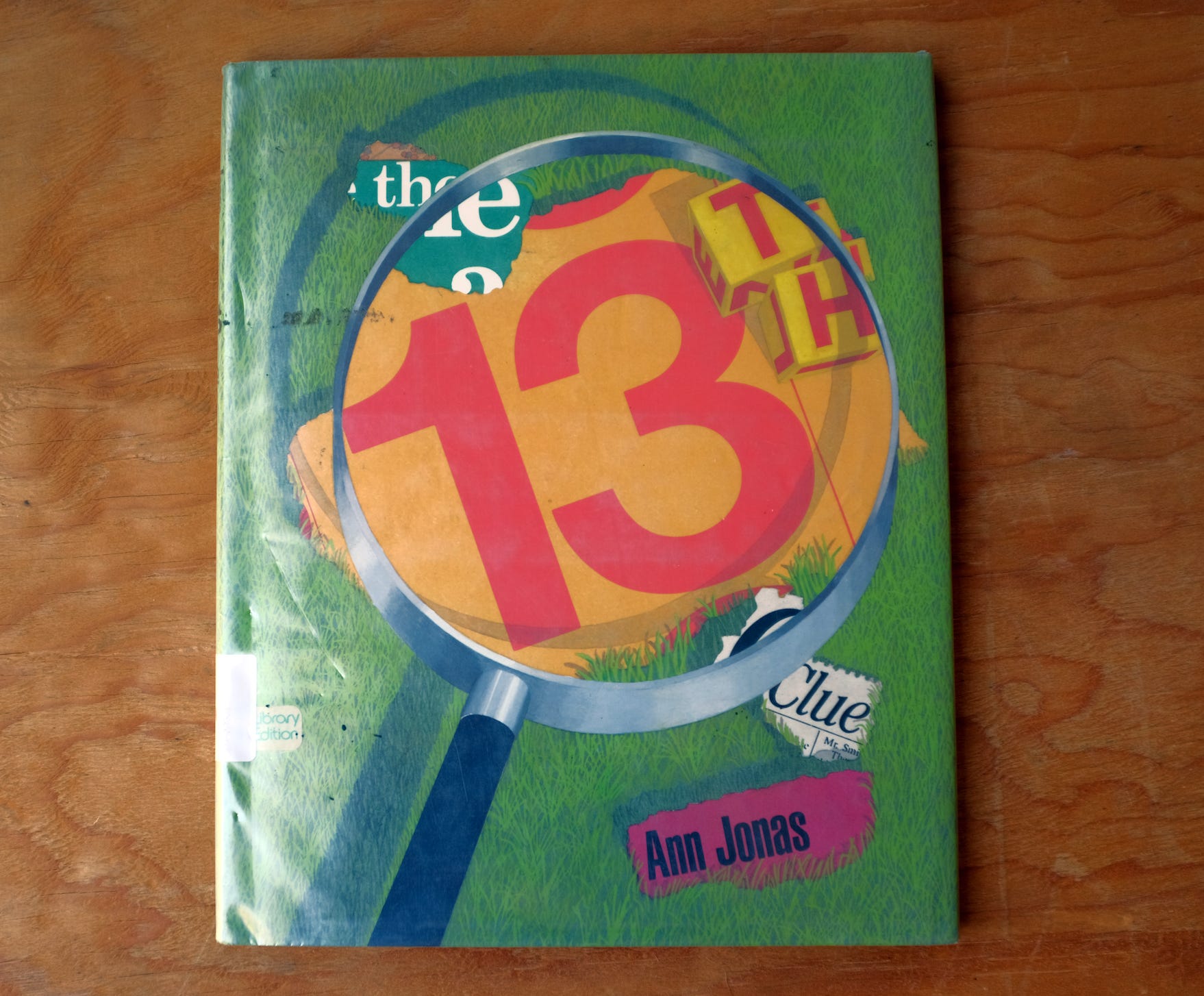
I’ve seen a million books with this one’s premise — a girl is sad because her friends forgot her birthday, but it turns out her friends were throwing her a surprise party — but I’ve never read anything like The 13th Clue. It’s “illustrated in the first person” — the pictures show things through the main character’s eyes. The text is diegetic — all the words appear “in world” — and mainly consists of a series of puzzles created by her friends.
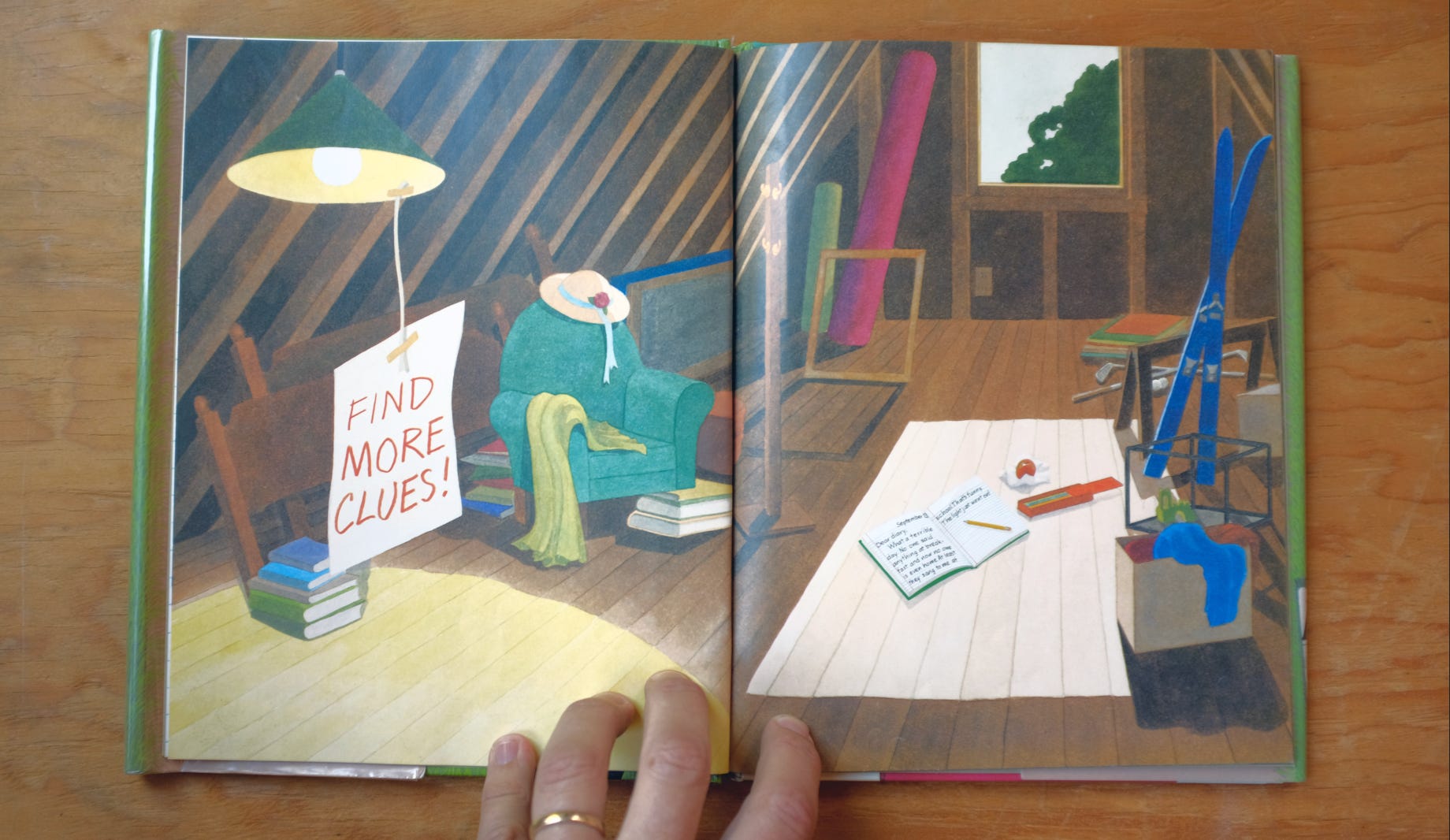
Jonas is in tight control of pace and mood. The compositions are often strange and vertiginous, which heightens the sense of mystery. There’s an especially impressive bit of business midway through, a moment where the girl sees her reflection (which is also our reflection, the first time we learn who we are). The whole thing is imbued with the sense of eerie dislocation I get from first-person puzzle games like Myst or Witness.
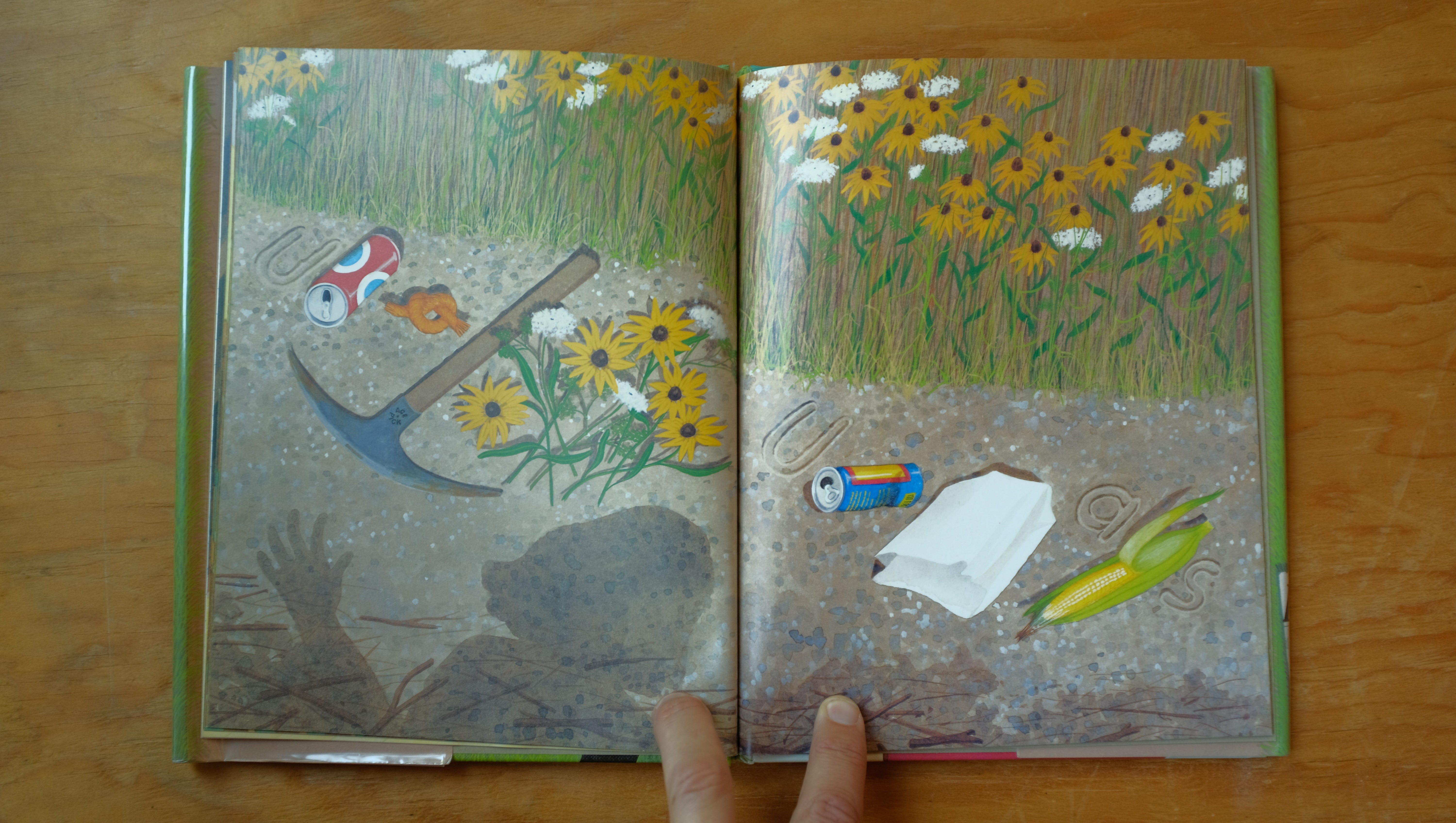
Here’s proof that even the most worn-out picture book premise can feel fresh and alive in the hands of a great technician. The 13th Clue is cerebral, it’s emotional, it’s full of big innovative ideas executed in unflashy fashion. What a book.
—MAC