

What is it?
How Tana Hoban cracked the photographic picture book.


Deep dives on great picture books are here.
We recommend picture books here.
Jon will be joining the (adult) book club at Womb House Books in Oakland on Sunday, October 26, for a discussion of the Skull. Tickets here.
And Mac will be in conversation with Jennifer Garner at the 92nd Street Y on December 5. They’ll be talking about — you guessed it — picture books. This is also an event for adults. The event is in New York, but if you can’t make it, you can buy a ticket to watch the livestream. Tickets here.
The Looking at Picture Books Shop is here.
MAC: Hi Jon.
JON: Hi Mac.
MAC: Today we’re looking at Tana Hoban books.
JON: It’s a good choice from us.
MAC: Yet again.
JON: What a great newsletter.
MAC: Hey, we like it.
I was going to say Tana Hoban is the greatest maker of photographic picture books, but maybe she’s just our favorite maker of photographic picture books?
JON: She certainly cracked them in the way we like best — and it does seem like something to be “cracked.” It’s tricky to do photographic picture books. A lot of them don’t work that well.
MAC: Well that brings me to my first question, which is, how do you feel about photographic books, generally? What was your relationship with them as a kid? Did you like them?
How do you feel about them now?
Do we need to define photographic picture books?
All great questions.
JON: Ummm, I’d say the definition is simply that they use photography as a way of generating the images... in them?
MAC: Yeah, they’re picture books that use photography instead of illustration.
I’d say that they often are concept books or nonfiction picture books, although there are photographic fiction picture books too.
OK, definition, check!
Sound off in the comments.
What do YOU think we got wrong in our definition of photographic picture books?
(I’ve been seeing a lot of people prompting discussion in the comments in their Substacks lately — thought I’d try it out.)
JON: (I think it’ll go really well!)
There is a whole other post about if I liked them. I had some, and I remember them vividly, which, if you listen to us at all, is kind of the best you can hope for as a book maker. I don’t think I’d say I liked them. They were usually weird and uncanny, so you go back because it’s fun to feel weird and uncanny.
MAC: I wasn’t drawn to them as a kid.
I liked drawings and paintings.
JON: Hahahah — such a snob.
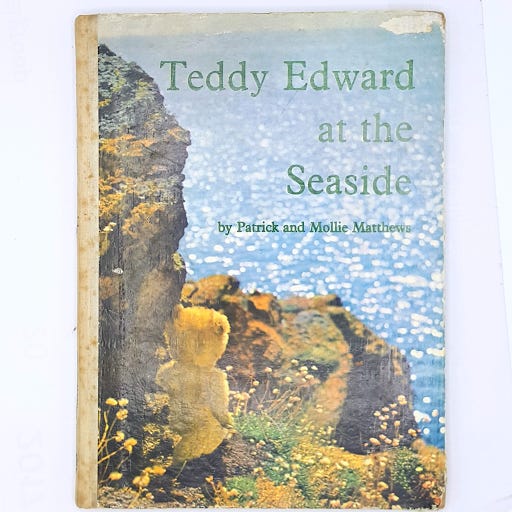
I had this one, and I looked at it a lot.
MAC: Oh yeah, that does not surprise me one bit.
JON: But I think even as a kid I pictured some dude posing a teddy bear in the sand and going around and taking a picture of it, and he was a weird guy doing that.
Also it’s upsetting to see a real teddy bear in like, outside, in the dirt. Getting dirty. It stressed me out.
MAC: When I started publishing kids’ books and visiting schools and seeing how certain kids just gravitated toward these books in the library, I developed a real respect for them. I love them now.
For years I’ve been taking pictures of ones that get faced out in the library that strike my fancy, but this is the only photo I can find on my phone right now.
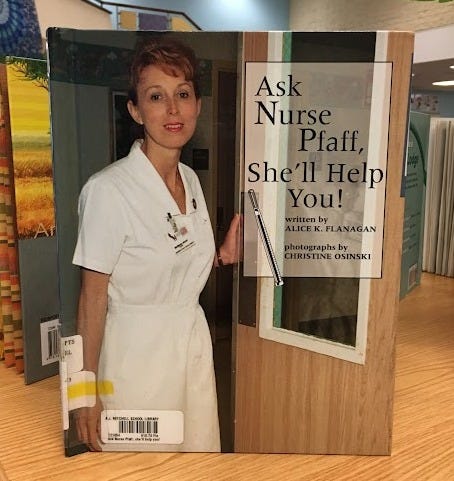
JON: Whoa.
MAC: Really wishing I hadn’t said “strike my fancy.”
So Tana Hoban!
JON: Phew yes, OK.
JON: I think, a lot of times, the tricky thing with photographic picture books is that they are using photographs to illustrate a story, or a character. And it should work — it ought to. But so often it either comes off looking like (or literally is) a film still that they grabbed and stuck on a page, or it looks like a workaround to drawing or painting something. I don’t know why exactly. Photography is of course a legit art form, like any other. But what Tana Hoban did, among other things, is kind of say that the photography, photographs, or even certain combinations of them, is enough. She almost never did a story, classically speaking. She said that pictures of things are enough. And they are. Especially hers. I think she is one of the best photographers I’ve ever seen.
MAC: So Tana Hoban studied art and taught herself photography in the late 1930s. By 1950, her work was in the permanent collection of the MoMA. It was only in 1970 that she started making children’s books.
She was inspired by a project at the Bank Street School of Education, an experimental lab school in New York, where teachers gave kids cameras and had them photograph their days.
She loved their pictures — what the kids noticed.
JON: Yeah, the experiment, how she explains it, is amazing. This is in New York, somewhere right?
They asked kids to talk about what they saw on their walk to school. And most of them of course said “nothing.” And then they gave the kids cameras and told them to photograph things on their “nothing” walk, and then, she said, all the kids suddenly noticed that on their way to school were many things. The river, fruit stands, all sorts of things.
The validity of those things — that they are notable and listable and important — seems to be a main thing in her work.
MAC: It was in New York, yeah.
The “H” shelf in the picture book section has a lot of Hobans, btw.
Her younger brother was Russell Hoban, one of the all-time best writers of picture books who did not illustrate them.
(We should come up with a term for those kinds of writers.)
(A really cool term.)
(One that makes them sound cool.)
JON: (“Team members.”)
MAC: (Very cool.)
JON: (”Necessary evils.”)
MAC: (That actually does sound cool.)
JON: (I know :/)
MAC: Russell Hoban was married for a time to the illustrator Lillian Hoban. Russell and Lillian Hoban made the Frances books together, about the family of badgers.
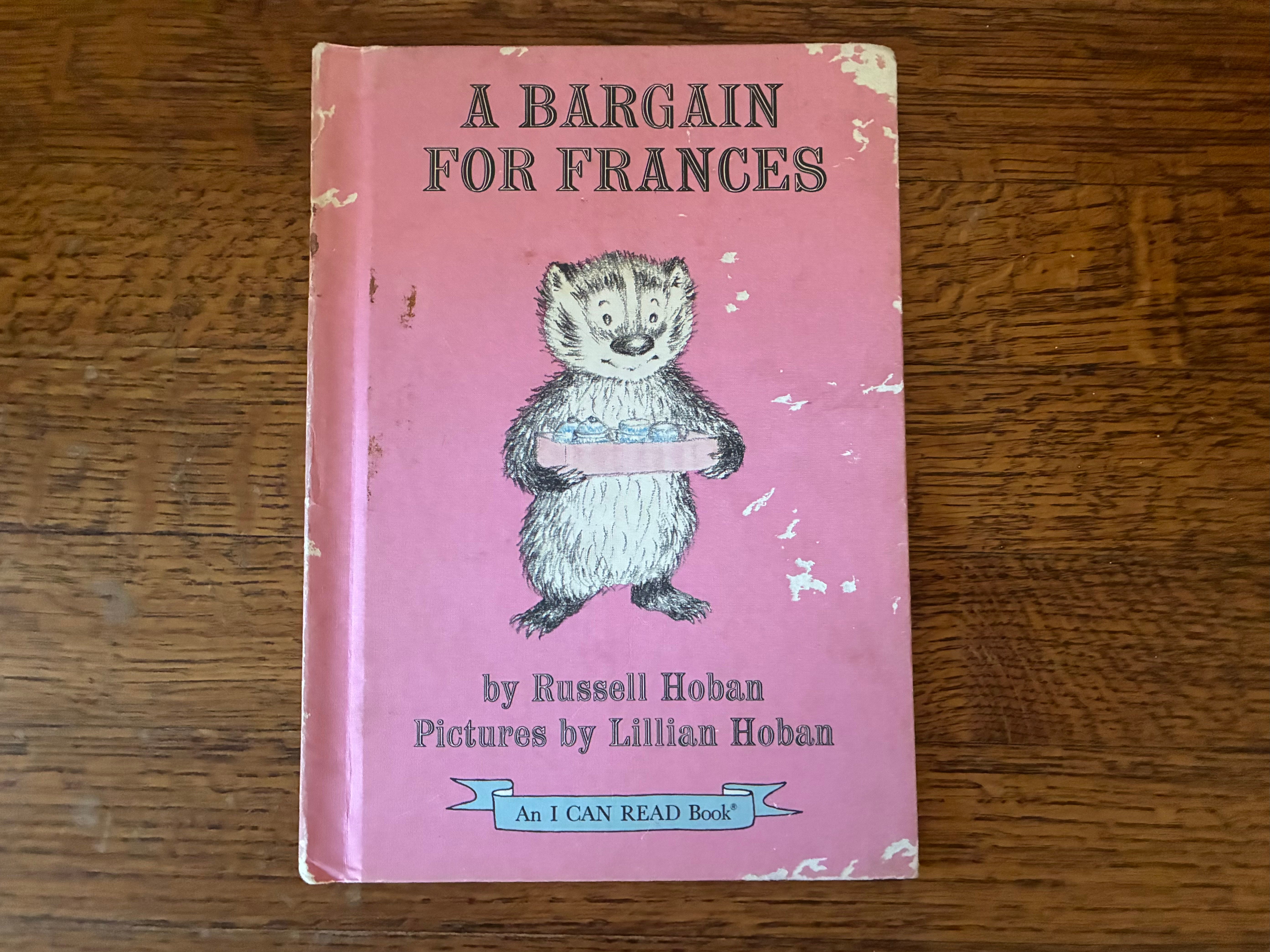
But that’s a whole other post that we’ll never write!
JON: Oh man we gotta — those books are the best too.
MAC: I think the greatness of Tana Hoban’s books comes down to three things for me:
The quality of the photographs (super tight).
The design (smart, beautiful, rigorous).
Their prevailing spirit (playful, sympathetic to children, in love with the world).
JON: Totally on board with that list.
It might be worth saying that “design,” as you mention it, you’re not meaning just in like, the fonts or the paper choice, but often, in her books, the design is the premise of the book, or a large part of it.
MAC: Yes.
Though the fonts are generally real good too.
JON: Yes — though interestingly she doesn’t have a standard look. The fonts and trims are all over the damn place, book to book.
MAC: OK, let’s take a look at some Tana Hoban books and talk about why they’re good.
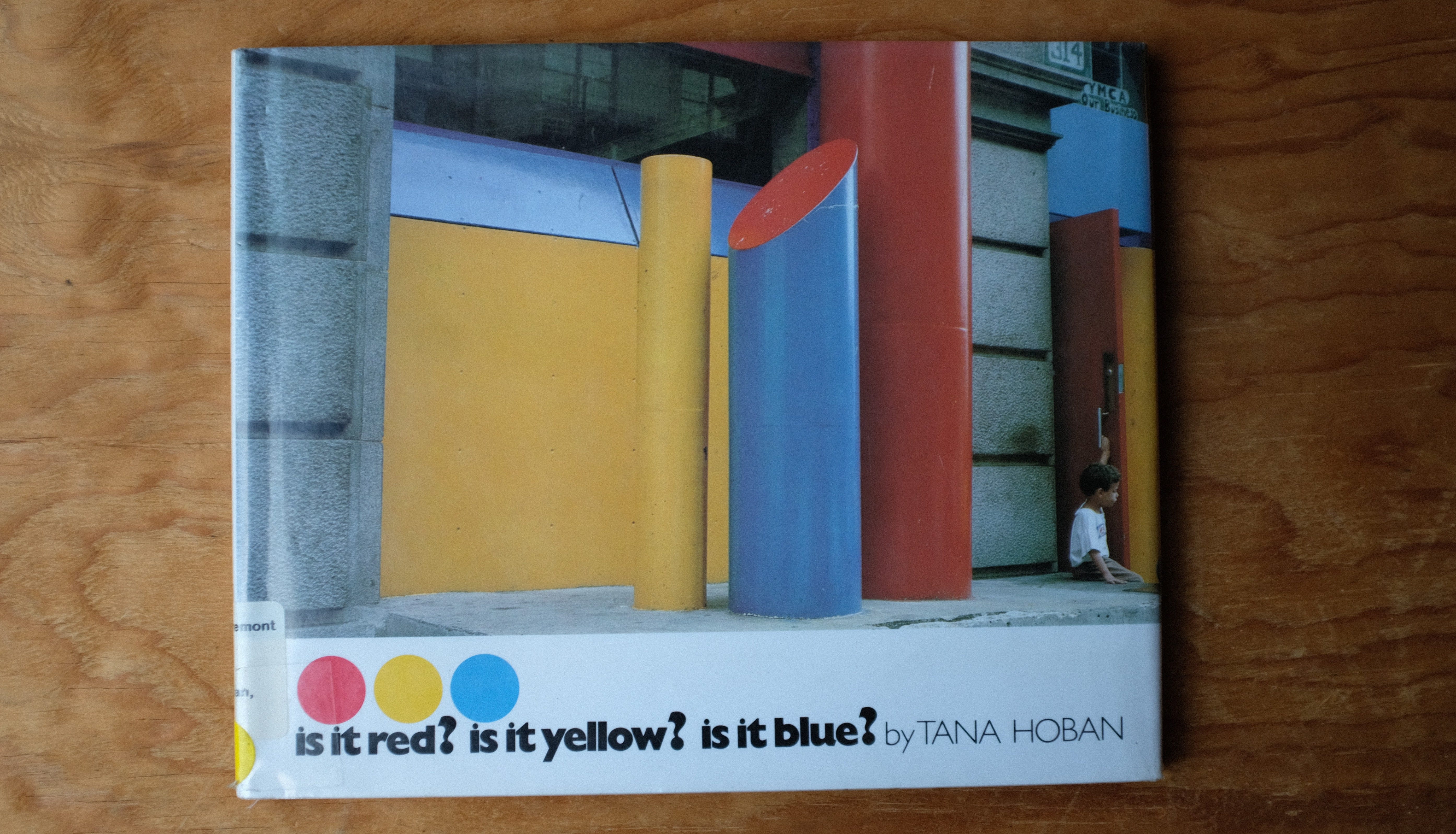
Like a lot of Hoban’s books, the title explains what will turn out to be the game of the book. Those dots, in the same order the colors come in the title, reinforce the connection between the colors and their names, and introduce the book’s most important design element.
And then, from left to right, the colors in her photograph go yellow, blue, red — so already she’s having fun, making us work.
The title page introduces more dots, and expands on the rules of the game.
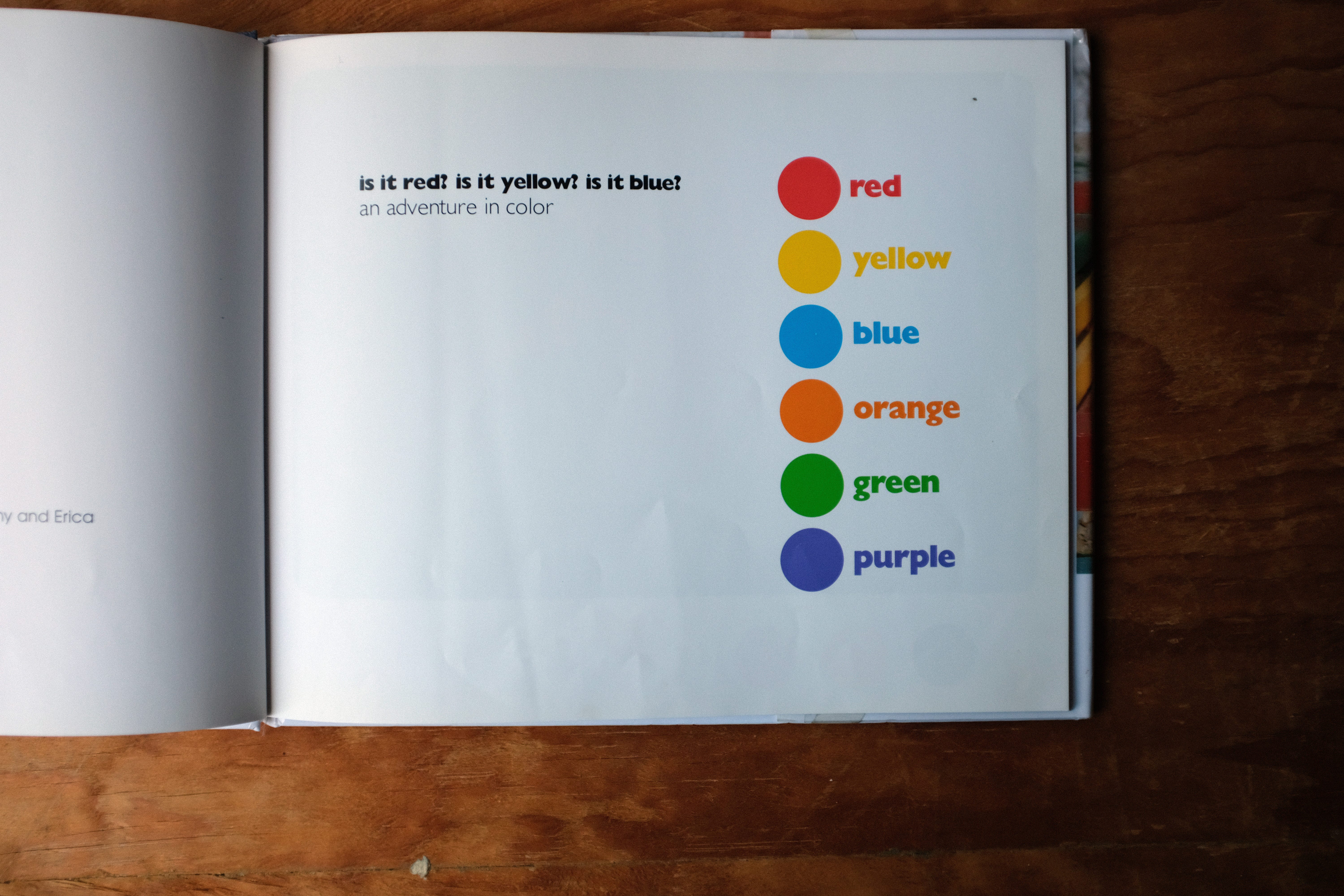
The rest of the book is wordless, a series of photographs, each with a set of colored dots below it that prompt the kid reading to find those colors in the picture
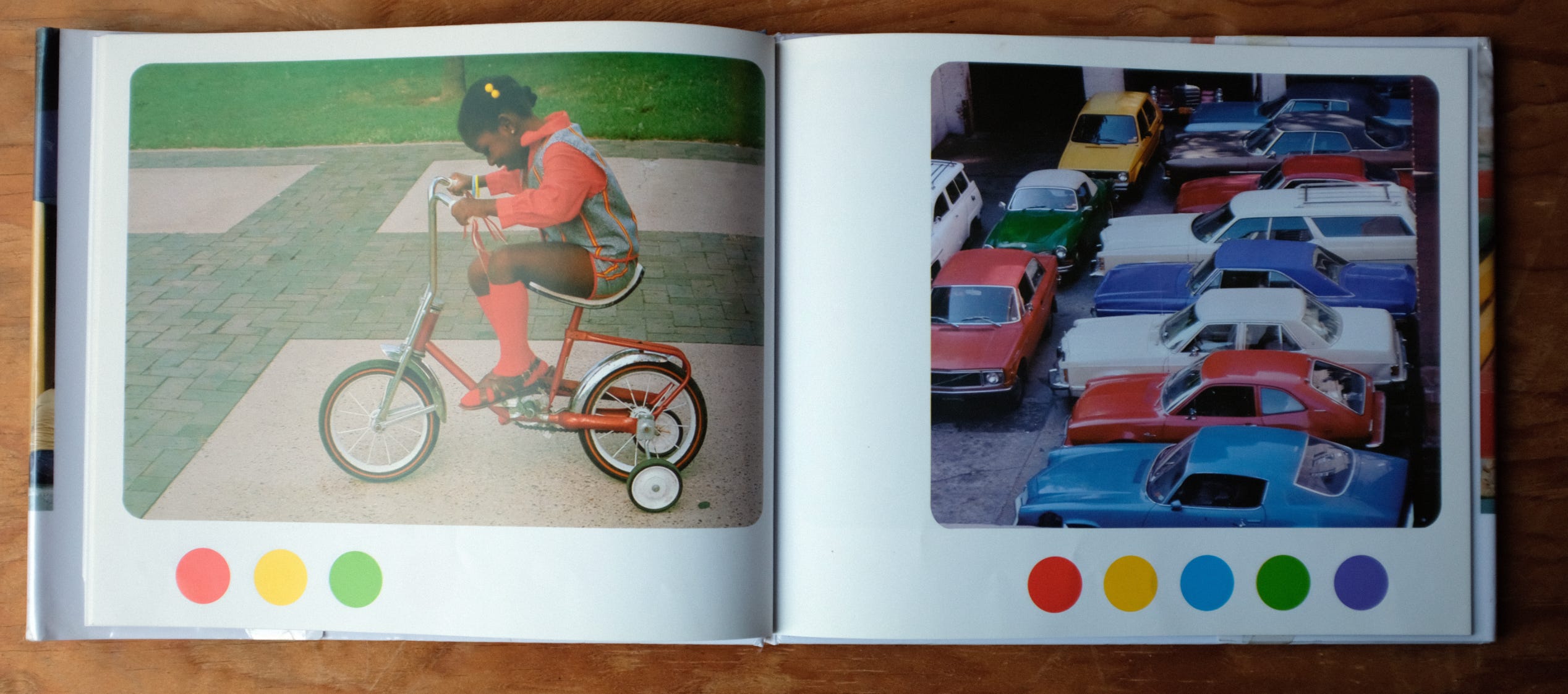
.Often, the longer you look, the more little hits of color you find.
So the “game” also prompts us to look closely at (beautiful) photographs — to really study an artwork.
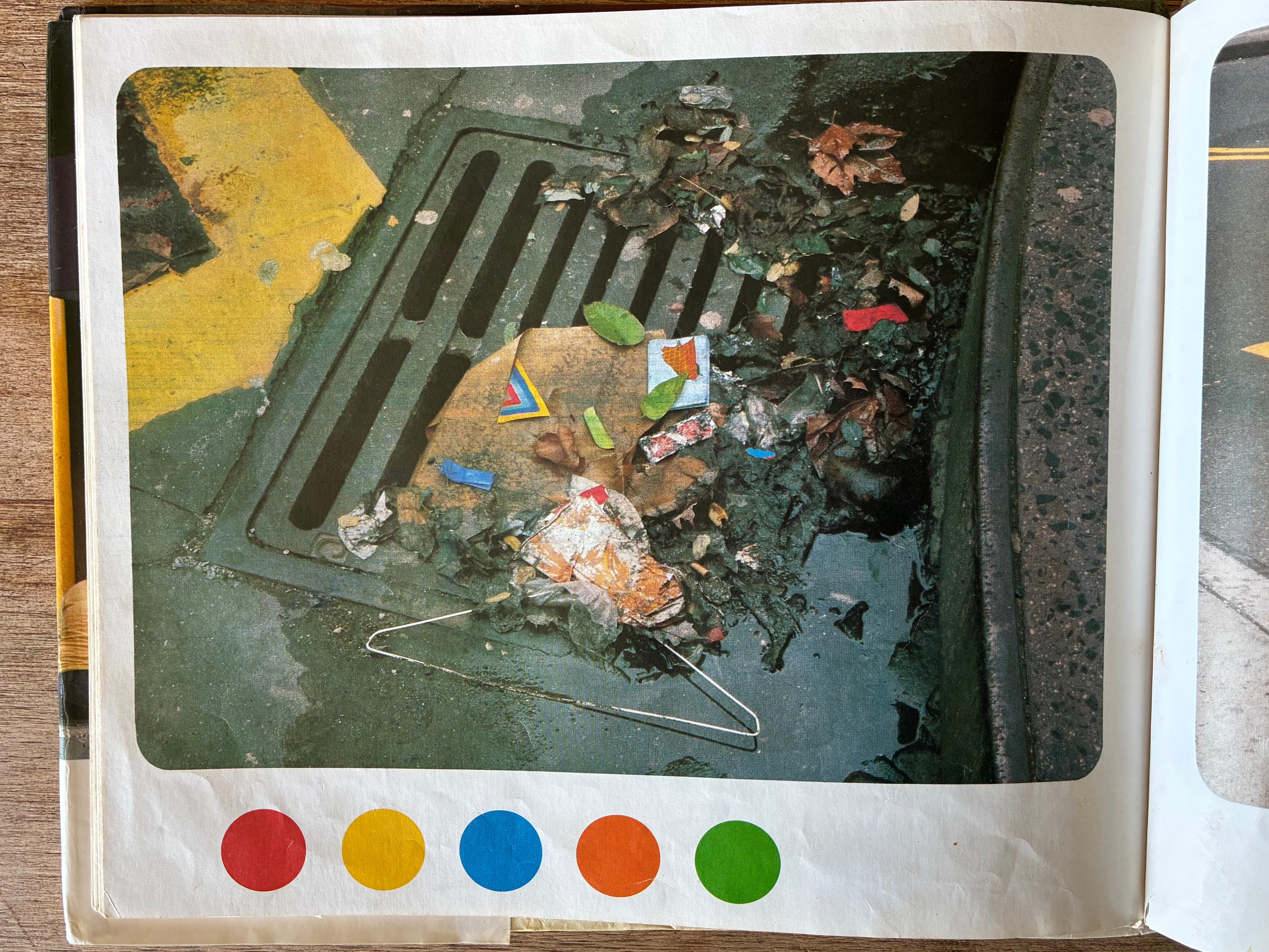
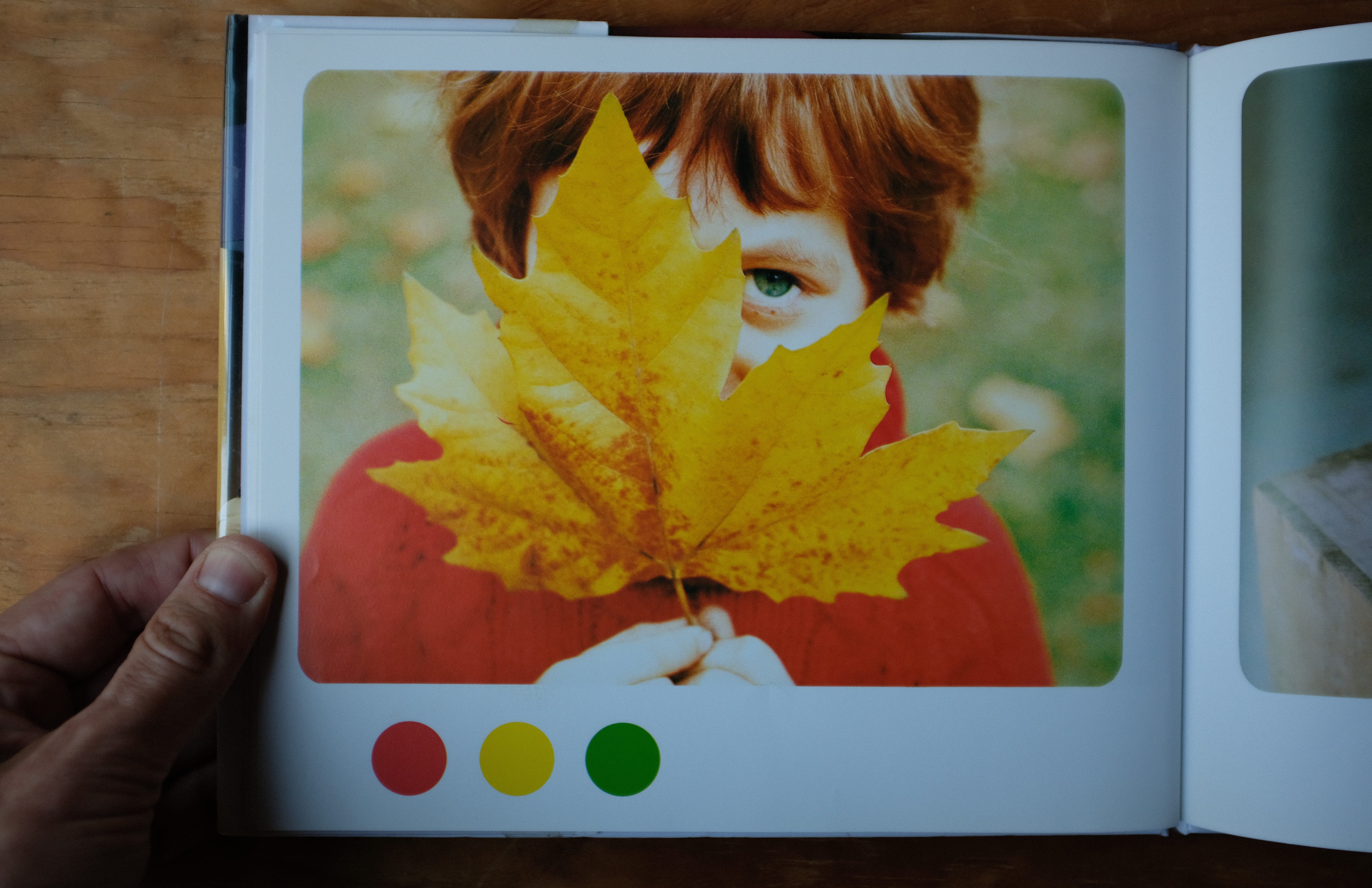
Look at this one:
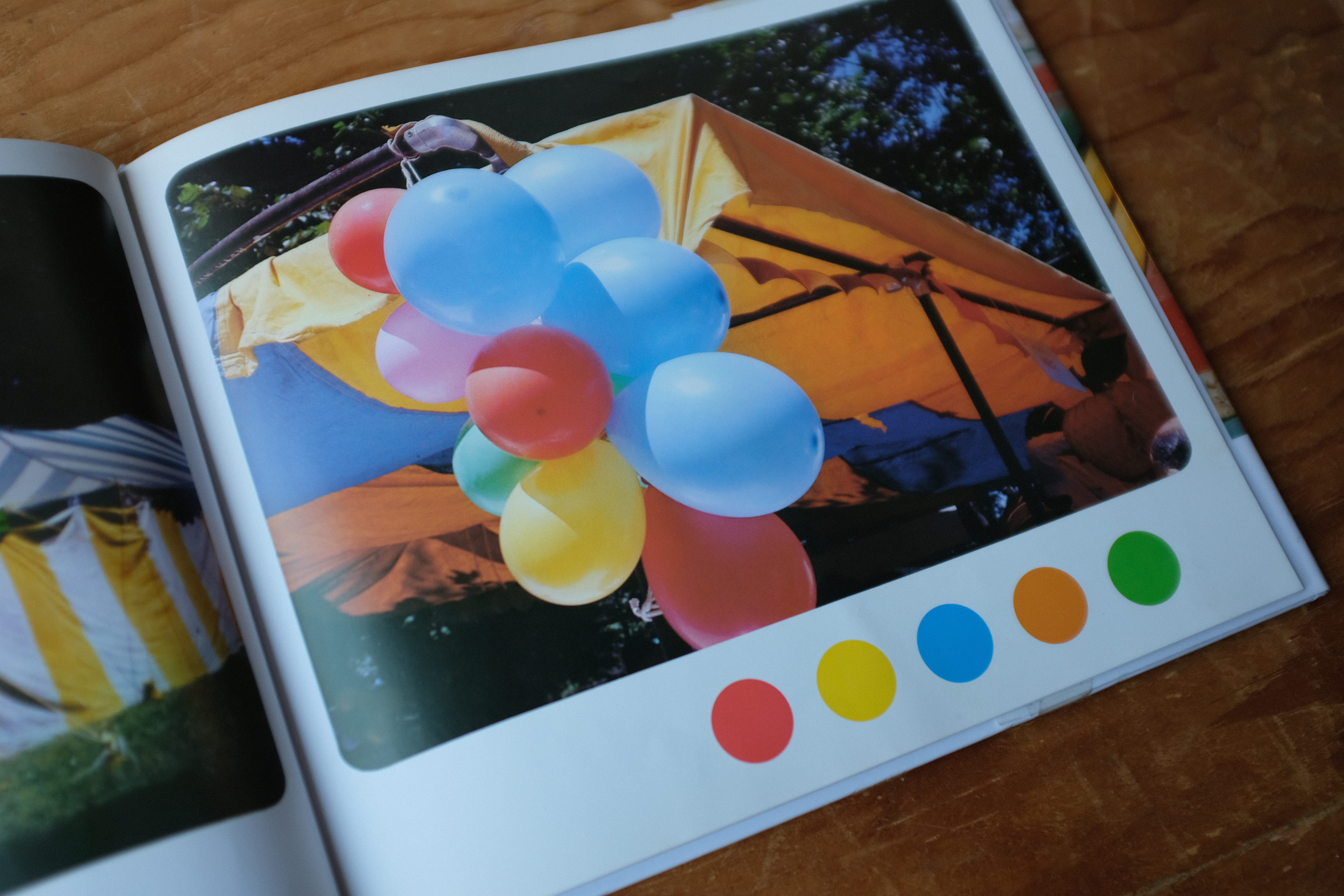
The canopy, in the sun, is yellow, but where it’s in the shade, it’s orange. So the same object is two different colors, depending on how the light is hitting it. That’s a pretty sophisticated, profound truth about color!
JON: What’s so great about it too — and what happens often in her books — is that sometimes the correlation isn’t immediately clear. Her photographs are often so alive and spontaneous-feeling, they don’t look like an academic presentation of the concept. But doing that to them yourself, as the reader, is so exciting.
What it points to is a kind of presence in the moment. It legitimizes a seemingly arbitrary point of view. The orange in that picture only being orange because of the angle the photo was taken from and the light right at that moment — and it being just as “true” as any other color in that photograph. You can dig down on the philosophical implications there basically as deep as you feel like going.
MAC: Here’s a quote I found on a day of digging around in a dusty old library full of monographs on Tana Hoban (it’s on her Wikipedia page):
“I try in my books to catch a fleeting moment and an emotion in a way that touches children.... Through my photograph and through open eyes I try to say ‘Look! There are shapes here and everywhere, things to count, colors to see, and always, surprises.’”
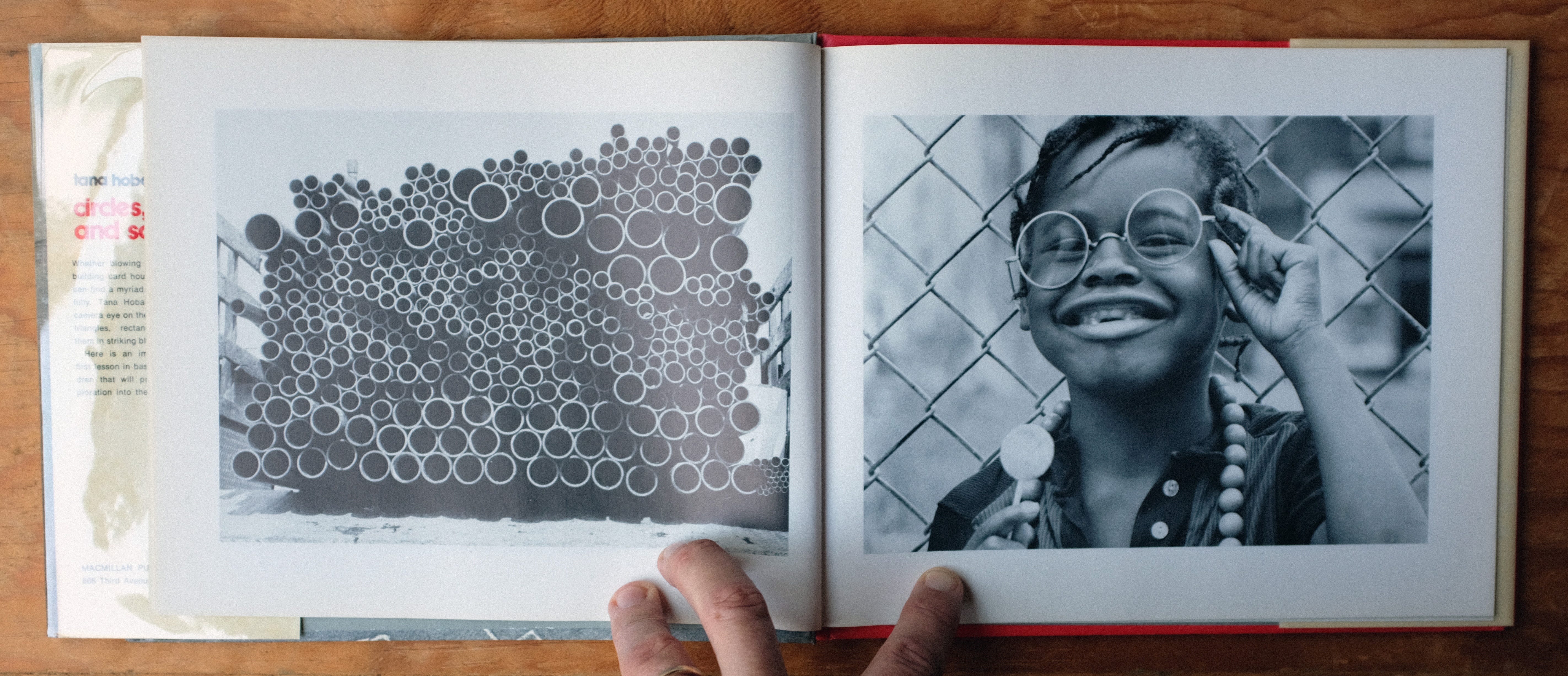
JON: It’s interesting, and I don’t think unfounded, that the kind of speed of life — the kind of way of moving through the world that that implies — we associate especially with children. It feels child-like.
But it’s also basically what so many religions and spiritual practices aim for, regardless of age. The kind of presence it represents is what people say they attain when they are doing well in those practices. It’s a state of peace.
MAC: Wow far out bro.
JON: Hey shut up.
MAC: Let’s do Is It Larger? Is It Smaller?
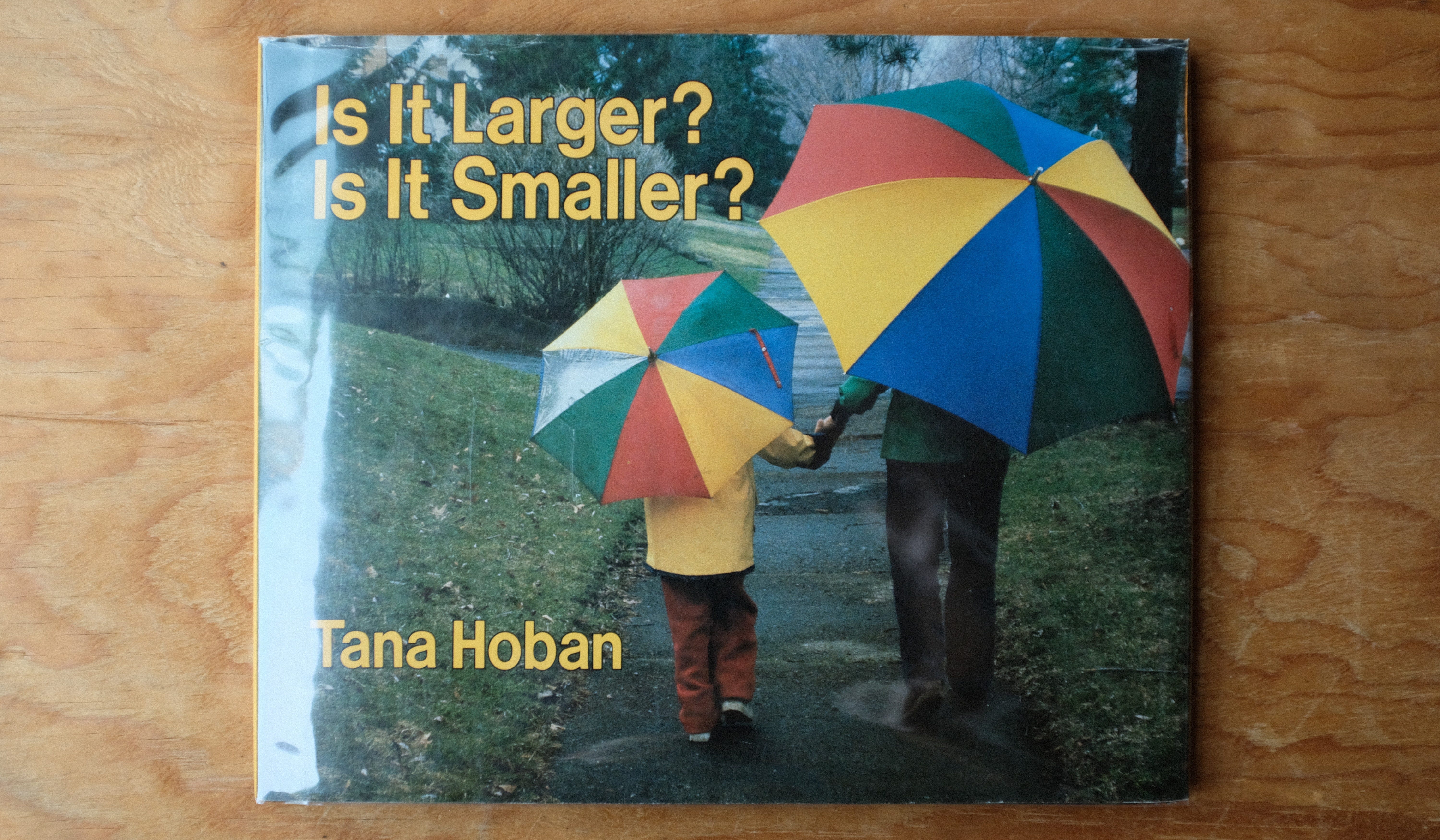
Again, the title is a direct question to the reader (and the only words in the book).
And you can play the game with the cover photo — an adult and a smaller kid with matching umbrellas in two different sizes.
JON: Also notable that both ways of answering the question are kind of correct. One is smaller and one is larger. It’s not a test with an answer. She’s just being playful.
MAC: Inside, in the photos, it’s not immediately clear what we’re supposed to be comparing.
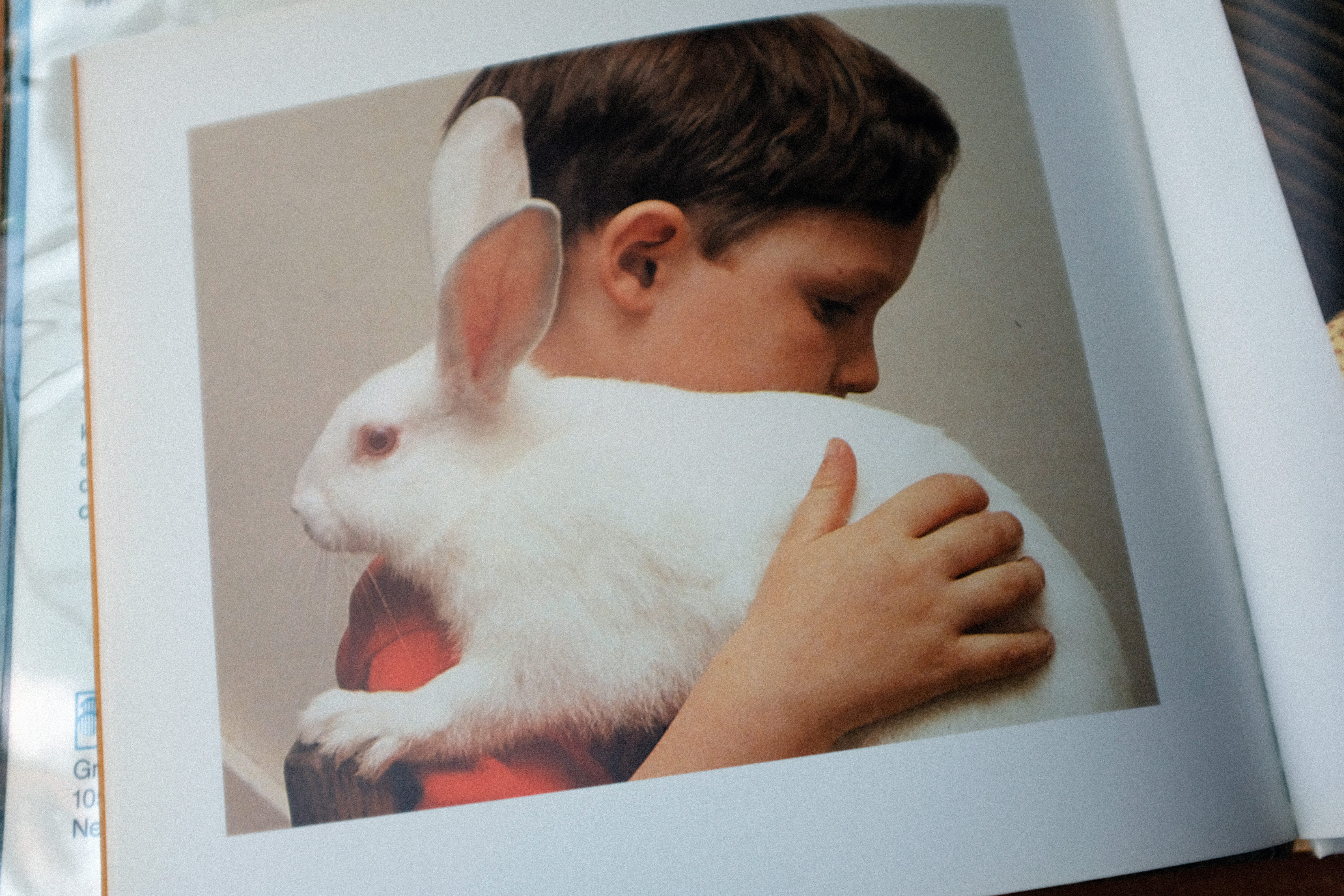
She knows it too. Look at this flap copy:
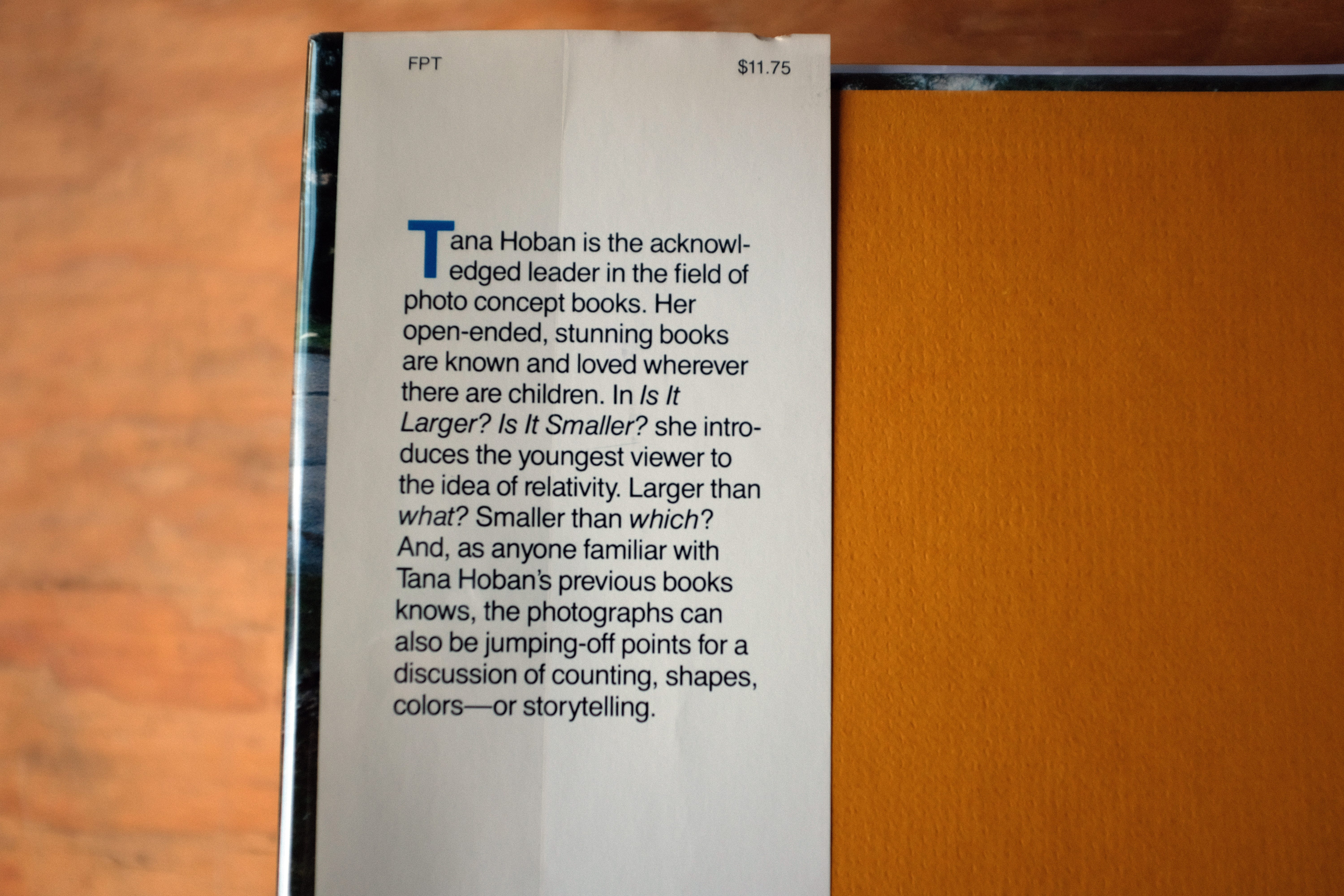
JON: It’s worth asking, maybe, why she pulls this off. Like you could potentially just print out the last ten photos on your phone and say, “These are meant as jumping-off points! Discuss!”
To be clear, I do think she pulls it off. It works — really, really well.
MAC: Readers, why do YOU think Tana Hoban’s ambiguity works? Sound off in the comments!
(prompting discussion and dodging the question 😎)
JON: Discuss!!
Maybe it comes down to the thing we come back to a lot — where she very simply cares as much as she hopes the reader does. Like she really believes in these pictures, in the work. She’s not offloading that.
MAC: This one in Is It Larger? Is It Smaller? kills me for some reason:
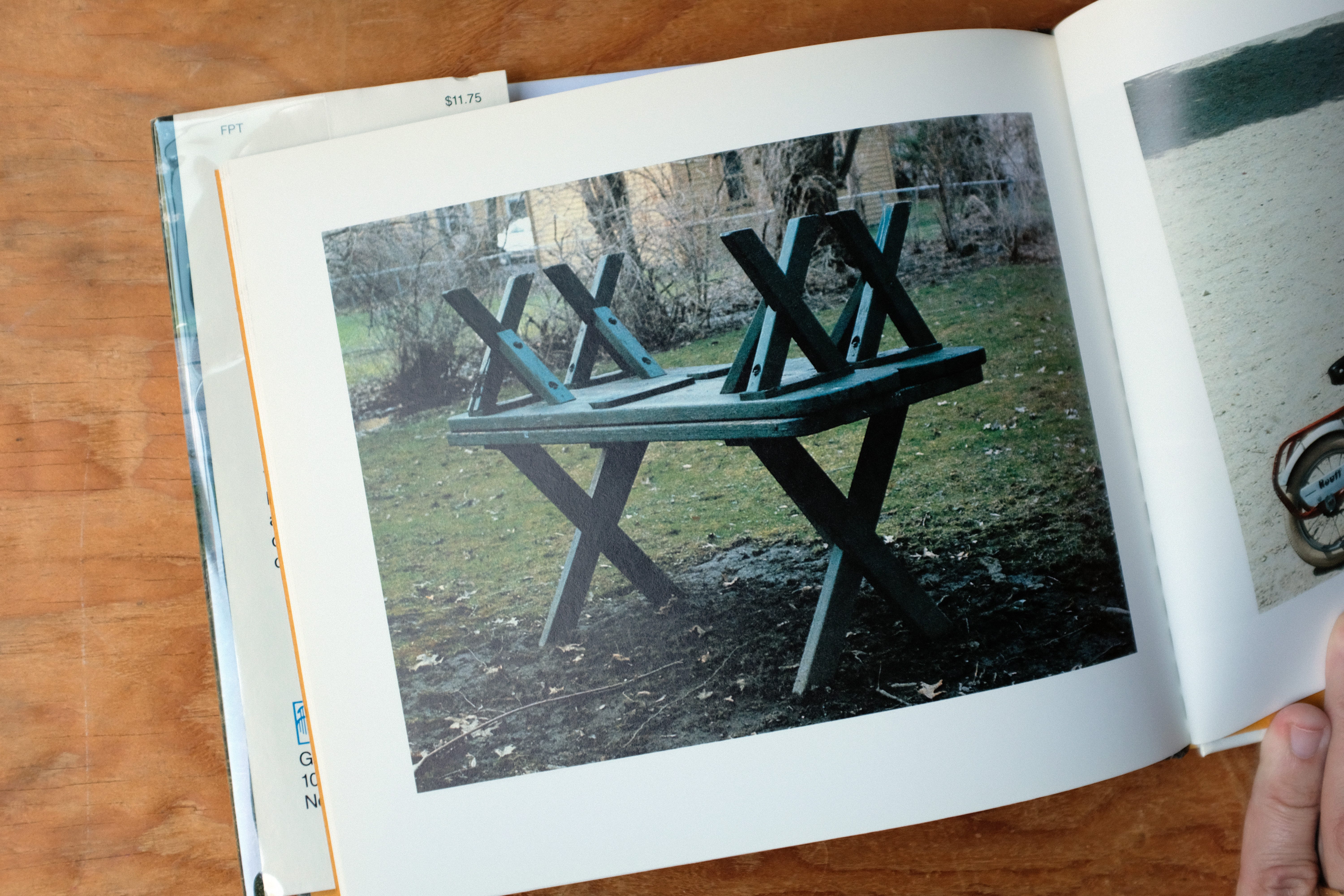
The fact that the tabletops are the same size but the legs, these beautiful X’s, are different sizes.
JON: That toothbrush one does it for me.
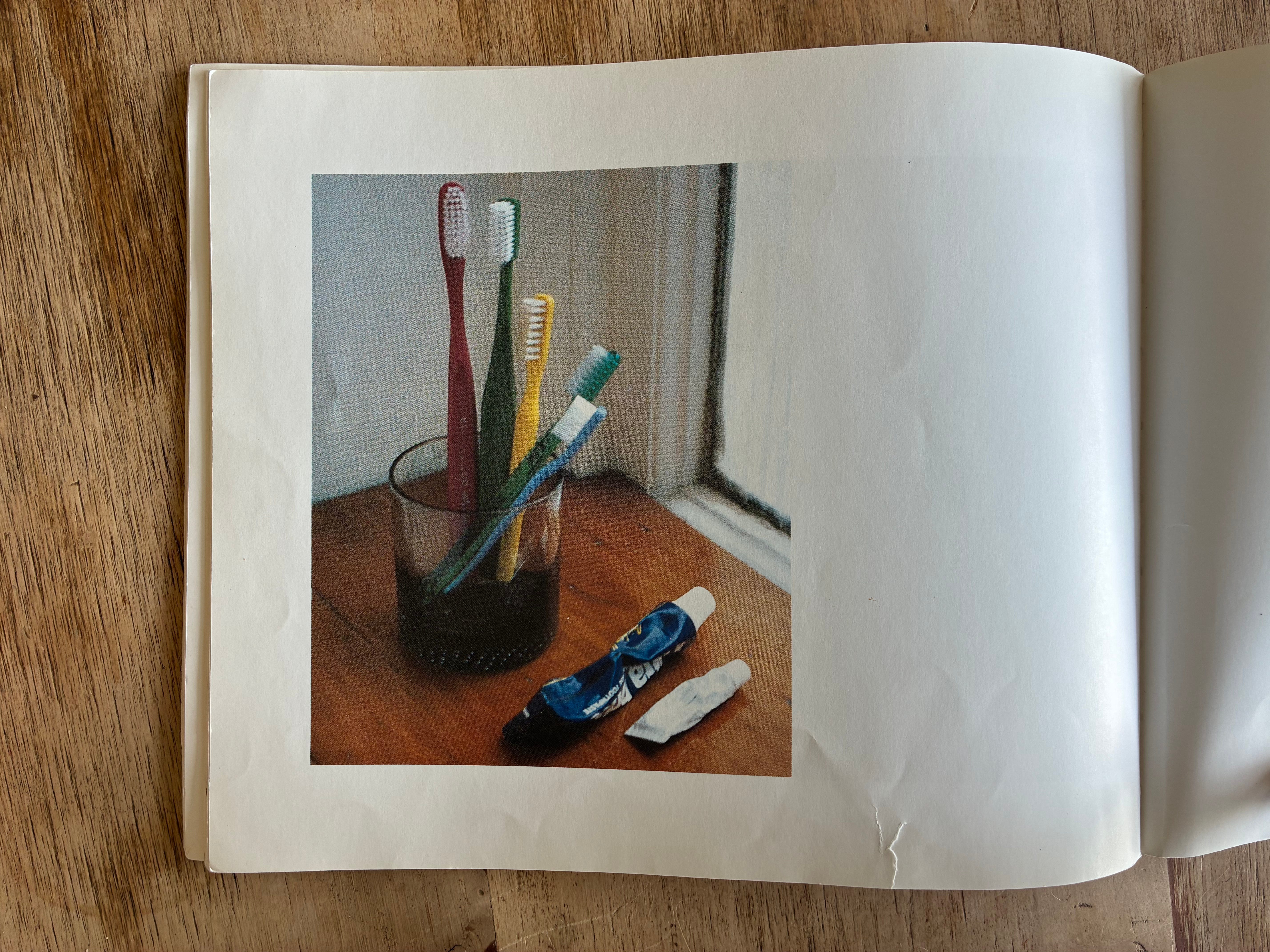
I think part of this — our response here, and what’s so rich about it — is that it’s just doing to us what great photographs, and photographers, do. We’re kind of at a loss to explain our reactions here, and that’s what great images are supposed to do.
MAC: And the form of the picture book is helping here too, right?
Putting these two sentences, “Is It Larger? Is It Smaller?” — words that don’t always make immediate sense next to the picture in a way that is generative and exciting — that’s making this rich.
JON: Let’s do this one.
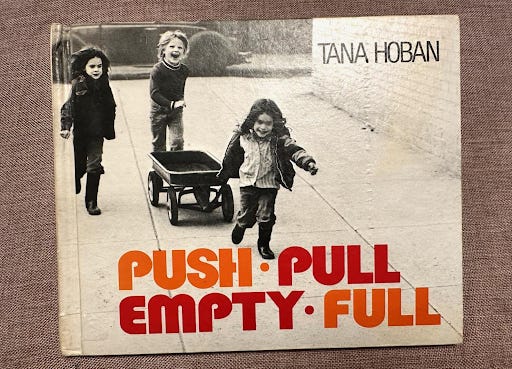
The “design” thing you mentioned earlier, being kind of part of the premise of the book, is so strong in this one — particularly its use of the spread and the gutter.
MAC: Right, two concepts and balanced, in some sort of tension, on the verso and recto of every spread. Often, but not always, a single image crosses the gutter.
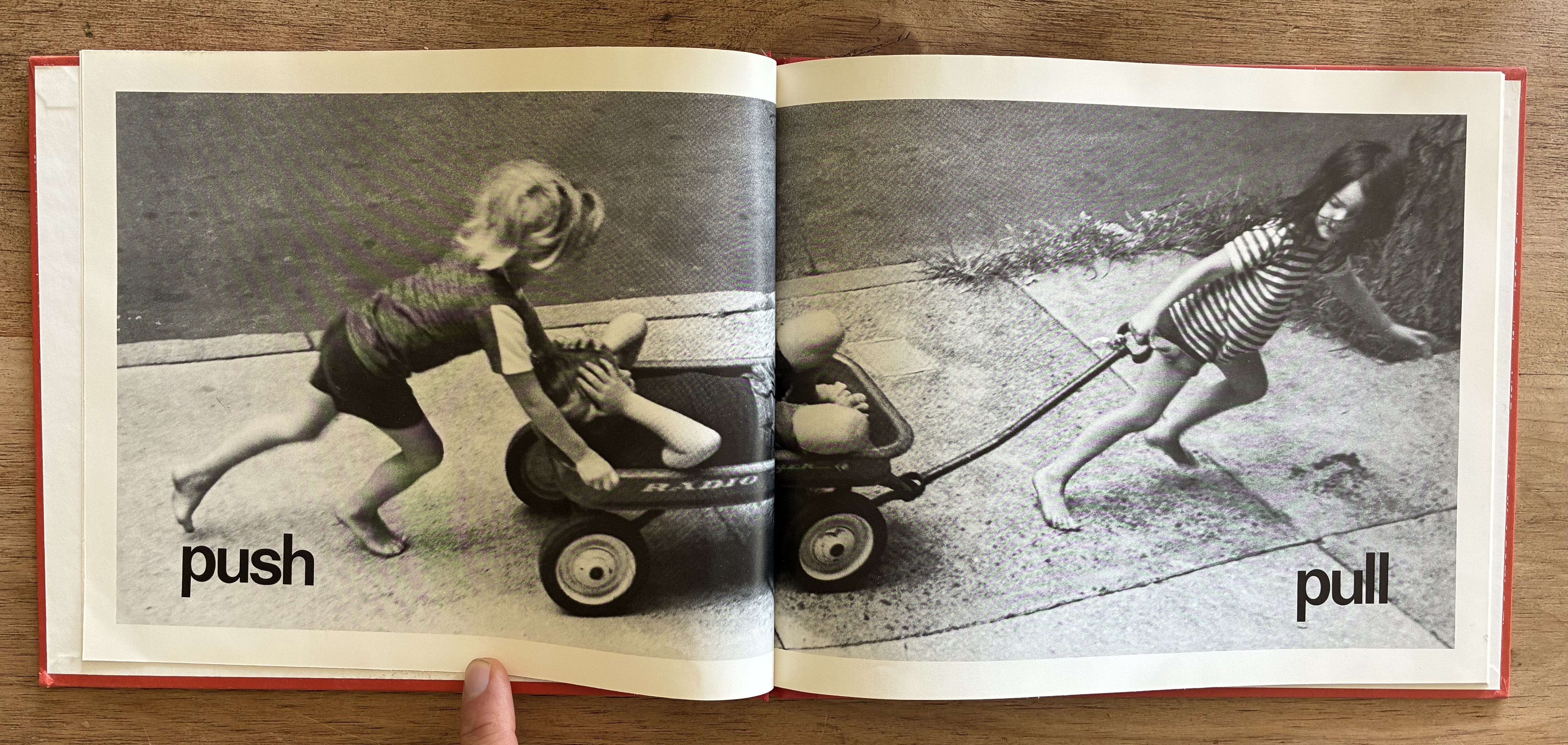
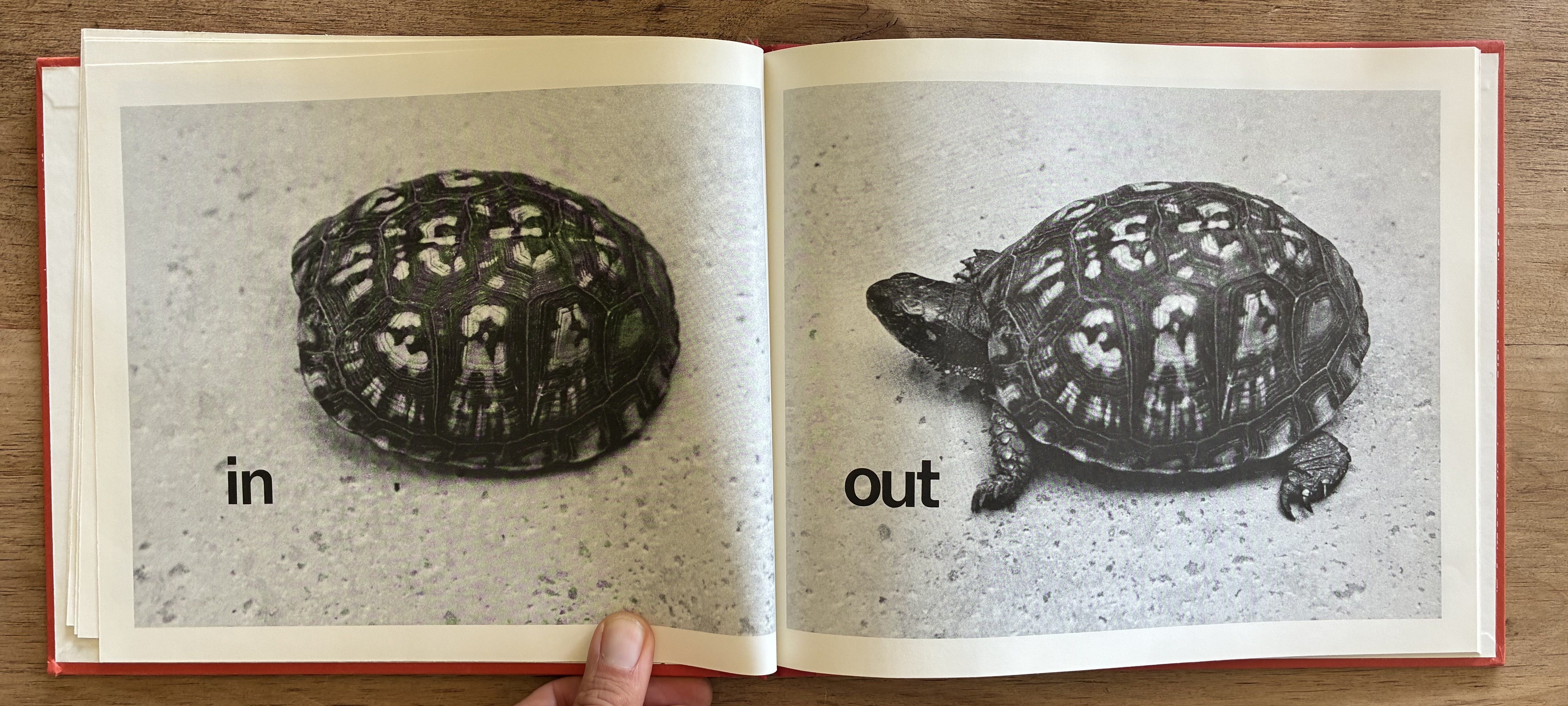
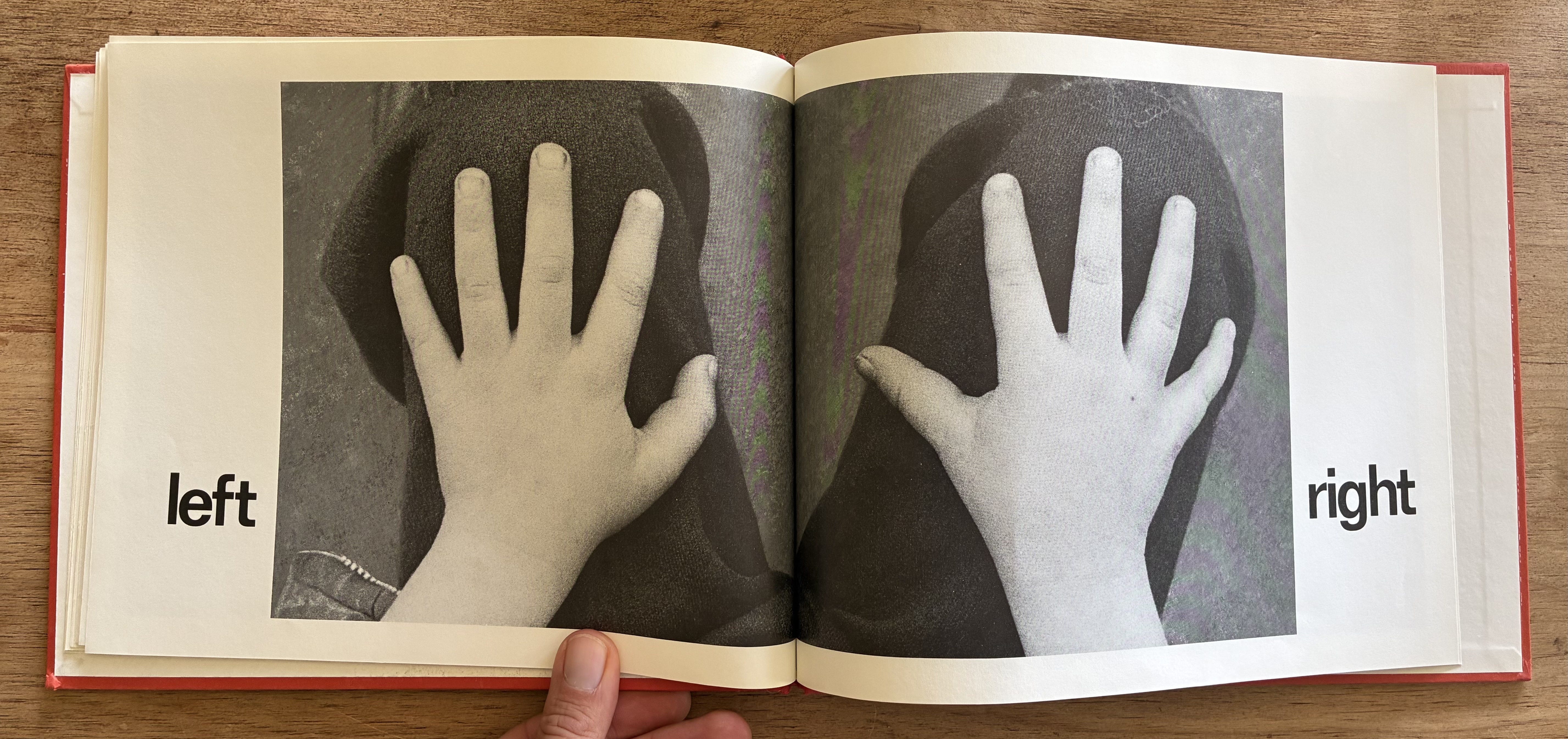
That last one is like... one of the best book spreads I’ve ever seen.
MAC: Say why!
JON: Ugh — it’s just using everything!!
It’s using the left and right of the spread, but also of course using that those are your left and right hands. It’s using the formal plainness of the type, which is clear and readable for the youngest audience, against the spontaneous, slightly asymmetrical photograph that is alive and natural-feeling even though it’s also the clearest angle to present that idea from. The words themselves are aligned with the hands on the page instead of being centered, height-wise.
And also — it’s a kid’s hands and knees, and there’s a decent chance the book would be sitting on the kid’s lap just like that when it’s open to this page, which blows my mind.
It’s just having so much fun.
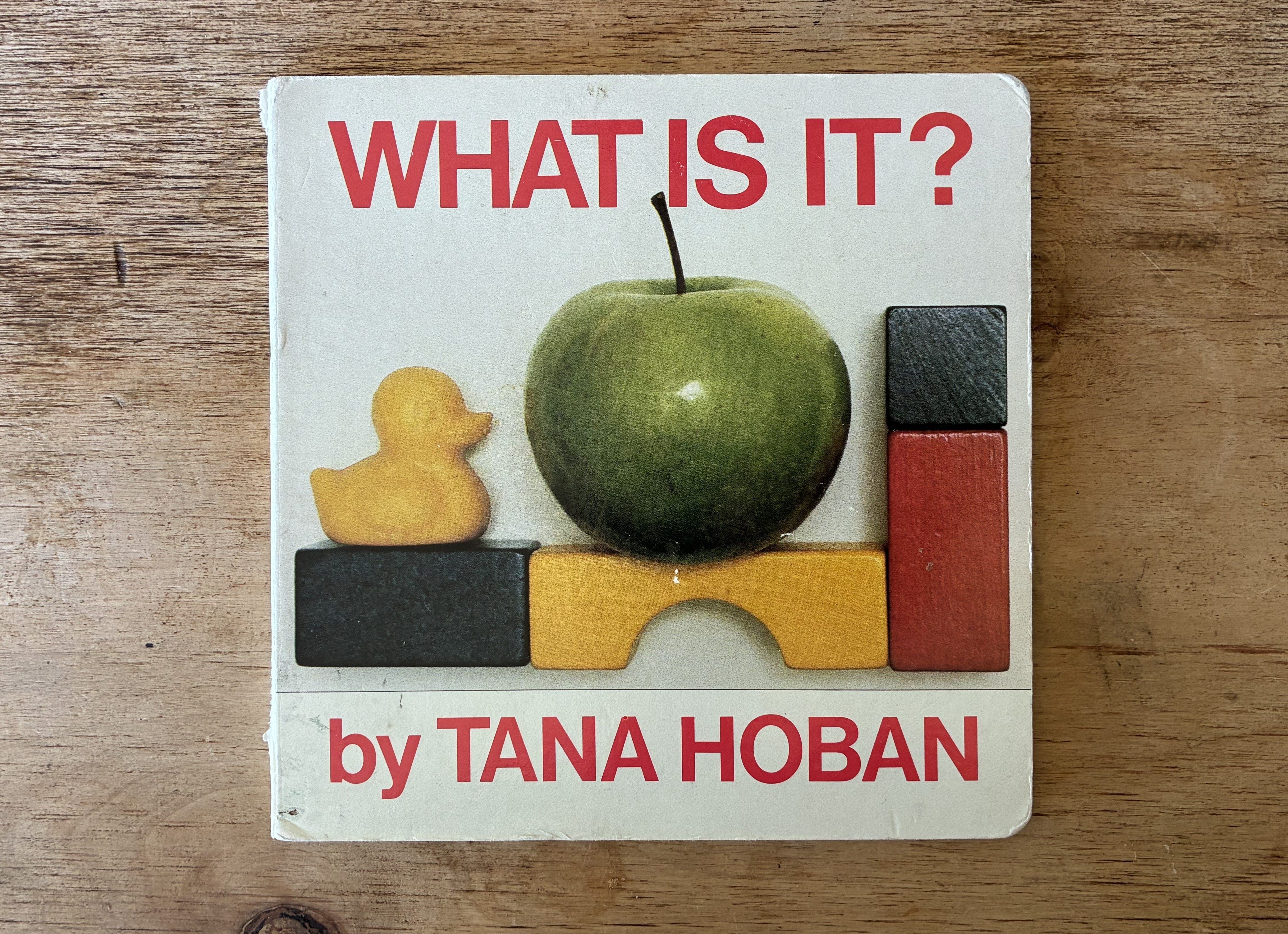
There are no words in this book either, besides the title.
MAC: Man, that title with that photo!
I mean, of course you can identify the individual objects, which is fun.
There is also this provocation about the whole scene: WHAT IS IT?
JON: Hahaha yeah — and it’s not really anything, exactly!
MAC: WHAT THE HELL IS IT?
JON: Tempting to Photoshop that title onto that cover, tbh.
MAC: Readers, YOU Photoshop it!
JON: Boy this is gonna be QUITE the comments section.
MAC: What could go wrong.
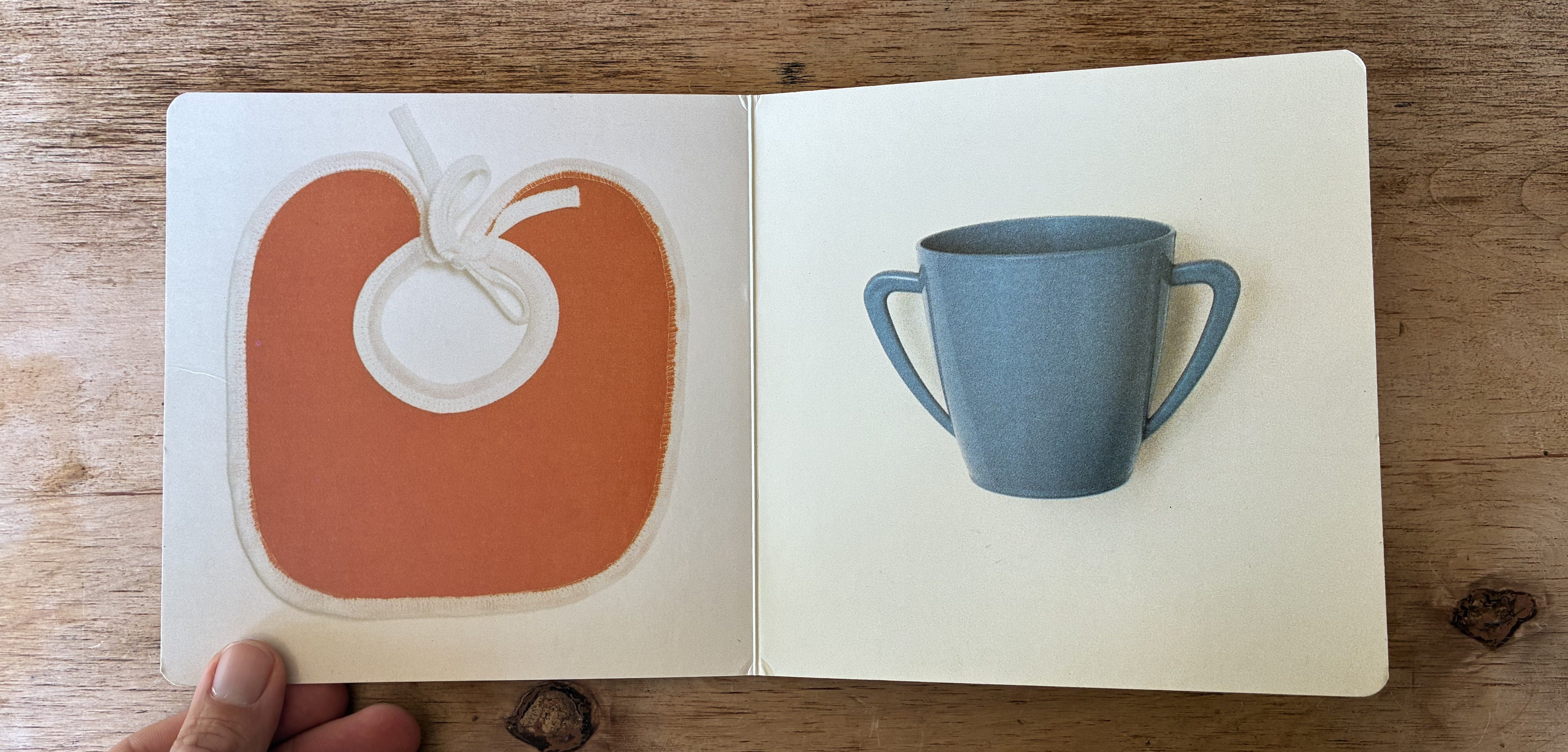
JON: Also, for a lot of these, there’s a few different right answers for what these objects are, what to call them! Or at least not one definitive name.
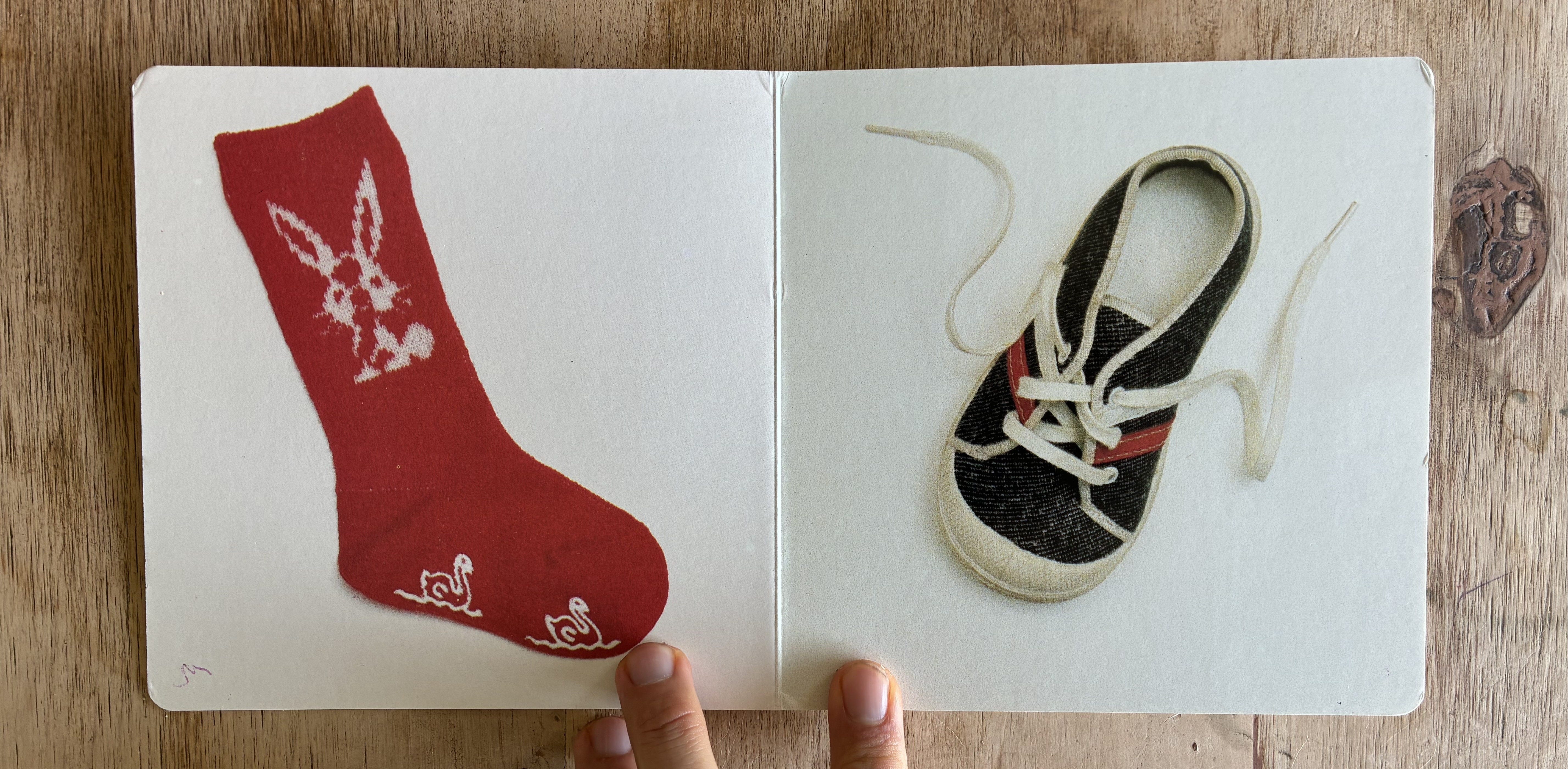
JON: Why, Mac, is it so badass that this book ends without a word?
MAC: “Mac, make yourself irrelevant.”
“Talk yourself out of a job.”
JON: “You’re off the team.”
MAC: Yeah, this book exists in relation to other word books, right?
Like other books for kids this age would put SOCK and SHOE on the page.
And she knows that.
She knows that we know how these things work.
And this one puts the grown-up on the hot seat.
And makes them say what it is.
It’s a provocation.
JON: Or the kid.
MAC: Yeah, but since it’s a board book, and there’s, like, a bib, I’m picturing babies here.
And you would be like, “Sock.”
And then the baby is pointing excitedly and getting mad when you keep saying sock, and you’re like, “Oh, that’s a rabbit.”
“Well, it’s a picture of a rabbit.”
“On a sock.”
“And there are ducks.”
“And I guess I should say that we’re looking at some sort of yarn here.”
“Also, red.”
JON: Right. She’s not even choosing clean, iconic examples of these things. They’re real ones — complicated ones.
MAC: And we’re talking to babies about how complex the real world is.
JON: Here’s another question. We talked before about how sometimes photographic picture books can look like the picture is trying (and often failing) to do the work of a narrative drawn or painted illustration — teddy bears on the beach, etc.
It’s hard to say why it often doesn’t work, but somethin’s up for sure. Here, I submit that THIS idea, in “What Is it?” would not work if it was illustrated with a drawing or painting. You would be a lot less interested if it were the exact same book, but with drawings of a cup or a sock.
Why is that?
MAC: And if you had to draw a sock, you would probably never draw a sock that way. One with rabbits and ducks on it.
JON: Right. The answer seems to be in there somewhere, actually.
MAC: Somewhere...
JON: Hoban is responding to the world around her. She’s not controlling it.
MAC: Could be a working definition of photography, right?
JON: You have (ideally) full control over what you’re drawing. You choose the shape and color. She’s just objectively looking at something with us.
MAC: It’s an art form energized by this tense negotiation between the world you can control and the world you can’t?
JON: Right — and that’s the question. Is photography objective? Can it ever be?
I like how that giant question comes up when it feels like we are nearing the end of this post.
MAC: Before we end, I want to show one more book!
Actually two more.
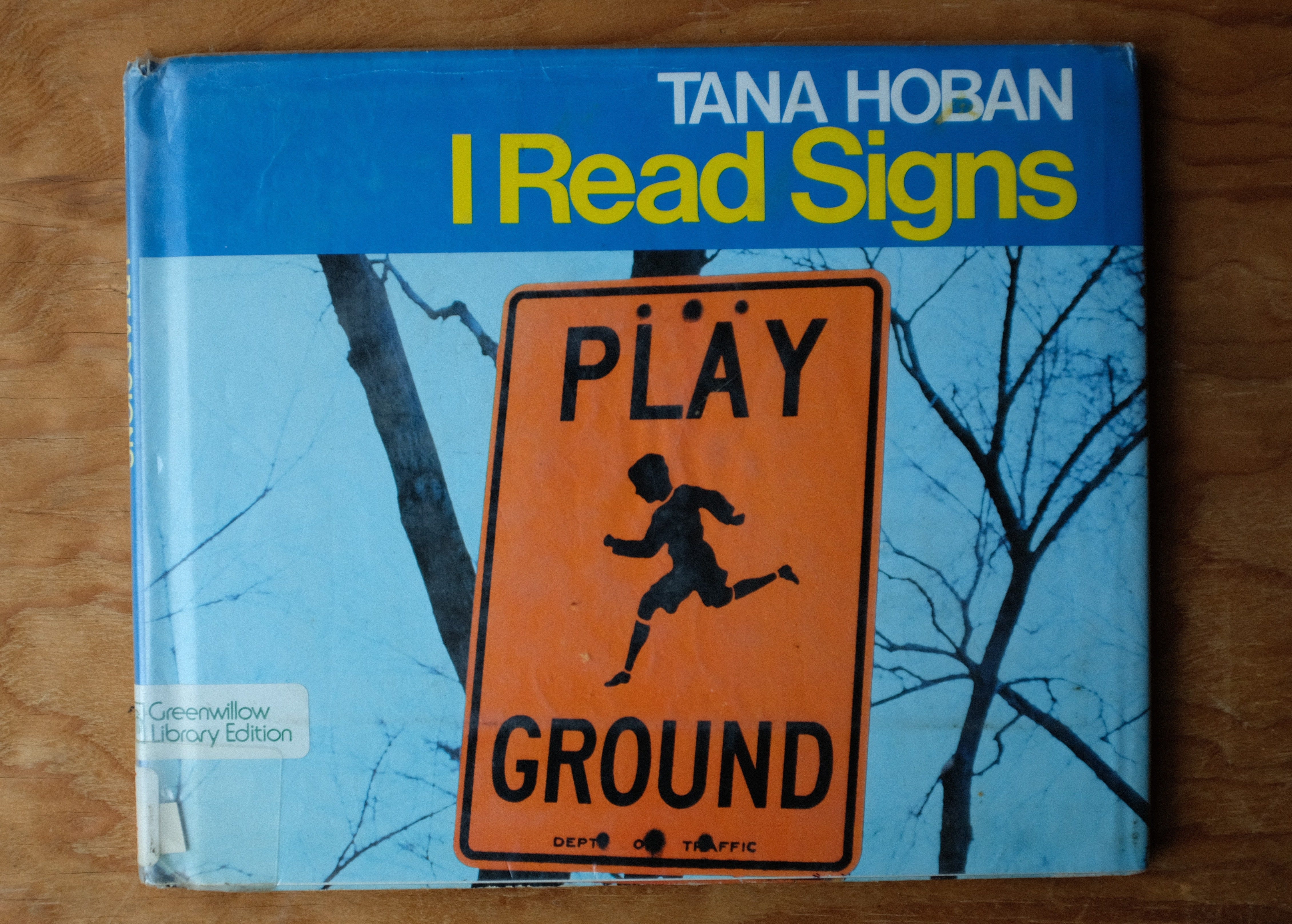
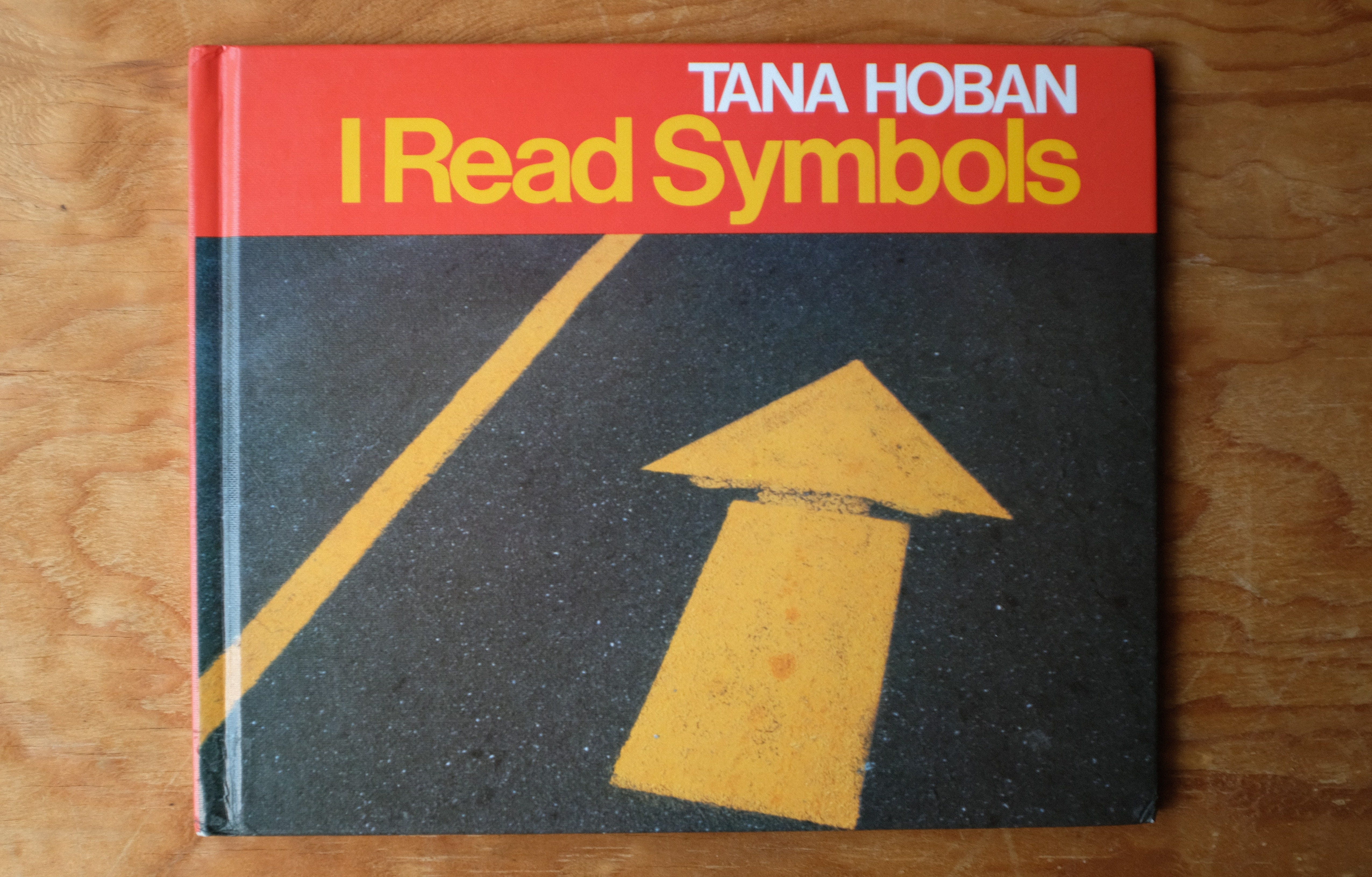
These two books show signs and symbols in the world around us.
And part of Hoban’s gambit here is to shock adults with how much pre-literate kids understand about letters and other symbolic forms of communication.
And guess what — it worked, because my son shocked me when I read these to him last year.
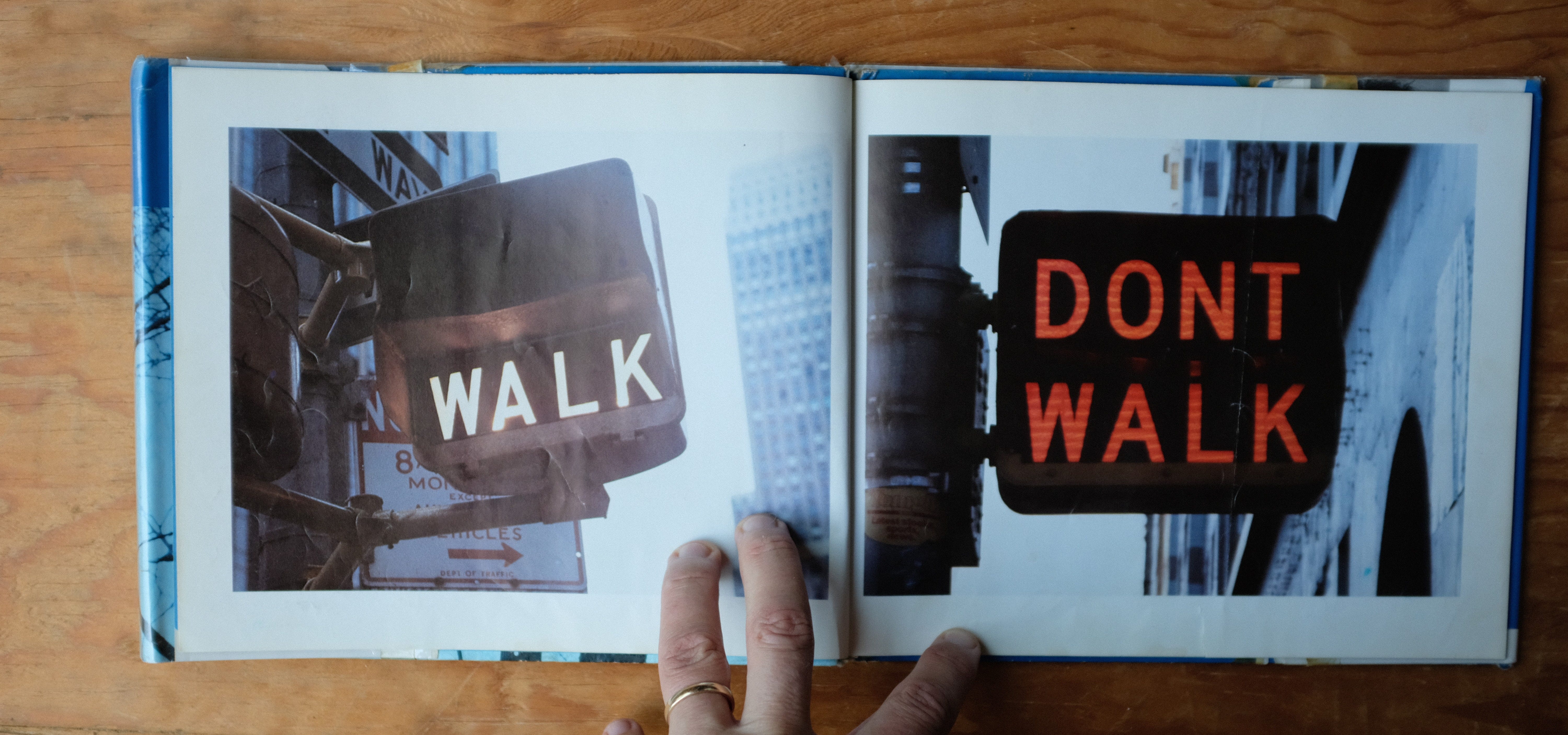
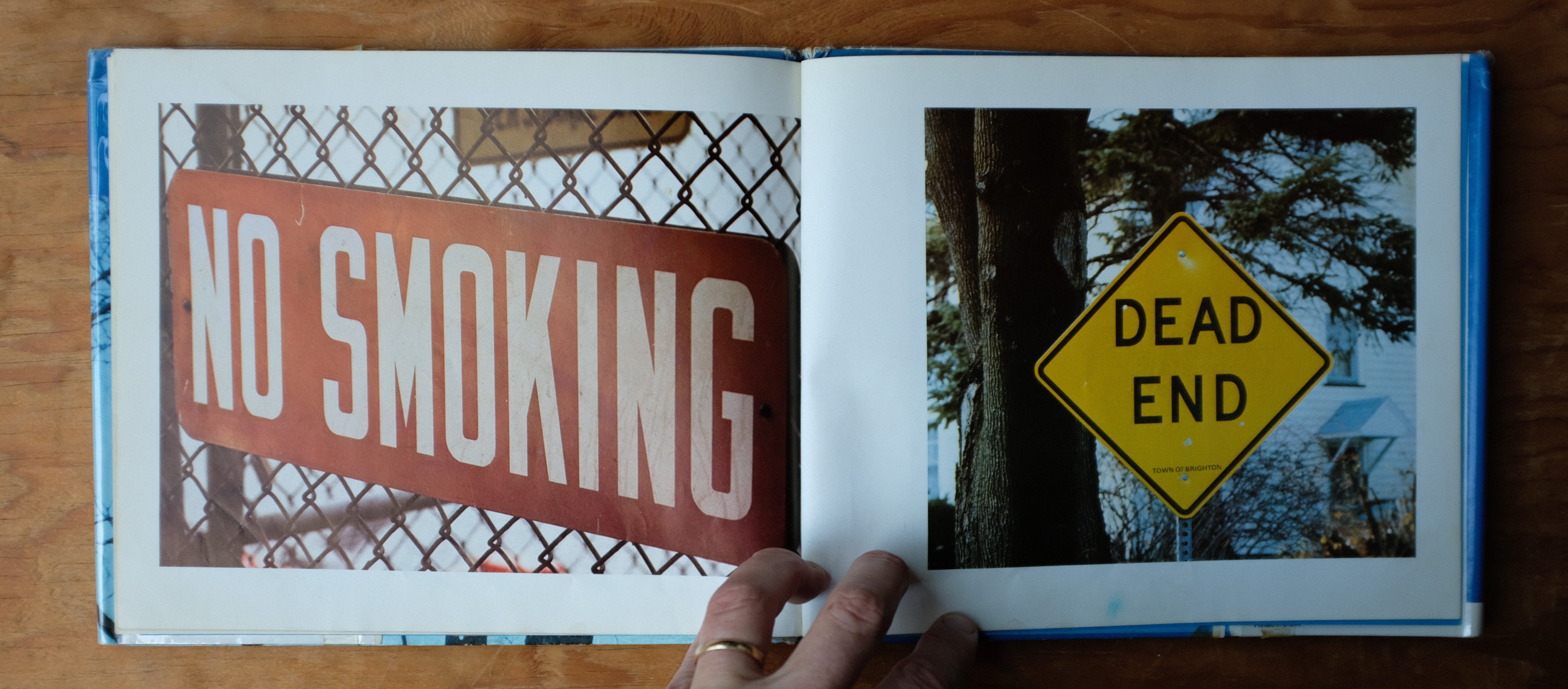
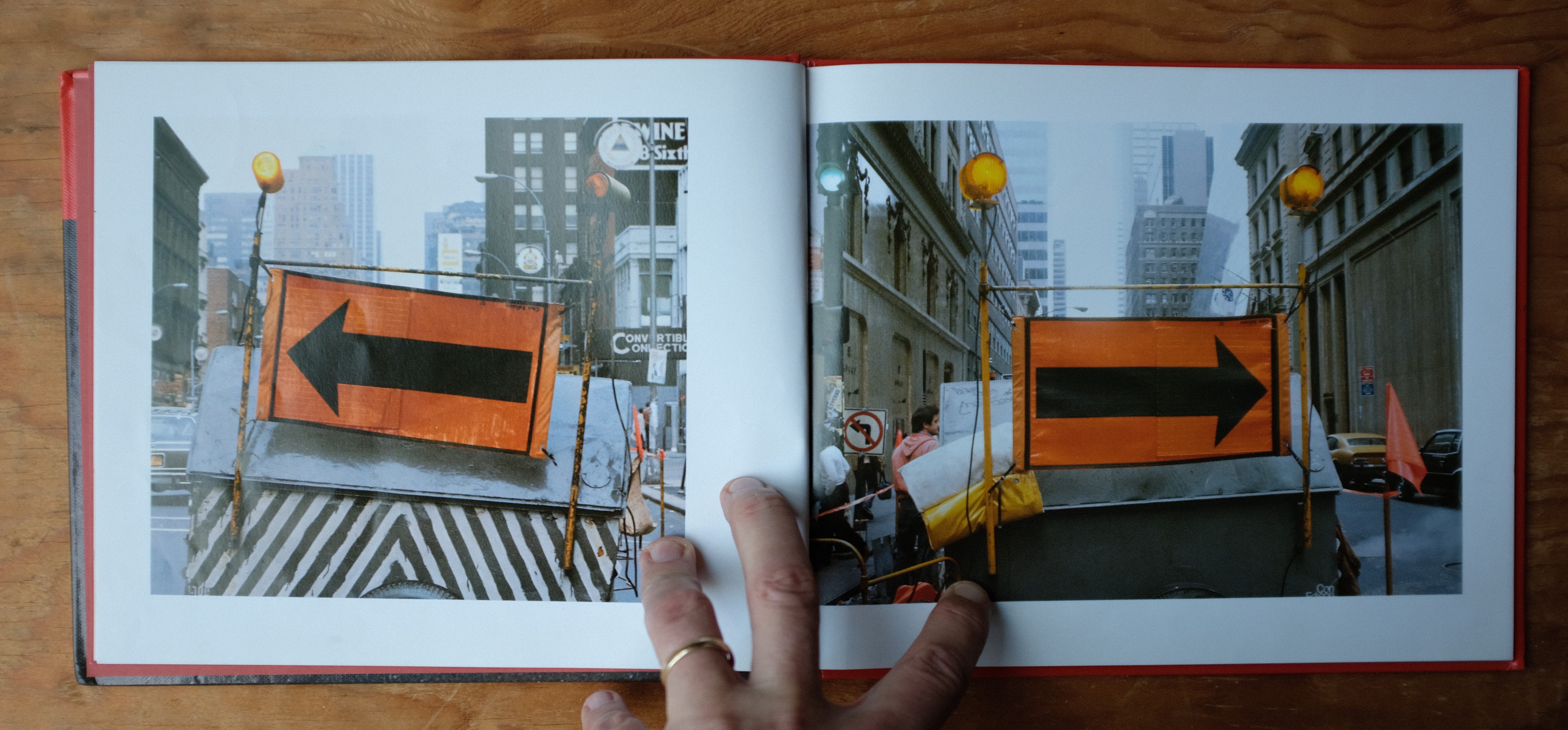
JON: Again, for some reason it is so badass to me that these are not taken as straight on as possible and all centered and stuff. Even the WALK / DON’T WALK — she doesn’t take the bait.
She’s using their own design — that these signs are meant to be as legible as possible from any angle — to her advantage. They look correct and familiar.
MAC: Both these books, and really her whole body of children’s books, are premised on kids’ intelligence and their wild ability to notice stuff.
Again, the back cover copy is great.
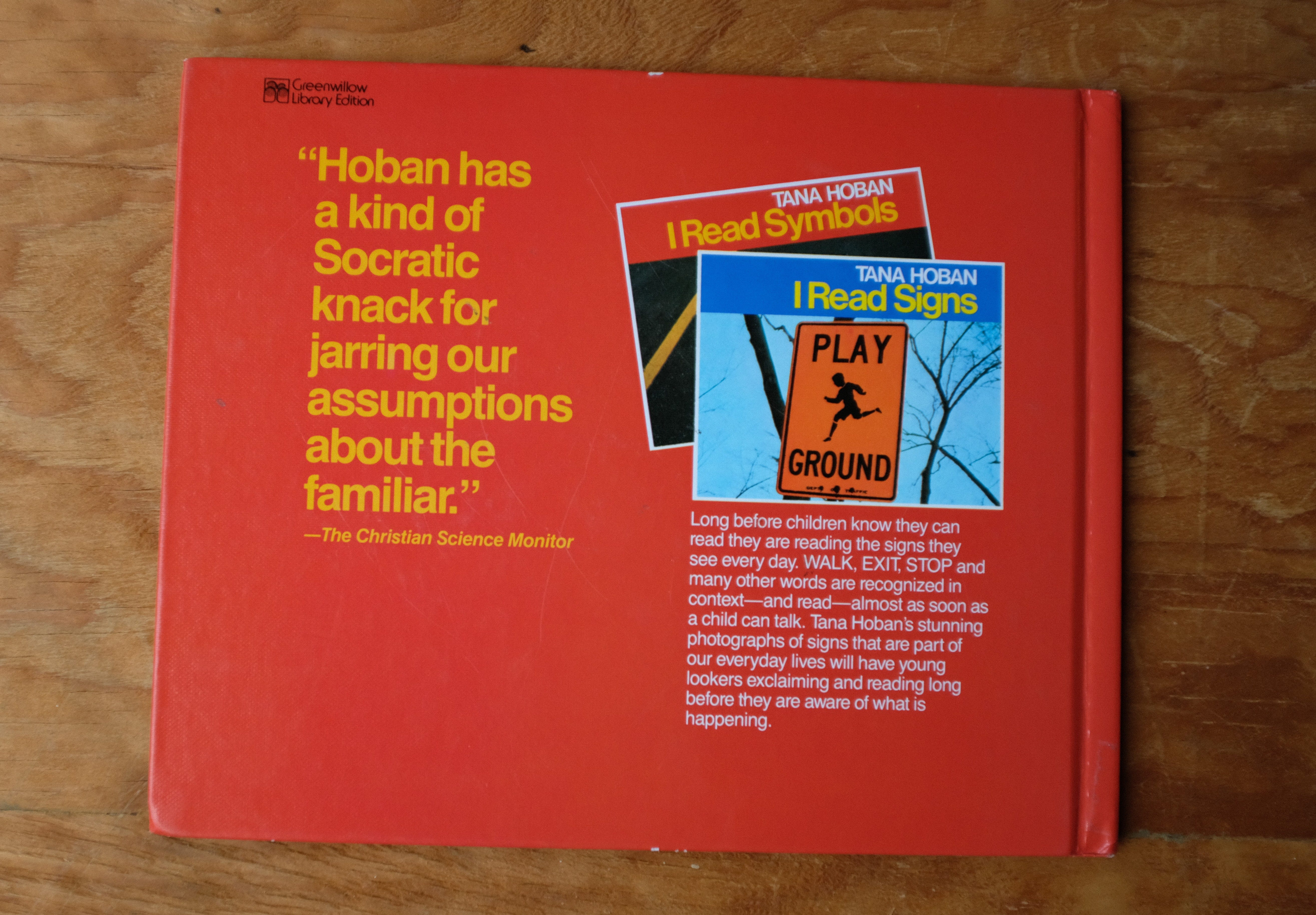
(Whoever was writing Hoban’s copy, I salute you.)
Also, that praise quote.
JON: Yeah. Did you write that?
MAC: Haha I know — really sounds like my steez.
JON: Did you write reviews for The Christian Science Monitor in the ’80s?
MAC: Look, I just want to say that a major national newspaper praising a children’s writer’s “kind of Socratic knack” —
It was a different time (complimentary).
JON: Speaking of a different time — we found a video interview with her and her editor.
Tonally, it’s very... dry. But honestly this is the kind of tone and straightforwardness we crave when talking about this work.
This interview, and the whole way they are talking about the work, is actually partly what got us to start this newsletter. We wanted to talk about the work this way.
MAC: But maybe not quite as dry.
JON: Does it sound a little like when they played old episodes of Krusty the Klown where they’re just talking about redistricting? Yes.
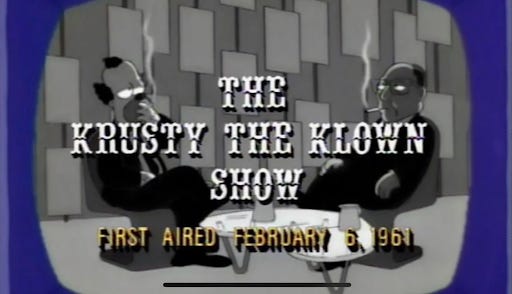
MAC: (complimentary.)
JON: But we also think it’s really interesting to hear one of the coolest people to ever do it talk about her work.
MAC: What do YOU think?
JON: Our poor comments section.
Wow that garbage photo. Publishers today would NEVER!!!!
How have I never pieced together that the Hobans were related - also here for the gossip column on various husband/wife children’s picture book duos :)