

An excerpt from Make Believe, Mac's first book for adults
Make Believe comes out Tuesday

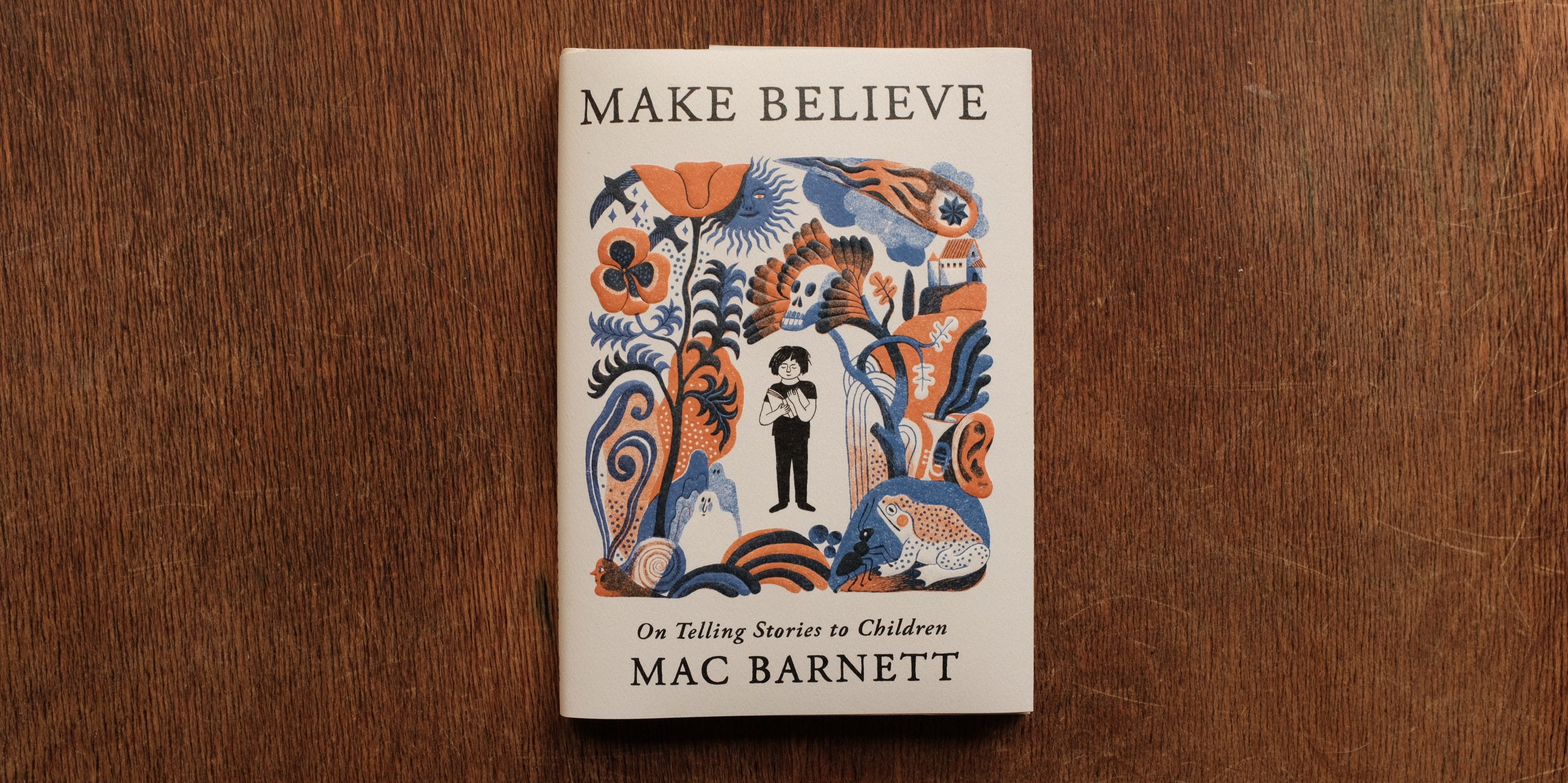
Mac’s new book Make Believe: On Telling Stories to Children — chosen by booksellers as the #1 Indie Next Pick for May — comes out Tuesday. Here’s a gift link to Gregory Maguire’s review in the New York Times. You can order a signed copy from East Bay Booksellers or pick it up from a bookstore near you.
Or come to one of Mac’s upcoming tour stops!

Make Believe contains essays about children’s literature written by Mac, and also a Venn diagram drawn by Jon.
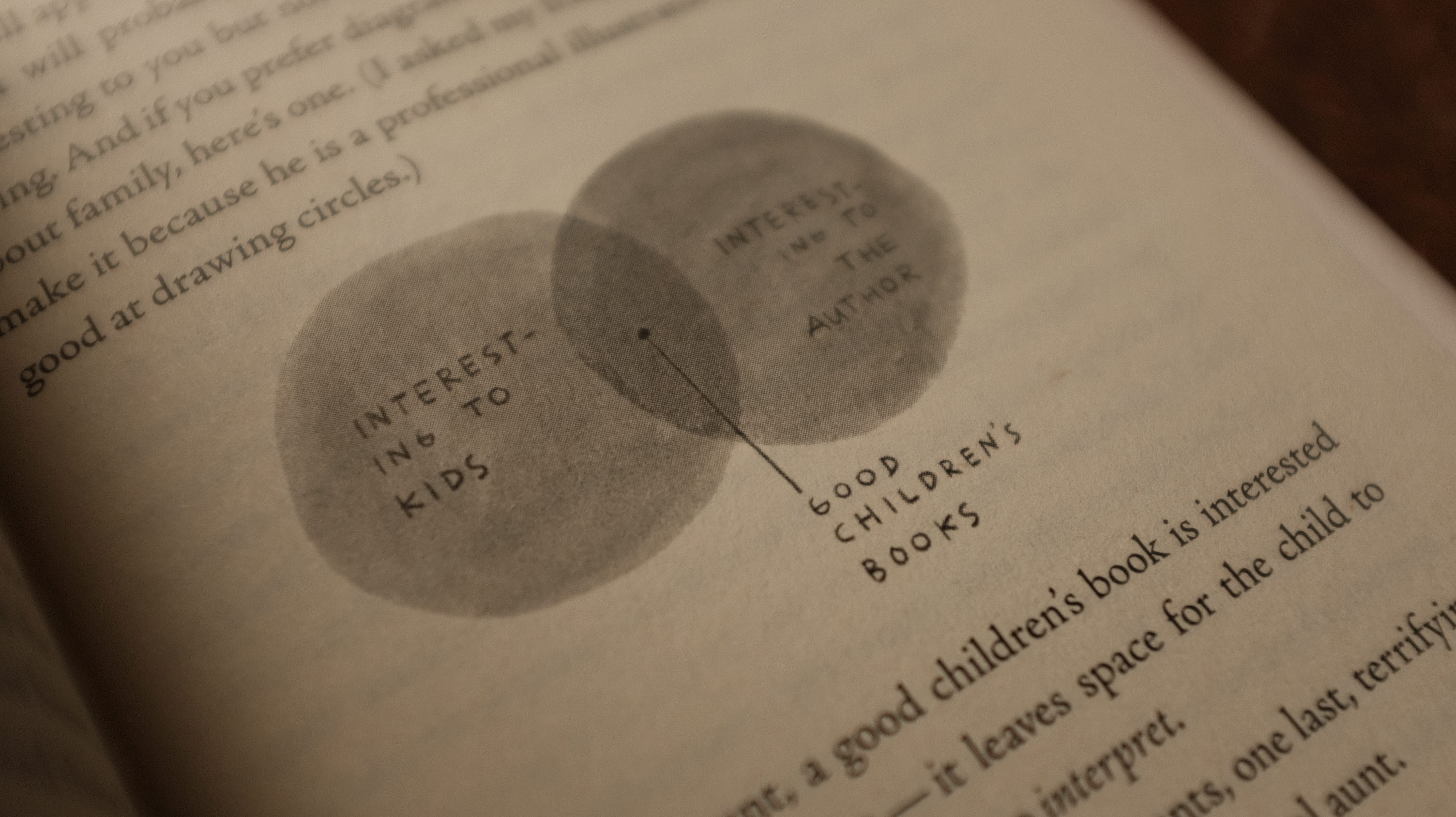
Here’s an exclusive look inside:
By treating the child’s experience with dignity and compassion, the children’s writer can often get to the very essence of human experience. And what are “childish enthusiasms” but the ability to see the world with the freshness and wonder that literature requires? The child who stares and marvels at the workings of a garbage truck sees the garbage truck better than adults do. The kid who breathlessly recounts horse facts, who finds it overwhelming that such an amazing creature actually exists, is correct.
My son loves the moon. He never forgets to look for it, and he points it out to me every night as soon as it gets dark. “Hey, the moon.” He watches the moon change. He delights in its beauty. The moon gives him real joy. In this way he is like a lot of other three-year-olds and unlike most adults, excepting the poets and astronomers who, like my son, remind us to look up at the sky.
Anyone who spends time with children knows that they ask questions — big questions that are hard for us to answer. What is love? Does god have a face? Why do we dream? What happens after we die? Why do people get sick? Do trees have feelings? Why do we have to follow rules? Do dogs find things funny? Why do people fight wars? How do our brains work? Why is my friend nice to me one day and mean the next? Why do I have to clean my room? These are many of the same questions that writers, for centuries, have been asking. The child and the writer are both engaged in the same huge task: trying to figure out what it means to be a person in the world. The children’s writer must always respect the child. It is our job to approach the reader in a spirit of play and fellow feeling.
On the other hand, the adults who read books to kids — parents, teachers, librarians, caregivers — are authority figures. Their relationship to children is, most of the time, governed by a different set of responsibilities. So for these adults, sharing a story with a child is an opportunity for hierarchies to be temporarily abandoned, even joyously inverted: If you’ve read good books to kids, you’ve probably been surprised when they noticed a detail in the pictures that you didn’t see, or been humbled when they understood something about the story you couldn’t. That’s because children tend to be better readers — more open-minded, more diligent, and more passionate — than adults. (No offense.)
Kids are certainly more willing to engage deeply with stories that demand the reader’s active participation, books we might call art fiction or literary fiction. This surprises a lot of adults, who assume that if something is difficult for a grown-up, it’ll be much harder for a child. But that’s not true for climbing trees or coming up with good names for pets, and it’s not true for reading. The genius of children is liberating, making possible new and ambitious fictions.
Interested in ambitious fictions (and ambitious merch)? Check out these links below.
Just popping in to say the sanctimonious social media posts over one sentence are just so, so dumb. So many otherwise intelligent people completely missing Mac’s point. Also, “crud” is just a very funny word. Love the book.
I literally sat my family down a few days ago and told them for Mother’s Day I want each of them to make me a venn diagram card, content their choice.
Also, what’s with the snubbing of the Midwest? I’m trying not to take it personally but