

Some Page Turns We Like
There was no going back.


Deep dives on great picture books are here.
We recommend picture books here.
Mac will be in conversation with Jennifer Garner at the 92nd Street Y on December 5. They’ll be talking about — you guessed it — picture books. This is an event for adults. The event is in New York, but if you can’t make it, you can buy a ticket to watch the livestream. Tickets here.
The Looking at Picture Books Shop is here.
Last week we talked about how to write to the page turns in picture books, looking at some examples from a book we made, Extra Yarn. This week we thought it would be fun to look at a couple of great page turns in other people’s picture books.
Henry’s Awful Mistake by Robert Quackenbush
In Henry’s Awful Mistake — part of Robert Quackenbush’s series about a hapless, lovelorn duck — Henry spots an ant in his kitchen while cooking dinner for his “friend” Clara. Worried that Clara “might think his house was not clean,” Henry is resolute: “The ant had to go.”
Things, as always, work out poorly for Henry. The book is beautifully structured. Every page turn is an escalation of Henry’s misery. Quackenbush lays out every spread the same way. An illustration on the verso, text on the recto, both set in frames. This formal design serves the comedy well. Quackenbush often repeats compositions, which give the page turns a flipbook quality, allowing him to pull off slapstick and physical gags that you’d think would be better suited to animation than picture books.
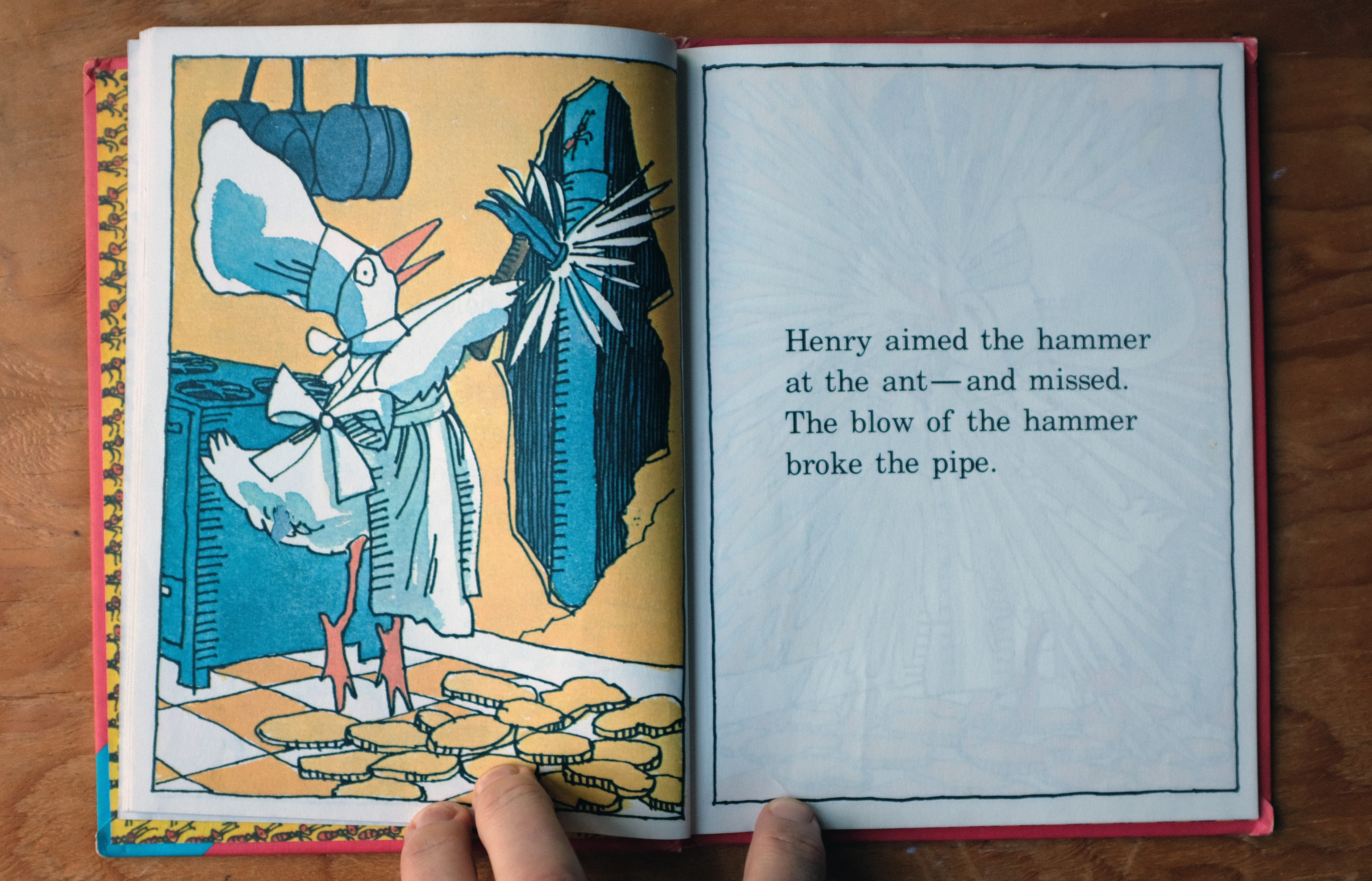
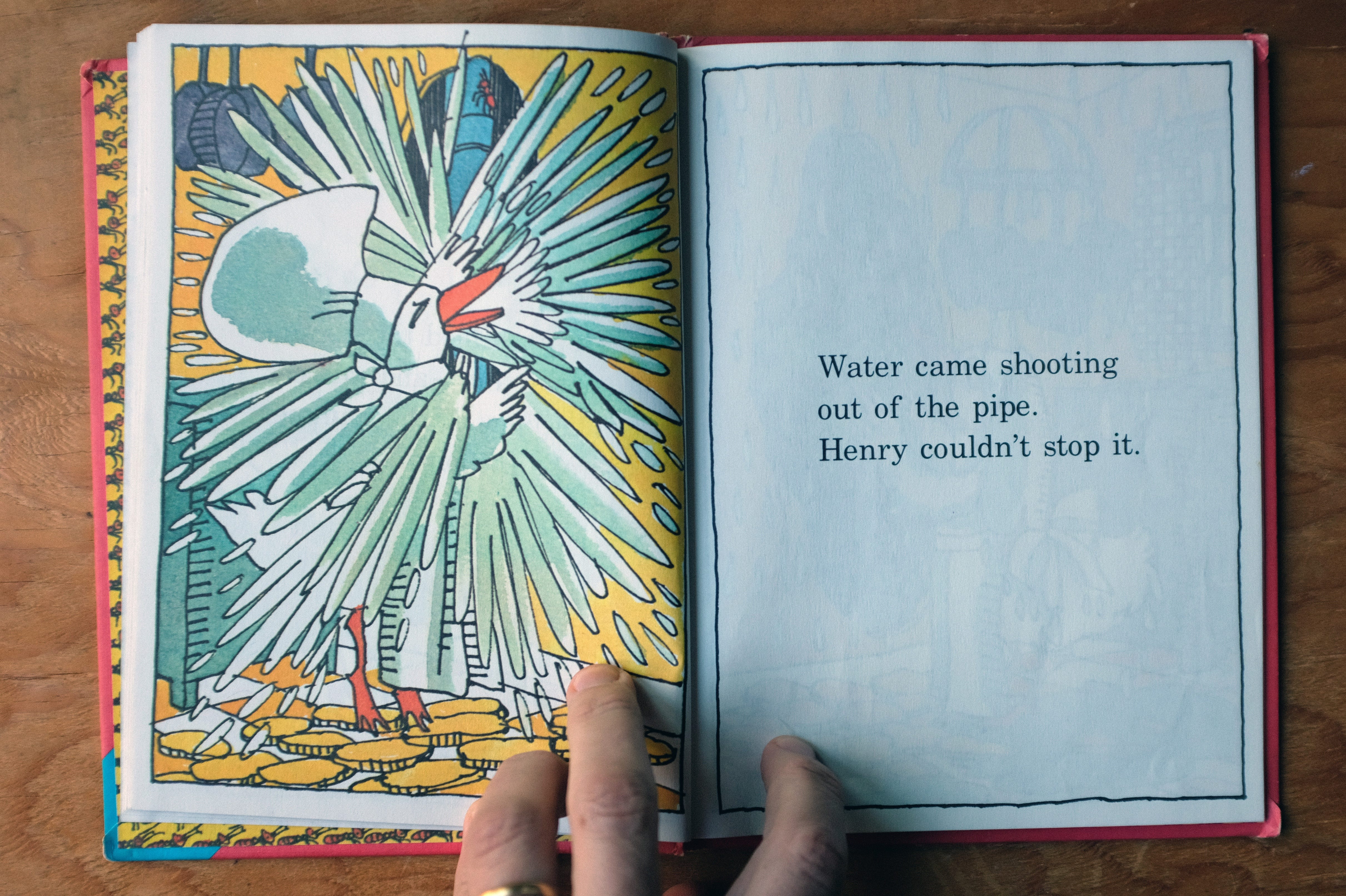
I love that page turn! But it’s not my favorite in the book.
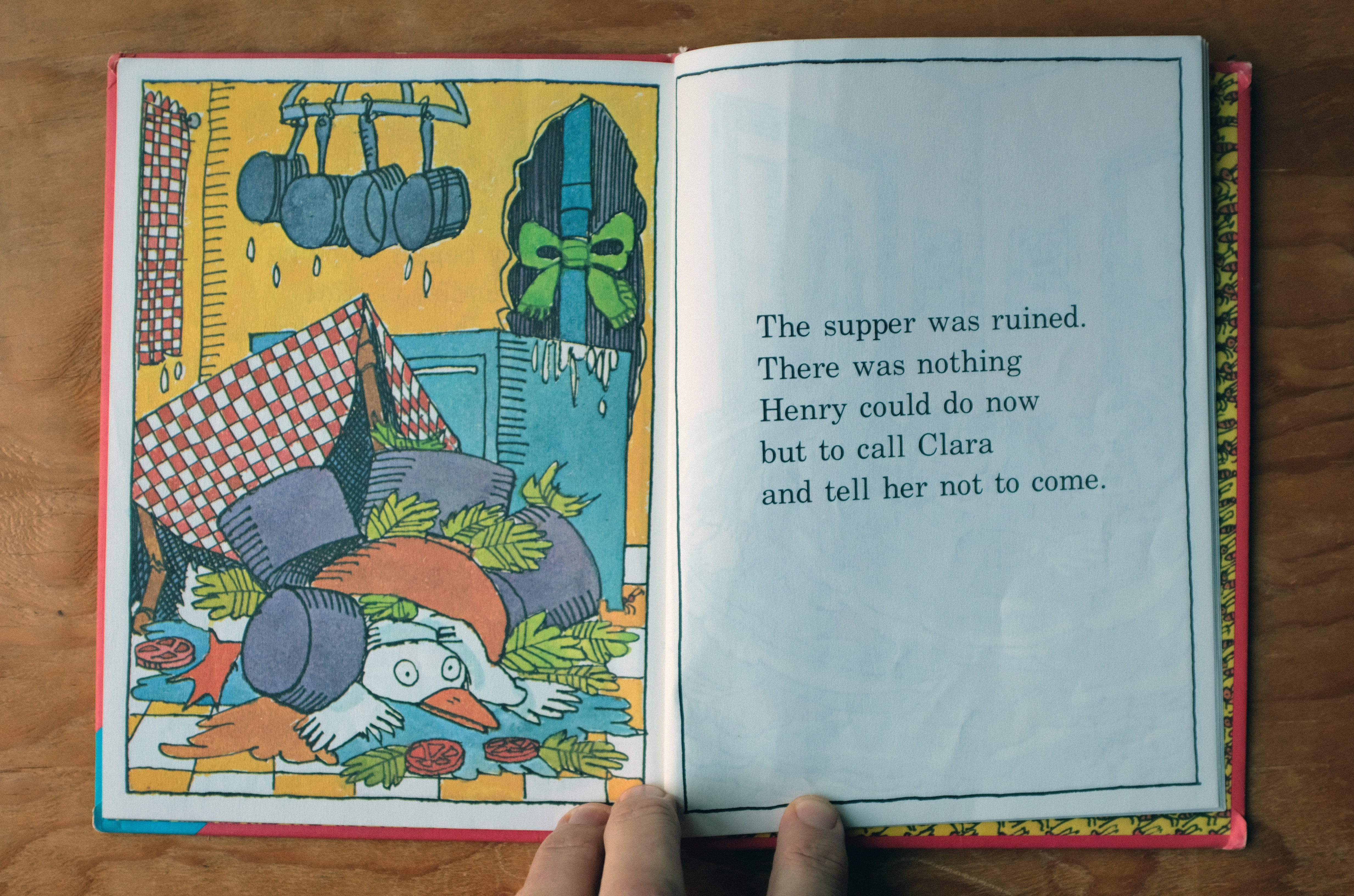
A few pages later, things get so bad that Henry must call Clara and cancel dinner.
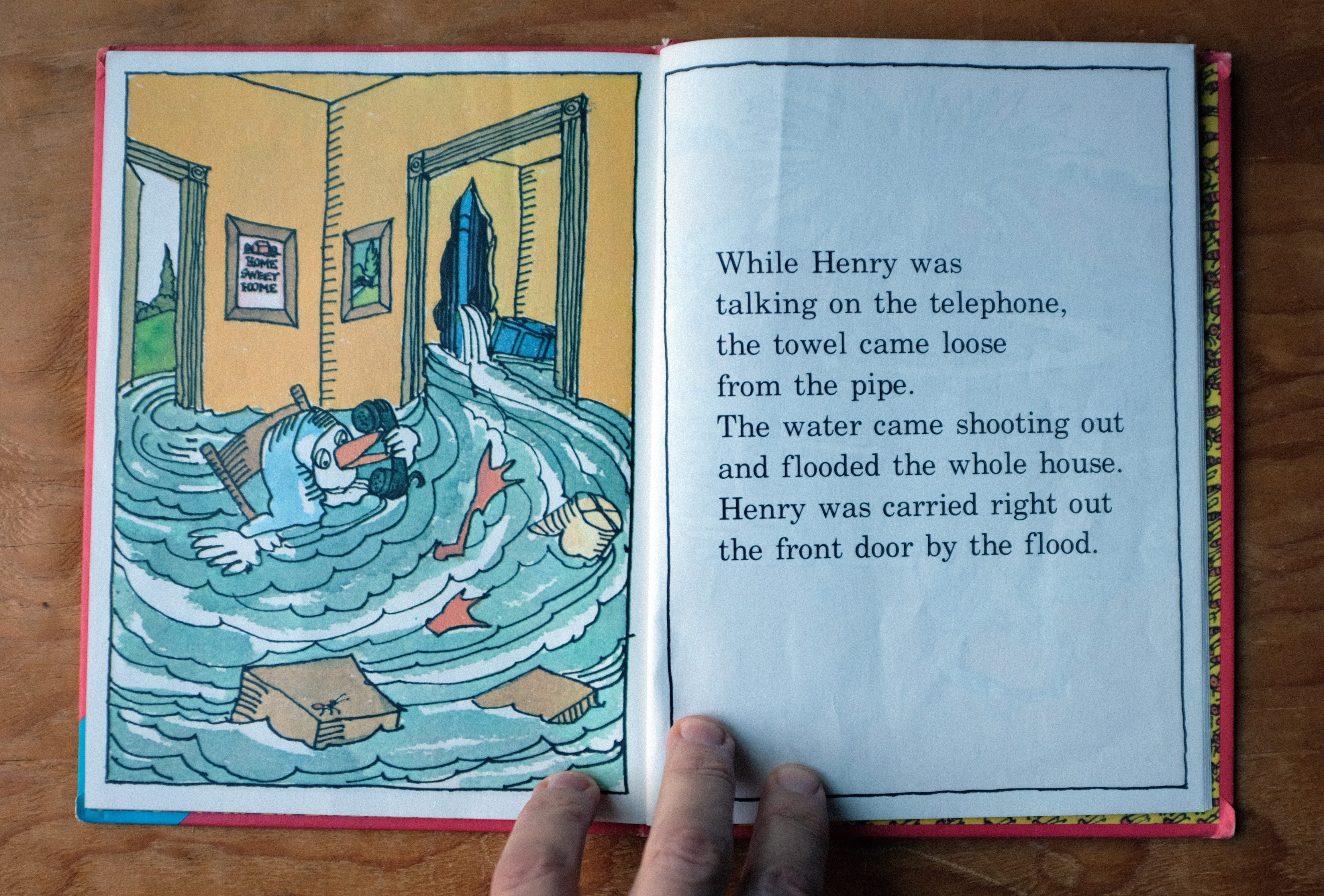
The pipe starts spewing water again. And then…
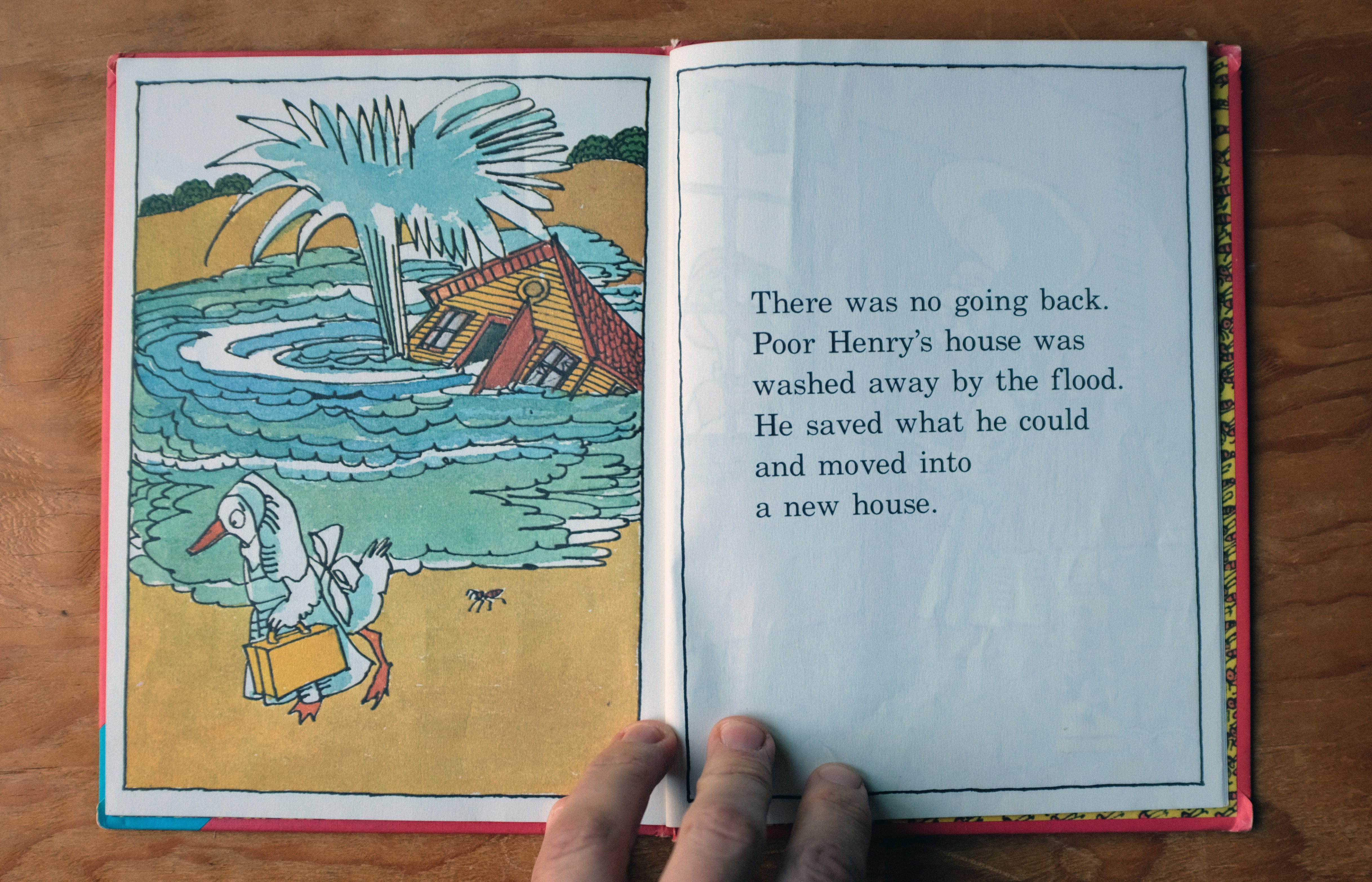
For the first time in the book, the scale of the drawing changes, and the scale of the narrative does too. “Poor Henry’s house was washed away by the flood. He saved what he could and moved into a new house.” (What a bit of writing, a master class in what is said and what is left out.) It’s a shocking moment, and although it is funny, especially in the context of the cartoonish rules of the book, it is truly awful too. Henry’s forlorn expression, his limp chef’s toque, the bedraggled ant: what pathos.
—MAC
Amos & Boris by William Steig
In William Steig’s Amos & Boris, the story introduces us to a mouse, Amos, who loves the ocean and wants to travel on it. He gets to work making a boat for himself, and the book takes us through, step by cute technical step, how he gathers the necessary supplies and builds it, and all the things he pleasantly loads on board the finished vessel that a mouse might need on a multi-year, life-changing journey at sea.
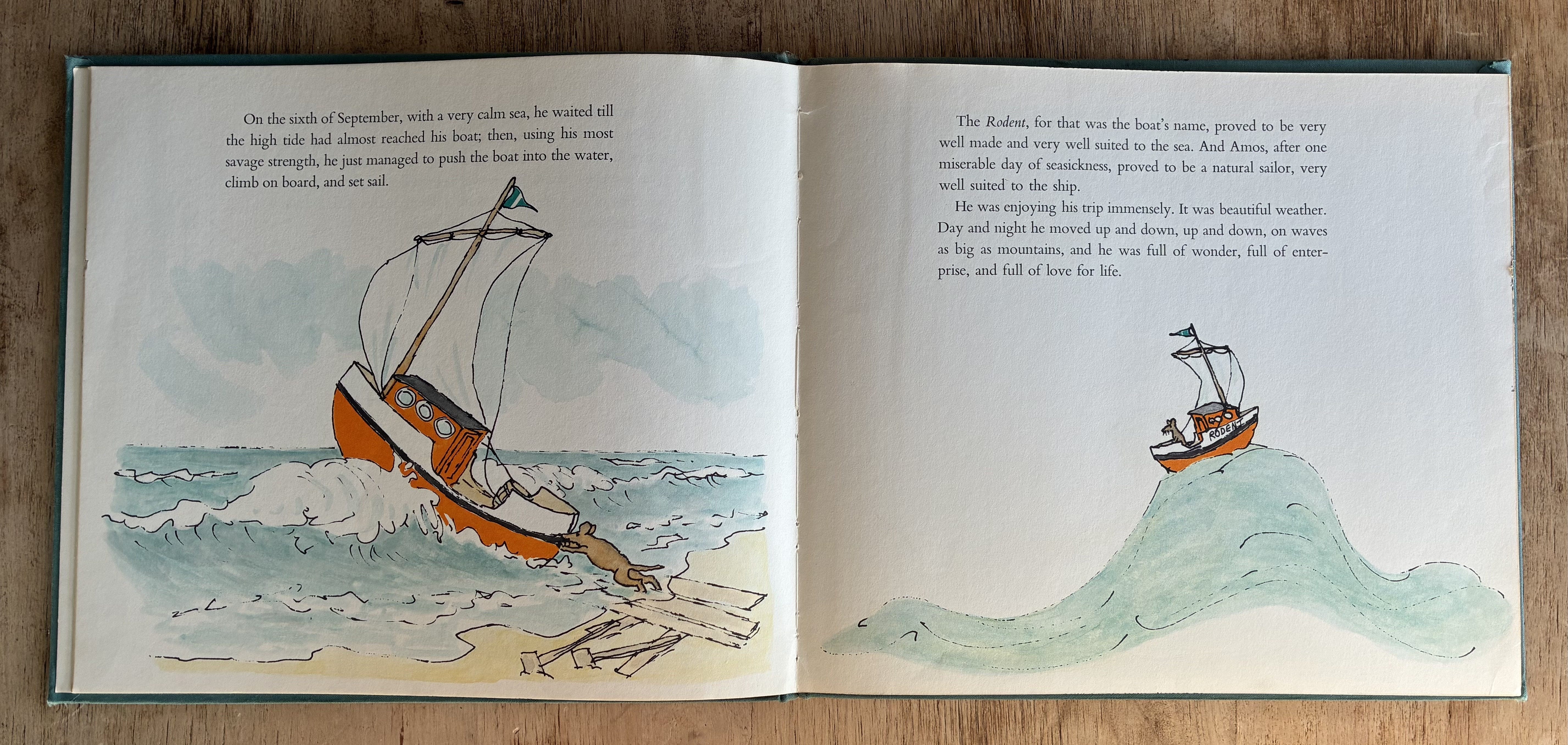
The day of the launch arrives and everything goes beautifully. Time gently speeds up and we are pleasantly crossing sunny days on the boat with Amos. The text goes from describing straight events into something more contemplative about Amos’ state of mind, in a way only Steig knows how to do. He continues this tone on the next page, showing us the night version of the mood he’s established, where we see Amos asleep on his gently rocking boat with whales going by dreamily in the dark.
And then you read the last line in the paragraph.
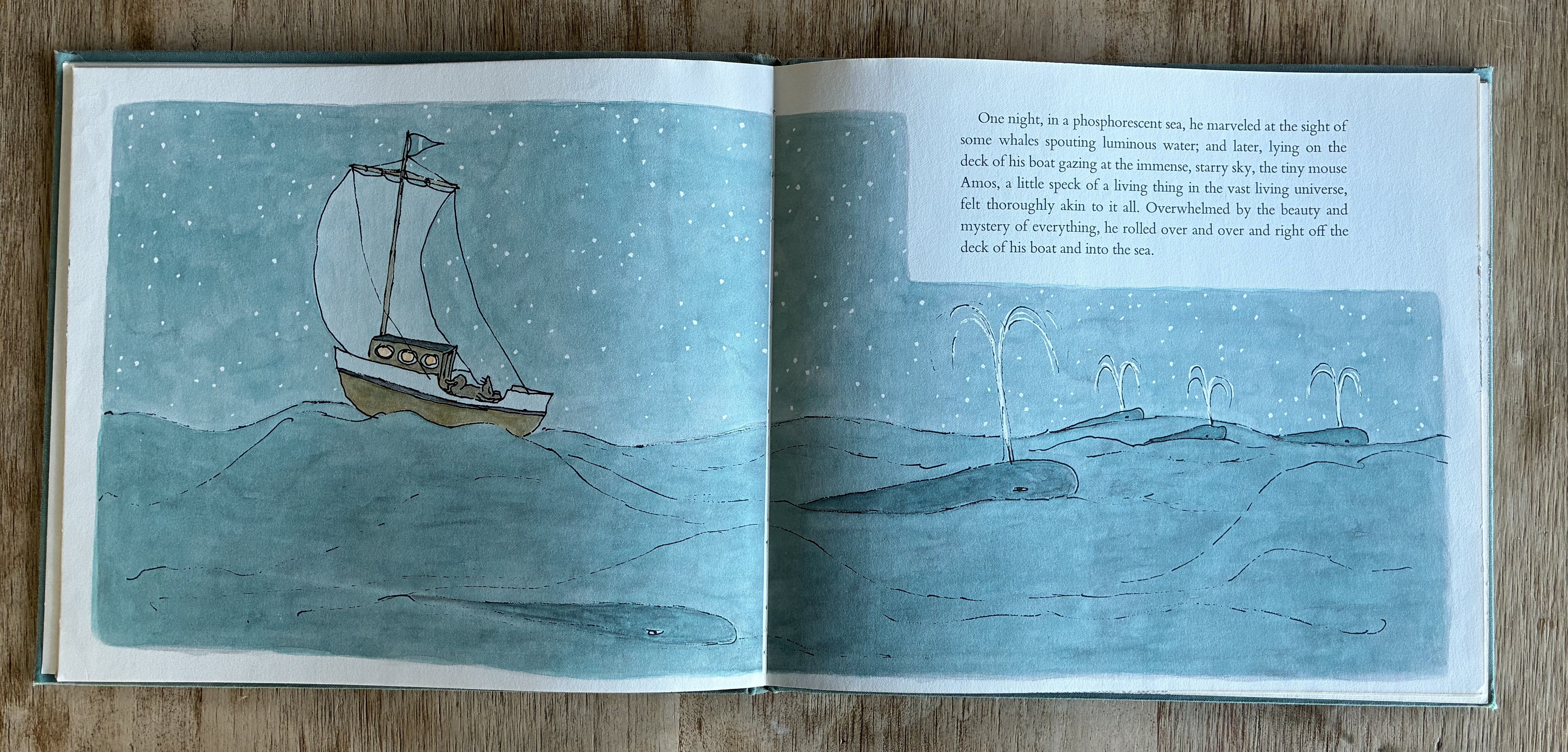
If you haven’t read Amos & Boris before, I expect some of you had to read that line twice, just to make sure.
There are many amazing things about this trick. The illustration is calm. It’s a calm night. It’s beautiful and surreal and we are having a great time with Amos, and Steig has crafted a poetic moment. But the story idea Steig has in mind requires this poetry. You need to believe and relate to Amos’ being overwhelmed to buy him rolling over the side — Steig brings you to it through his writing. Anyone could think of, like, a storm at sea, or a rock jutting out of the waves. Steig is after something harder. He wanted this moment on the page — Amos just softly slipping into the water, the victim of a euphoria we as the reader understand and have been brought along into. Basically, Steig is saying “the beauty of my writing is the thing that has to knock him, and us, overboard.” And it works.
As with a lot of great page turns, and visually-told sequential moments generally, the moment of impact, the fall itself, or the splash, is not shown. It happens in between this picture and the next. When we see him again, Amos is in the water trying to catch up to his boat. This is a big change from the last visual we had, but Steig’s not done. Read the last line on THIS page.
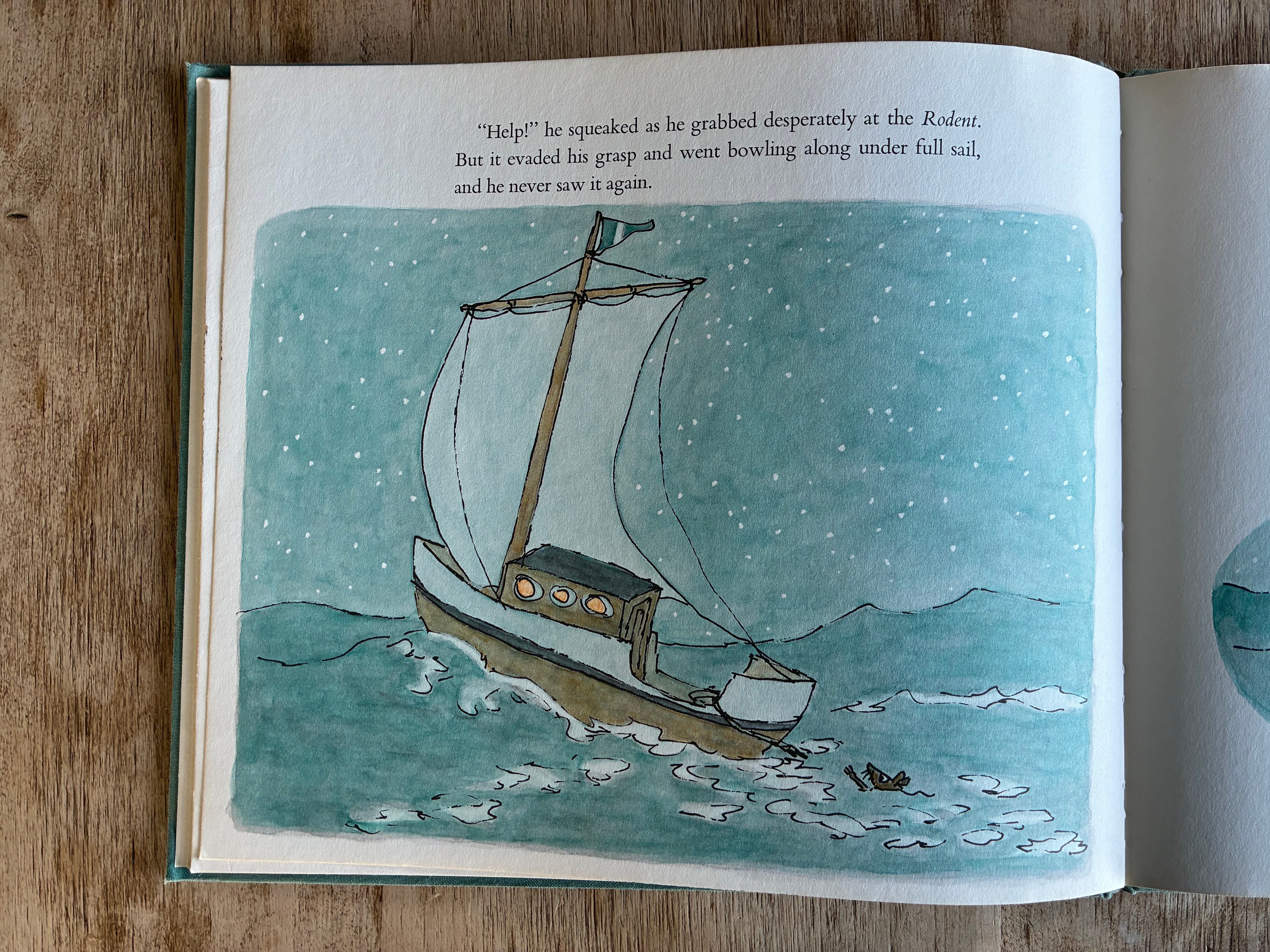
“He never saw it again”??? One page ago, he was lying under a blanket of stars, whales going by, nothing in the WHOLE BOOK had gone wrong. Amos loves the ocean, he builds a boat, boat works beautifully, he has years of supplies. Everything has gone so well that he is literally tripping out on his deck about it, and one page later he’s in the water, boat is a few feet away and, we are told, in the text, he is going to just watch it float off until it’s gone forever.
That implication, of Amos just helplessly watching his boat slowly float away forever instead of the chaos and excitement of say, a storm or a rock, is somehow much scarier, and more real.
The realness gets more real on the facing page. The boat is gone, and Amos is left to consider his options, which are few and grim.
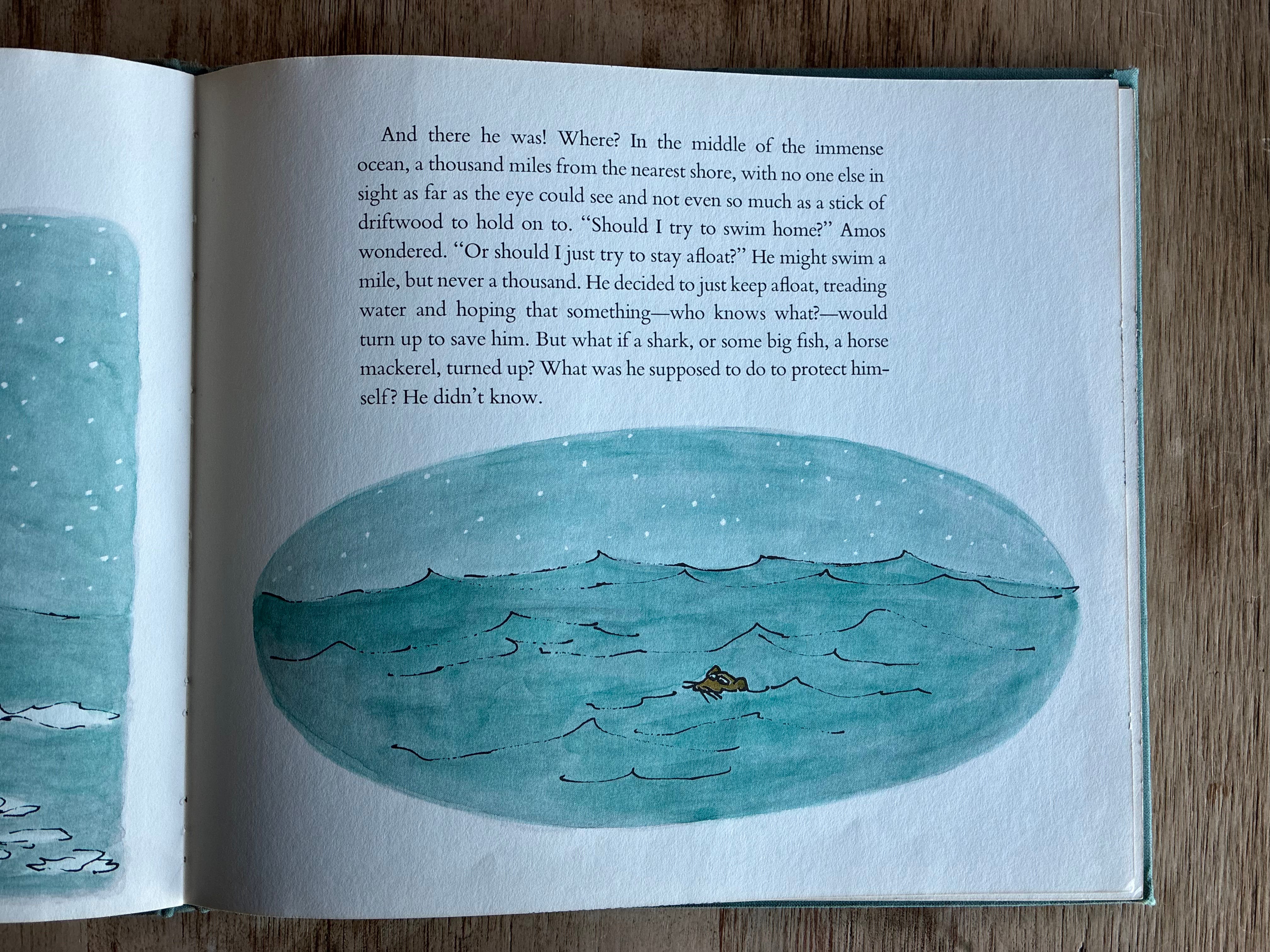
One of the things that always sets Steig apart for me is that he’s able to give equal possibility and validity to an almost boringly-great outcome and a truly dark and hopeless one. His stories always seem capable of both. He is a realist. He is unflinching about how the world is, and how it can be, in either direction. Yes, if you work towards something, it might work out. It sometimes does! But if something goes wrong, either by your own fault or just a bad bounce, the stakes are real. The questions Amos is asking here, floating in the sea, are not fanciful. They are good, reasonable questions. They would be our questions, too, if we were there. We’ve gone, in the space of a page turn, from a somewhat airy and distant book about a mouse who wants to go to sea so he builds a cute boat and is all set for cute times to “actually this is probably pretty close to what it would really personally feel like to be looking into the abyss.”
—JON
The way I just dashed to my library's home page to put a hold on Amos & Boris. I must know how this turns out!
I think my all-time favorite is the Caps for Sale spread, “When he woke up he was refreshed and rested.”