

What Is a Book Trailer?
Nobody knows. But we've made some anyway.


Today, Jon and Mac talk about making a “book trailer” for their new quartet of board books. Included is a playlist of a bunch of films — mostly about childhood, and quite a few from their own childhoods — that inspired them.

So, yeah — Jon and Mac have some board books coming out in March! If you preorder the books and submit your receipt here, you will join the Now I See Mail Club, which means you’ll receive four curated and themed packages from Jon/Mac/Tundra Books, one in each season (summer 2026, fall 2026, winter 2027, and spring 2027). Please note, the Mail Club is only open to residents of the US and Canada, excluding Quebec, and there are more thrilling terms and conditions at this link.
Also, there are now navy blue shirts in the shop.

And:
OK, on to trailer talk.
MAC: Hi Jon.
JON: Hi Mac.
MAC: I guess first of all we should say we made a book trailer and you can watch it.
JON: It’s actually the first in a series of short videos — or “trailers” — all directed by Nathan Zack, for our new series of board books: the Now I See series, published by Tundra Books.
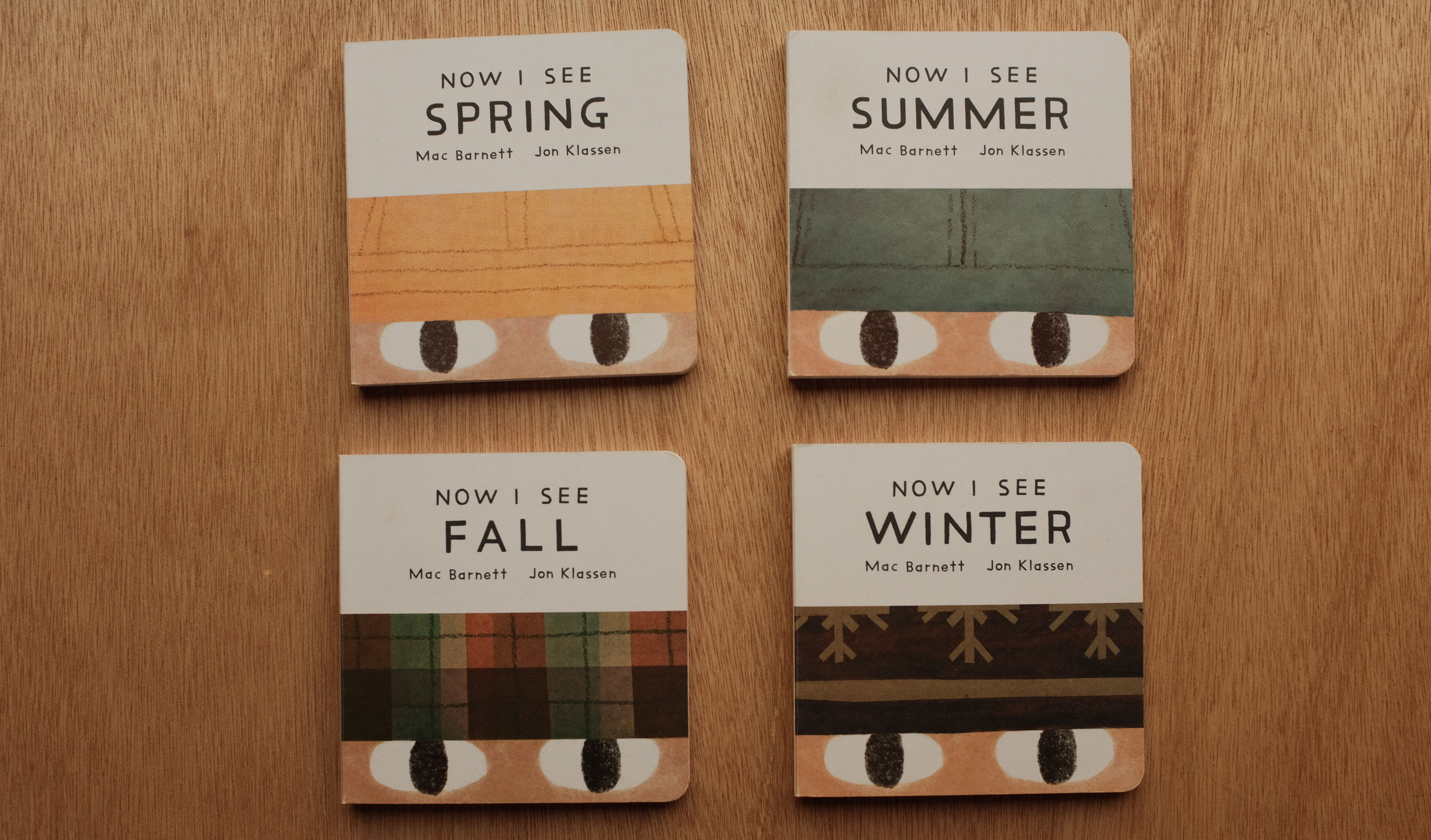
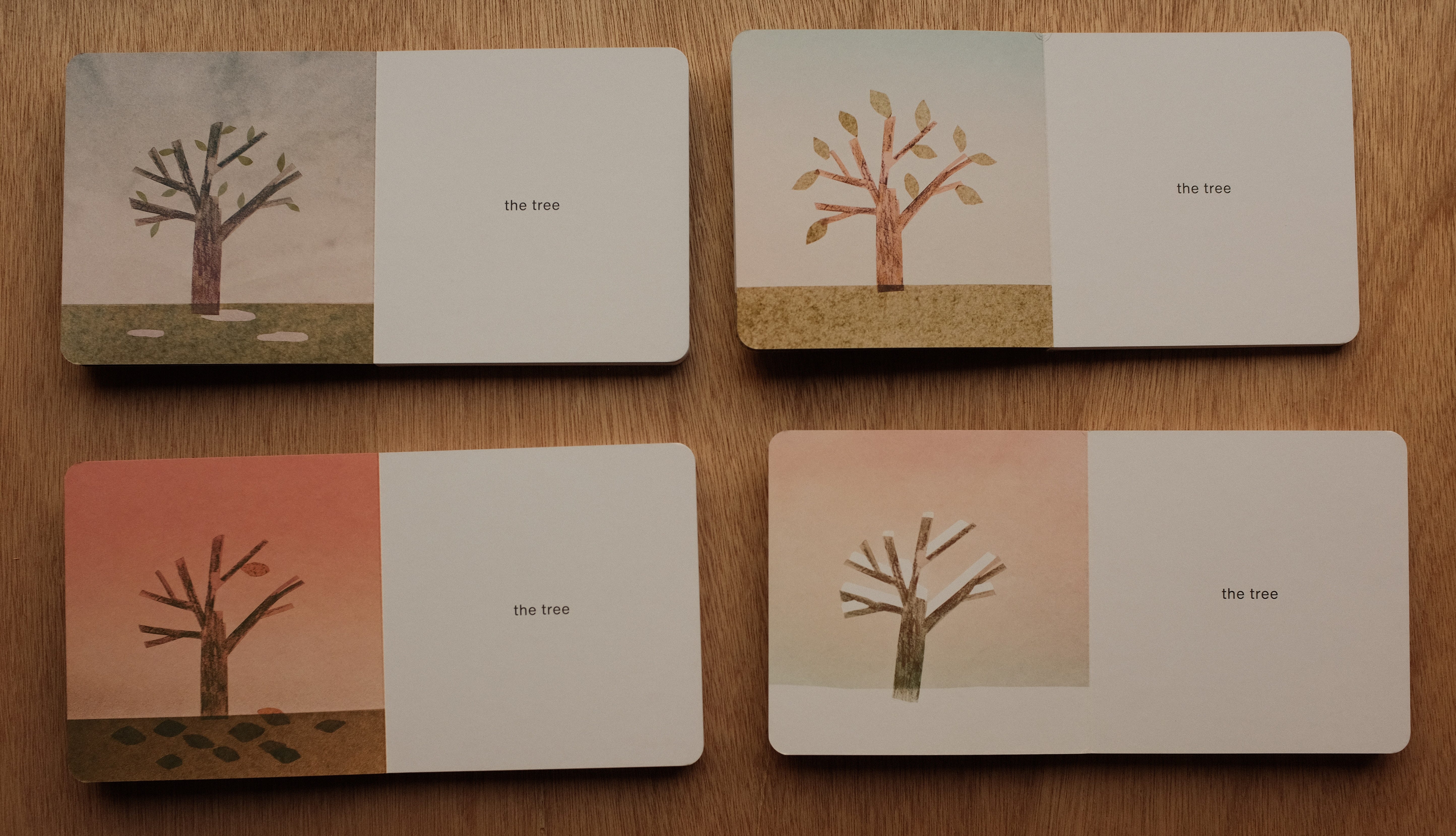
There are four books in the series, one for each season. Each of the books contain the same text, and the illustrations change according to the titular season.
MAC: The book trailer has become a standard part of marketing a book, although its purpose, to me at least, has always been a bit mysterious. Are they supposed to spread awareness of a new book, and even entice people to buy them? And if so, entice whom? Booksellers? Librarians? Teachers? Parents? Kids? Probably not kids, because kids don’t have money. Are book trailers for librarians and teachers to screen for kids before reading our book aloud (I wouldn’t have thought so, but it happens!)?
Historically, I’ve handled these questions by trying not to think about them.
Jon, what even are book trailers??
JON: Book trailers are little commercials or teasers for books that are being released. They came about as a publishing marketing tool with the advent of YouTube and social media.
MAC: I do remember first learning about book trailers, a conversation with a marketing person, who asked me, in a hushed tone, in 2009, if I had ever heard of YouTube.
(I had 😎)
JON: I think book trailers also come out of the idea that releasing a book can be viewed a little like releasing a film. There is a similarity to movie releases in the kind of urgency to create momentum in the first few weeks they are out — to get on bestseller lists and just generally break away from the pack, before the next wave of stuff is released and buries you.
MAC: :(
JON: The trouble with the movie trailer comparison is that movies and picture books are very different. Movies are long. You can show SOME things from them without showing everything, leaving your audience wanting to see the rest of the things. Picture books are short. Simply teasing a picture book is hard. The publisher often, understandably, doesn’t want to show too much of the book (something we, ourselves actually don’t mind doing, but that’s another post).
So what’s left for us to show or establish in a trailer is maybe a premise, or explaining some kind of hook or mechanic you might have employed, but increasingly we’ve also kind of settled into using book trailers for just… like…vibes.
MAC: 😎
JON: That sounds like a joke, but really, think about why you buy a picture book, or why you remember one that you had. Often a lot of it IS vibes! We work hard on the story and the page-by-page construction of them — this newsletter is basically about appreciating exactly that — but we also have a healthy interest in, and respect for, vibes.
MAC: 😎
JON: And film is very good at vibes. It gives you vibey things that books don’t give you. It gives you sound and editing. You can spend a long, satisfying time with good sound and a good edit and not get into any kind of actual plot or story, classically speaking.
One of our early forays into this more vibes-based approach was the trailer for Sam & Dave Dig A Hole, in 2014.
It was a memorable day. It was actually shot by the venerable Shawn Harris, and the three of us went out to the desert in what we were confident would be a short excursion. Surely we would drive 20 minutes outside of Los Angeles and come upon a place to dig a hole. This did not happen, and we narrowly avoided some pretty meth’d-out situations.
MAC: There was a troubling incident with some guys who’d converted a golf cart into a four-wheel drive vehicle to patrol their desert, and I’m guessing at this point, secret laboratory.
JON: Late afternoon we finally found a non-meth spot by some railroad tracks and it ended up being okay that it had taken all day because the light was great, and we got to shoot over the sunset.
The final thing ended up being about a minute of video that was hopefully fun to watch, established the title, us, the very basic gist of the book, and not much else, which had been the goal.
MAC: (The other goal was to avoid, if possible, any animation of Jon’s artwork from the books, something book trailers do sometimes, and something that, with a few exceptions shown later, kind of hurts Jon’s eyes when it happens to his stuff.)
(These animations, it seems worth saying, are my mom’s favorite genre of book trailer.)
But yeah, I think this established a style of trailer for us, something you could call Jon & Mac Act a Fool.
JON: The same general approach was applied years later to the trailer for The Three Billy Goats Gruff. Shawn shot it again, and, again, it is less about the book itself and more about vibes.
MAC: And goats.
JON: We had the advantage on that book that most people know that story, but still. Good vibes.
MAC: But this approach didn’t feel right for the Now I See books.
JON: Yeah, the job of the Now I See trailers was to kind of tip how the books worked, but we also wanted to try to get at how we wanted this whole project to feel more generally.
MAC: We first met Nathan Zack when he made a short about Looking at Picture Books for a series called Substack on Film.
JON: We called him and asked him to make a bunch of quick, more abstract-feeling pieces about the Now I See books, along with some longer ones. We’ll be scattering them out there as the release approaches.
MAC: I think we wanted these little films to get at some of what it felt like to read with our own kids when they were very young, and also to make something that felt consonant with the gentle spirit of these particular board books.
We had a bunch of reference stuff: films we felt that got childhood right, often in some subjective, experiential sense. Sometimes these were videos that we remembered watching as kids — and feeling, as kids, that they were right and true.
JON: One of the tonal touchstones that came up were these short interstitials we saw when we were kids called “Hinterland Who’s Who.”
MAC: I didn’t see them as a kid. They’re Canadian. You and Nate were really going nuts over them, though. Vibing.
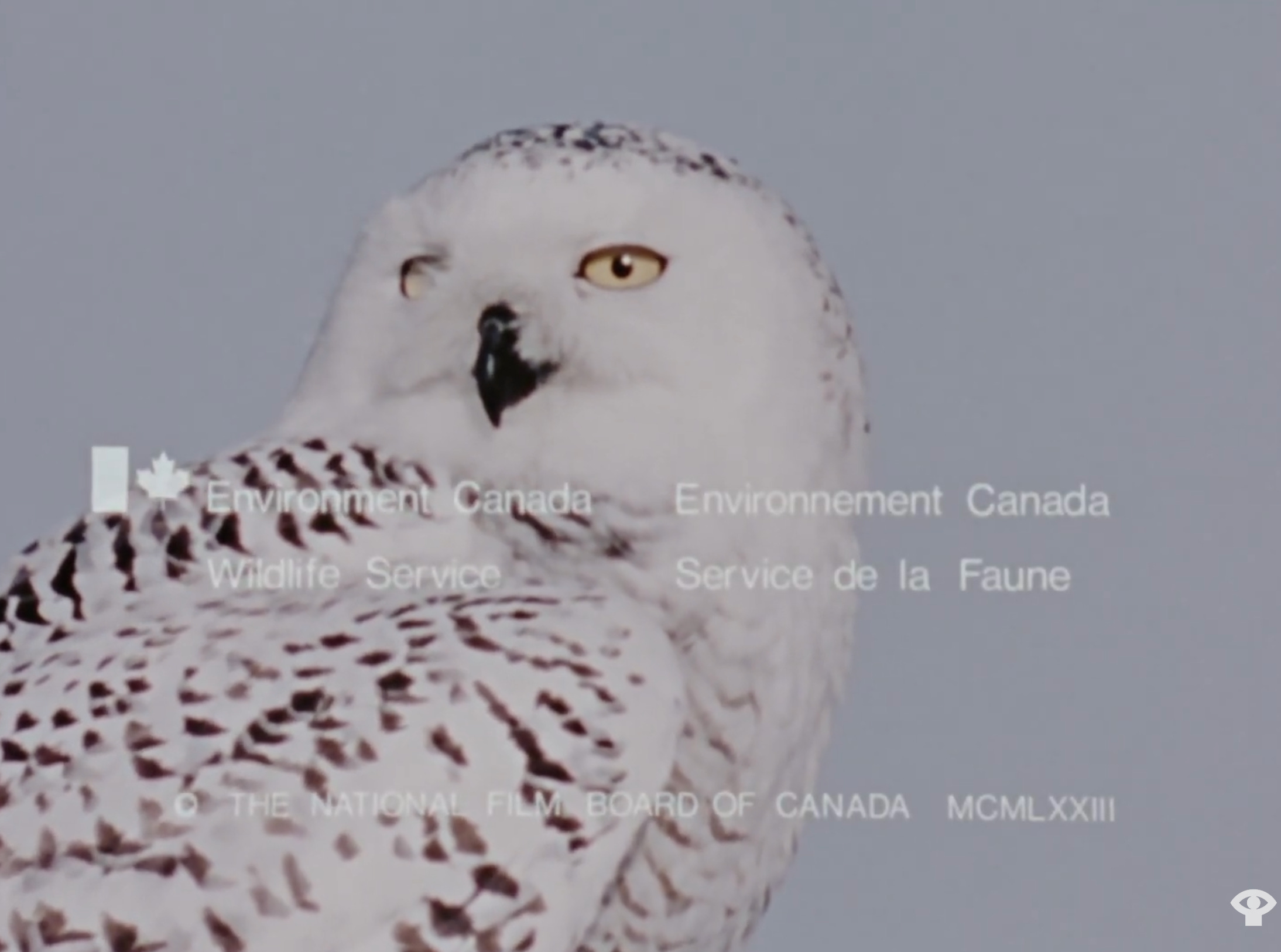
JON: These shorts were made by The National Film Board of Canada. They were very straightforward, filmed naturalistically and narrated plainly with simple facts about the animals they focused on. But there was something about the format and treatment that also lent them a poetry that made them memorable.
MAC: The brevity.
JON: Also the music, the same flute melody that played behind all of them. A meandering, gently mysterious piece called “Flute Poem” witten by television score composer Jon Cacavas.
As much as they was very informative, the final products also felt like little tonal jewels.
MAC: Poetry and science at peace.
JON: Each video ended with a federal agency graphic over the footage. Canada’s federal identity design, in its heyday, was unmatched.
The National Film Board logo was not far from our minds when making the logo for this newsletter.
The endings to the “Hinterland” shorts always looked great, too. (They also recommended that for more information on the animal in question, just contact the government. Verrrry cuuuute.)
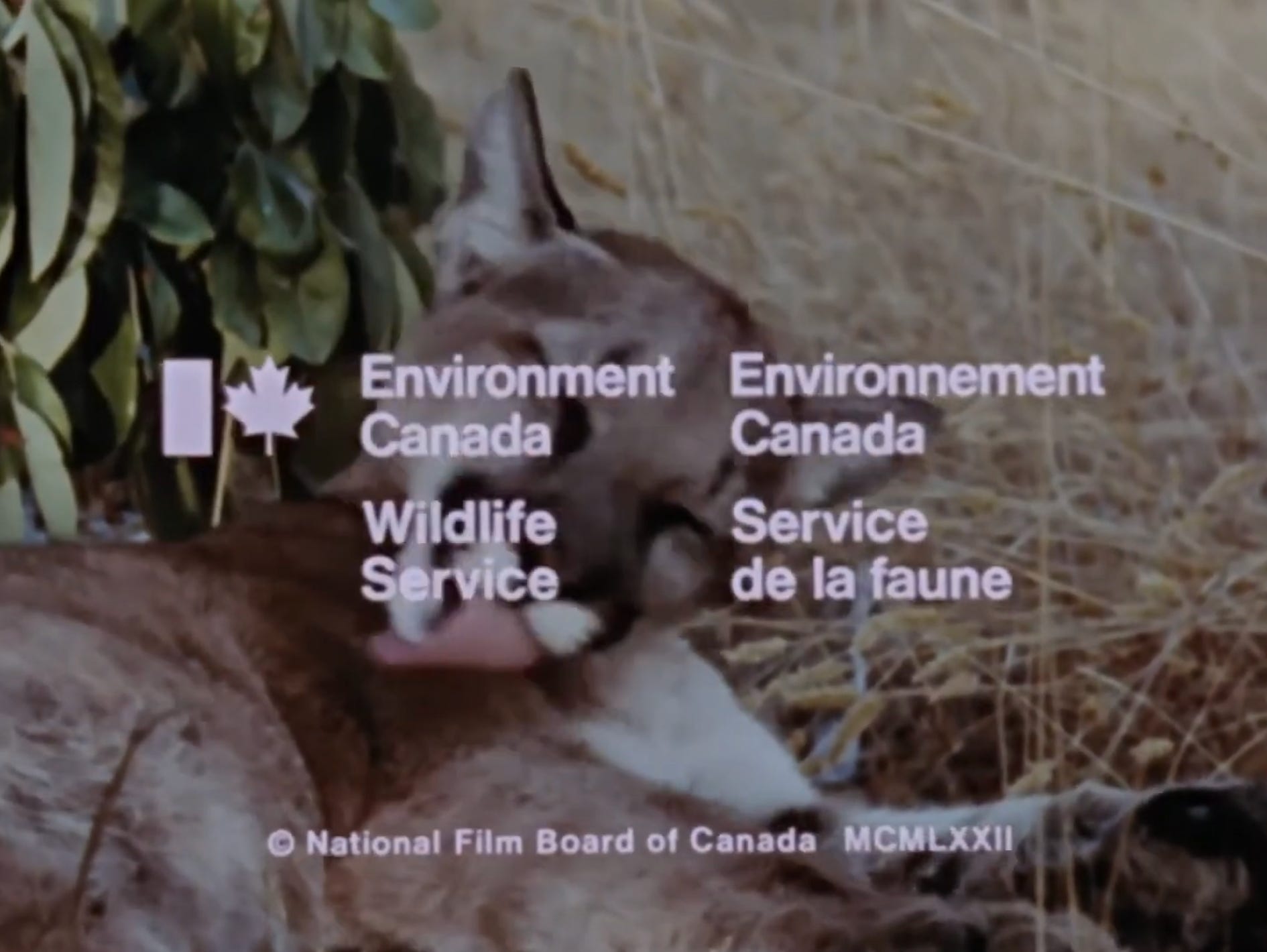
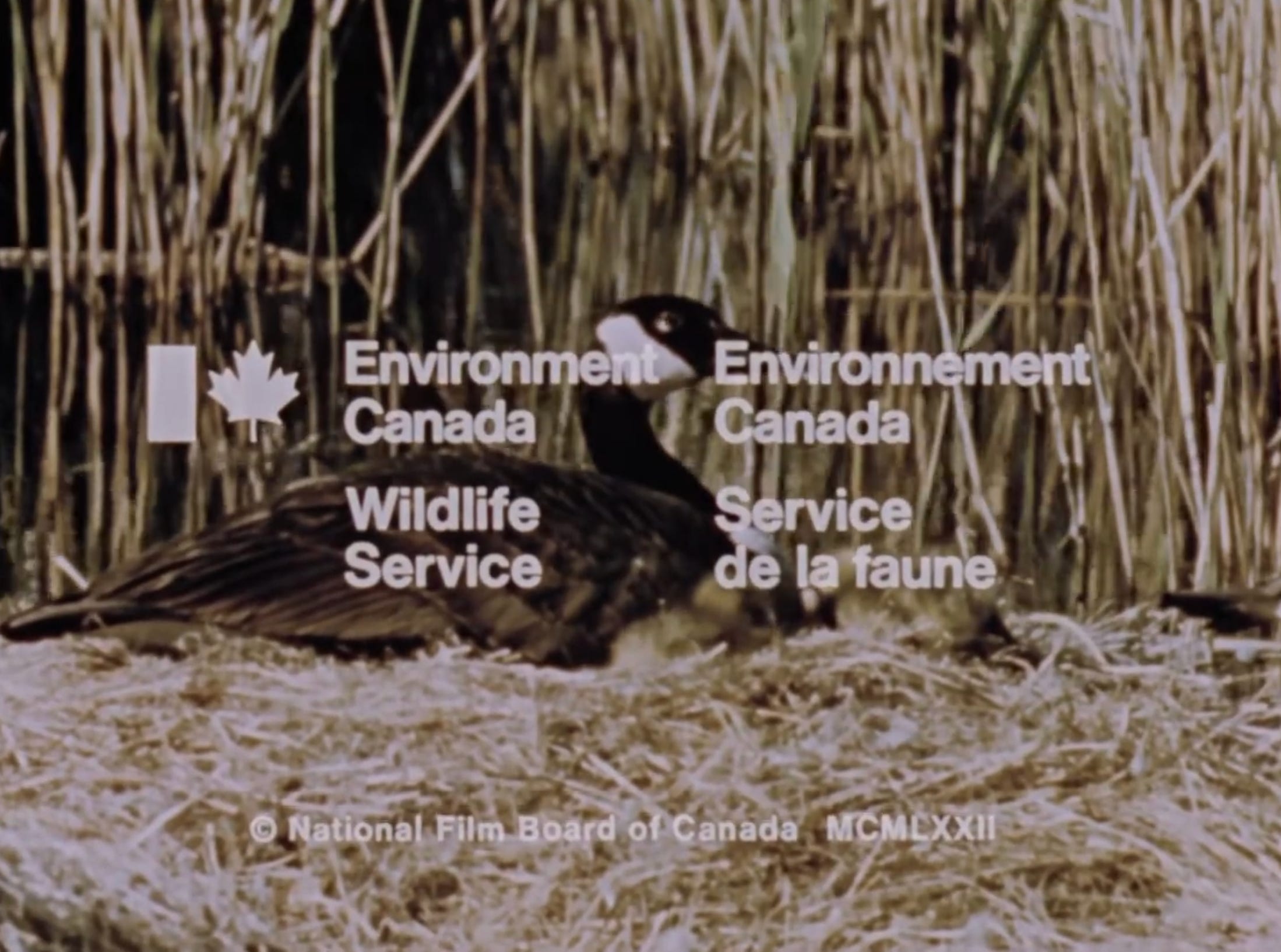
We tried for the same general approach to our type treatment on these trailers.
We thought the down shot of the books being arranged from above was a little like Sesame Street videos where you’d see downshots of shapes being moved around.
MAC: I think about and talk about old Sesame Street a lot. This short didn’t influence our trailers as much as the book itself. The sound is godawful. Sesame Workshop, please save us and upload a good version to the Sesame Street Classics channel.
There’s a series of shorts, directed by Jim Henson, that show kids playing with toy vehicles, intercut with footage of the toys’ real-world equivalents at work. The whole concept displays a respect for the way kids play. And they’re shot and edited in this way that feels unsentimental but beautiful and captures the vividness of childhood’s sounds, sights, and textures. The rushing faucet at the beginning brings me straight back to bath time, age four.
This next short captures a profound and underexplored playground phenomenon — kids teaching other kids, initiating the youngest among them into the culture of childhood. Like most of the old Sesame Street stuff, it doesn’t use professional child actors (thank heavens). And the whole thing is so wonderfully paced, and so captures the emotional rhythms of play.
Speaking of non-professionals, I love the unvarnished narration of kids’ voiceovers on the old Sesame Street shorts. Maybe my all-time favorite is this one about taking care of farm animals in the winter. What an opening line: “Uh, when, when winter comes and stuff, it’s hard for the cows and all the animals, so, um, the people on the ranch, they feed the cows so they won’t starve and die.”
And here’s a nice — with slightly more polished but still unaffected narration — one about spring. The pioneering electronic musician Beverly Glenn-Copeland scored a bunch of early Sesame Street stuff. Maybe I’m wrong, but I feel like this has to be one of his. (Now I’m feeling like the cows in winter might be Glenn-Copeland too.)
There are couple of features that were touchstones for us too. The Red Balloon, which Jon and I both saw as kids, a movie that really stuck with us.
It looks like the whole thing is on YouTube.
And Where Is the Friend’s House?, which we watched last year. Jon saw it first and then told me to watch it, and I feel like it dominated our conversations for a few weeks.
Here’s the trailer:
And it looks like it’s streaming on Criterion now, if you’ve got that subscription.
JON: As a little bonus, here are the three trailers for the Hat Trilogy books. The first two were animated and composited by my friend David O’Reilly, and the third by my other friend, Fran Krause.
The I Want My Hat Back trailer was initially cut to the Shostakovich waltz from “Eyes Wide Shut” (it worked very well), but of course those music rights were a little tricky, so a soundalike track was commissioned.
The same process for the music was used for This Is Not My Hat, but this time it had been cut to Bernard Herrmann’s opening credit score for “Psycho”, a big structural inspiration for the book itself (another post in there, someday), and again a soundalike score was used.
For the third book, it was friend-of-the-public-domain Burl Ives to the rescue again (initially we tried “Sweet Dreams” by Patsy Cline, it really does go with the book, but again, those pesky rights).
MAC: And, finally, here are two very different trailers for one book, The Future Book, by me and Shawn Harris. Both trailers were made by Lauren and Lindsay Kent. One is footage from a read-aloud in front of students in California. We wanted to show how the book worked with an audience.
And this one is more a conceptual “video from the future.” We put a smoke machine in Shawn’s living room.
JON: 😎
Was not expecting to be carried down a memory portal by Burl Ives (multiple times in one post!), voice of an angel, even better when you’re lying on the blue carpet in the den listening to Little White Duck on vinyl
Oh, man, I have to bookmark this for later, or I'm going to lose a whole day of work to this click-temptation insanity! And on a Tuesday, too--the day I traditionally remember that the week has ACTUALLY (actually) started and I should, you know, accomplish *something* before Friday.
<eyeing the red, candy-like play buttons; trying not to be weak>
Thanks a lot, guys. 😂